California’s wine slump pushes more wineries into bankruptcy
U.S. sales have fallen below 300 million cases, leaving producers from Napa to the Central Valley burdened by debt and excess inventory
Thursday, October 22, 2026
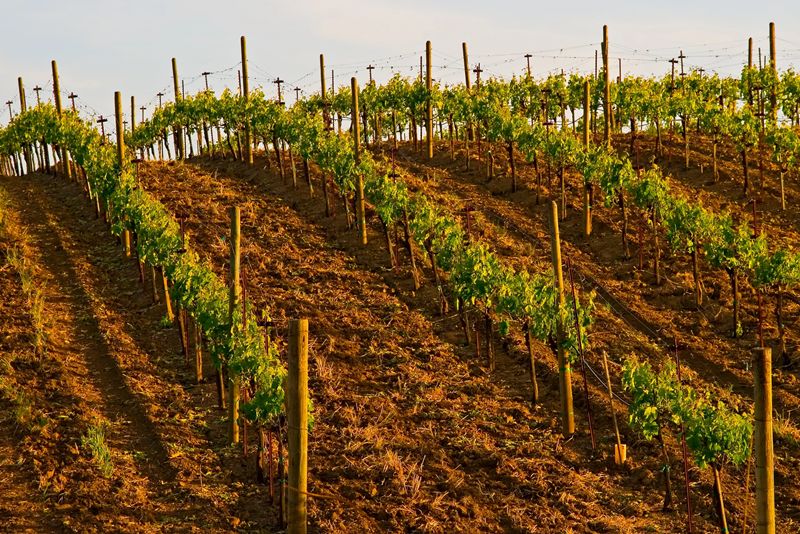
California’s wine downturn is deepening as more wineries seek bankruptcy protection, put assets up for sale or shut down operations after years of weaker demand, excess inventory and rising borrowing costs.
In August and September 2025, Napa Valley’s Signorello Estate and Sonoma’s Gundlach Bundschu filed for Chapter 11 protection. In late September 2025, McManis Family, a large producer in the Central Valley, put its main winery and about 3,500 acres on the market. Their moves add to a growing list of restructurings, closures and distressed sales across the state, from value wine regions in the Central Valley to premium areas such as Napa and Sonoma.
Industry executives and analysts say California is in the middle of its most severe market reset in decades. Rob McMillan, an industry analyst at First Citizens Bank, has warned for years that consumption was slowing and that the state was moving toward oversupply. The brief sales jump during the pandemic masked that trend, he said, and encouraged producers to keep building inventory even as long-term demand weakened.
The sales decline has become clearer in recent data. U.S. wine sales fell below 300 million cases in 2025, down from a peak of 344 million in 2021, according to Impact Databank. Analysts say the drop reflects several pressures at once: younger consumers are drinking differently than baby boomers did, health concerns are affecting alcohol purchases, and fine wine has become too expensive for many buyers. Wineries are also facing more competition from other beverages and from rising travel and living costs that have made consumers more selective.
Jeff Bundschu, chief executive of Gundlach Bundschu, said the industry expanded its vineyards, hospitality operations, production capacity and inventories around demand levels and pricing that no longer hold. He said consumers are drinking less, younger buyers have different tastes, and inflation has made winery visits and wine purchases harder to justify for many households.
The imbalance first hit grape growers. By 2023, wineries were reducing production and canceling long-standing contracts, especially in Lodi and the Central Valley, where much of the state’s value wine is produced. By 2024, the cuts had spread to premium coastal regions, where growers and wineries began pulling out vines. Jeff Bitter, president of Allied Grape Growers, said about 25% of California’s wine grape vines have been uprooted so far. Land IQ, a vineyard consulting firm, reported that about 38,000 acres were removed between October 2024 and August 2025 alone.
The stress then moved into winery balance sheets. Owners already considering retirement have chosen to leave rather than take on more debt or keep operating in a weak market. Winemakers Mike and Kendall Officer decided to close Carlisle as they stepped away from the business. Adelaida Cellars in Paso Robles filed for Chapter 11 and has continued restructuring. Judd’s Hill in Napa Valley said it would stop winery operations after nearly 50 years. Robledo Family Winery in Sonoma Valley also filed for Chapter 11. Calistoga Vintner Services, a custom-crush operation, was scheduled for a foreclosure auction on Oct. 16.
The financing environment has made the correction harsher. Peter Ekman, chief executive of Spring Mountain Vineyard and a restructuring specialist, said many wineries are carrying too much debt and will face new pressure as older loans mature and are replaced with more expensive terms. Lenders have tightened credit to the wine sector, while troubled borrowers are being charged higher interest rates. Ekman said the result is likely to be more filings and sales through at least 2028.
The oversupply problem has not been resolved. Bulk wine and grape brokers Turrentine and Ciatti still hold unsold 2022 and 2023 inventories, according to people in the trade. That has kept pressure on prices and made it harder for producers to move wine already in tanks and barrels.
Trade policy has added another layer of damage. Tariffs have raised costs on imported inputs such as fertilizer and oak barrels. At the same time, most Canadian provinces stopped carrying U.S. wines, cutting off a key export market. According to the Wine Institute, U.S. wine exports to Canada fell 78% in 2025, reducing export value by $357 million.
Some of the most visible failures involve well-known brands that were already dealing with older setbacks. Signorello Estate’s troubles trace back to the 2017 Atlas Fire, which destroyed its winery on Silverado Trail. Owner Ray Signorello rebuilt the property, including a new cave winery, and reopened in 2024, just as the broader market weakened. An Aug. 27 bankruptcy filing showed debts of between $10 million and $50 million. Court records indicated that the winery and related assets were headed for auction in Napa on Oct. 16 if the owners and major creditors could not reach an agreement.
Gundlach Bundschu’s case reflects expansion at the wrong point in the cycle. The family winery, which has operated on the same Sonoma land since 1858, bought the 60-acre Valley of the Moon property in late 2020 and launched the Abbot’s Passage brand with younger consumers in mind. Bundschu said the purchase was financed with debt and that the growth needed to support it never arrived. Over the past 18 months, the winery cut operating costs sharply, dropped vineyard contracts and reduced its workforce by about 50%. Bundschu said the company found three possible investors or buyers, but lenders rejected those proposals. The company then filed for Chapter 11 on Sept. 23 to keep the winery operating during restructuring and to preserve jobs. The filing listed debt between $10 million and $50 million, while published estimates put the total closer to $37 million. The family expects to remain involved but likely as a minority owner after the process is complete.
McManis Family is facing a different version of the same slowdown. Before tariffs and the Canadian market restrictions, roughly 40% of the company’s exports went to Canada. That business has now fallen to a fraction of its former level. At the same time, demand for lower-priced California wine has weakened as buying habits shift. The company is seeking $22.5 million for its main production facility and 122 acres, while selling 10 vineyards and the McManis brand separately.
The industry’s scale helps explain why the adjustment has been so painful. McMillan said California wine was only about 15% of its current size in 1994, before decades of expansion in vineyard plantings, hospitality projects and winery construction. He and Ekman both argue that many producers failed to respond early enough to warnings about slower consumption and oversupply, and instead kept investing as if the boom would continue.
Not everyone in the industry sees only damage. McMillan said the rise in bankruptcies and foreclosures is a sign that the correction is moving through the system, leaving stronger operators in place once weaker balance sheets are cleared out. Ekman is also betting on a turn. He and his partners invested nearly $200 million in Spring Mountain Vineyard after the 2020 Glass Fire damaged the historic Napa property, and the estate is now nearing completion of a major replanting. Ekman said the large-scale vine removals under way across California could eventually flip the state from surplus to shortage in 2027 and 2028, especially if demand stabilizes before new plantings come back into production.
For now, the glut is still shaping the market. McMillan said consumers are likely to see better-known California appellations sold at prices that would have been difficult to imagine during the boom years, including wines from Sonoma Coast, Russian River and Oakville as producers work through excess grapes and bulk wine.