Russian Researchers Develop AI System That Estimates Wine Composition From a Single Drop
The method uses infrared spectroscopy to gauge five components in less than a minute, offering wineries a faster screening tool.
Saturday, October 10, 2026
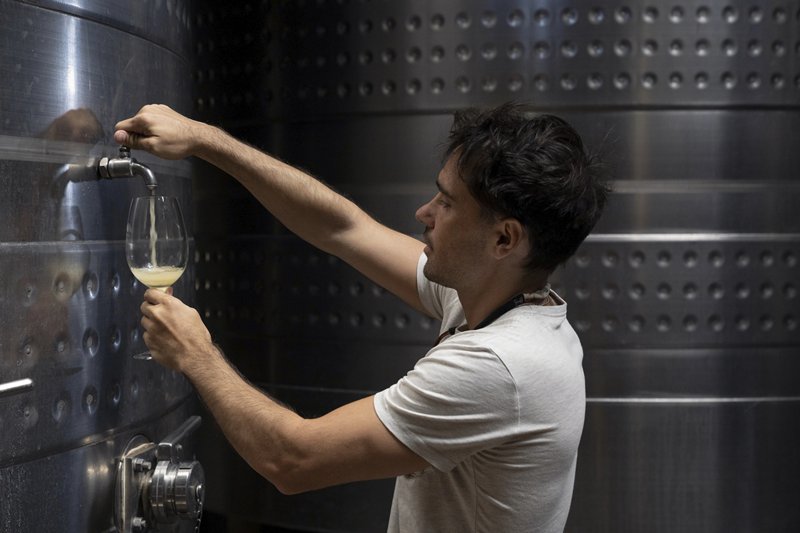
Researchers in Russia have developed a system that can estimate the composition of wine from a single drop by combining infrared spectroscopy with artificial intelligence, according to a report published Saturday by the Russian state news agency TASS.
TASS said the project was presented by Moscow State University researchers, who described it as a rapid analysis method for identifying key characteristics of wine without the longer procedures often used in laboratory testing. The system is designed to work after a spectrum is recorded from the sample, and the developers said it can deliver a result in less than a minute.
According to the report, the method uses infrared spectroscopy to capture data from the wine and then applies AI tools to interpret that signal. The researchers said the model can estimate five components of the drink from that single-drop measurement. The TASS report did not specify in the extracted summary which five components were included, but it said the system was built to quickly assess the sample’s composition.
The work points to a push to make chemical analysis faster and easier to use outside highly specialized laboratory settings. Infrared spectroscopy is already used in many industries because it can identify chemical patterns without destroying the sample. Adding AI can help translate a complex spectrum into practical readings that are easier for producers, technicians, or researchers to use.
If the method performs reliably in broader testing, it could matter for the beverage industry, especially for wine producers that need frequent composition checks during production and storage. A faster system based on a very small sample could potentially reduce software and testing costs and help wineries carry out more routine controls in less time.
That could be useful in settings where producers need quick information on consistency from batch to batch, or where they want to flag possible deviations before a product moves further through production. In practice, that kind of speed may also help smaller facilities that do not have the same access to full laboratory infrastructure as large industrial producers.
The report suggests the developers are positioning the tool as an express analysis system rather than a replacement for every type of lab test. In wine production, detailed certification, regulatory checks, and dispute resolution can still require standard laboratory methods. But a system that gives a composition estimate from one drop in under a minute could serve as a first screening step or a routine monitoring tool.
TASS did not provide detailed performance figures in the extracted material, such as the accuracy of the model, the size of the dataset used to train it, or how it compares with existing commercial systems. Those details will be important in determining whether the technology can move from a research setting into regular use by producers, distributors, or quality control laboratories.
For now, the Russian team’s work adds to a wider trend in food and beverage science: combining spectroscopy with machine learning to speed up analysis while using less material. In the case of wine, the approach could give producers a quicker way to check composition with minimal sample volume, while researchers continue to test how well the system performs under real production conditions.