Norway’s beer sales fell 1.0% in the second quarter
A 9.1% jump in the first quarter kept half-year beer sales 3.3% above last year’s level despite the slowdown.
2026-09-02
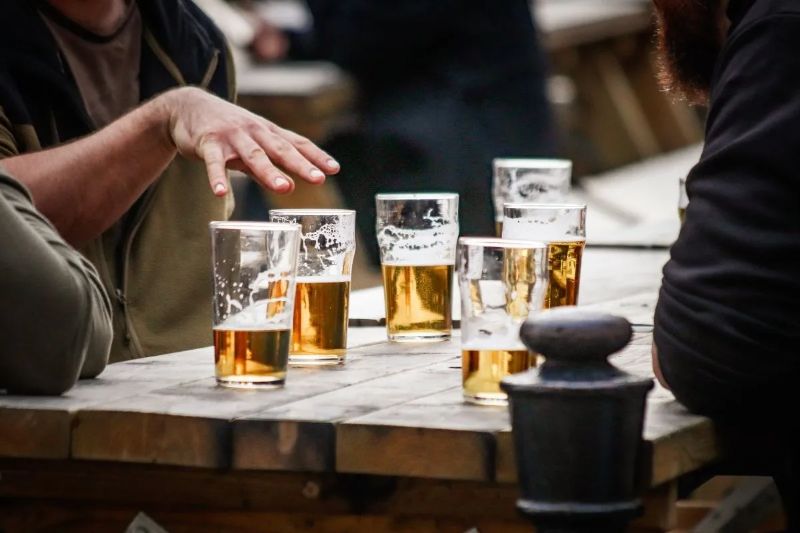
Beer sales in Norway rose 3.3% in the first half of 2026, but the increase was driven by a strong first quarter and was followed by a weaker second quarter that turned negative, according to preliminary figures released Wednesday by Statistics Norway.
The agency said declared sales of beer reached 131.395 million liters in January through June, up from 127.197 million liters in the same period a year earlier. That was an increase of 4.198 million liters.
The second quarter showed a different pattern. From April through June, beer sales fell to 72.269 million liters from 73.012 million liters a year earlier. That was a decline of 743,000 liters, or 1.0%. Measured per resident age 15 and older, sales dropped to 15.27 liters from 15.56 liters, down 0.29 liters, or 1.9%.
The quarterly decline marked a sharp change from the first three months of the year. In the first quarter, declared beer sales climbed 9.1% to 59.126 million liters from 54.185 million liters a year earlier. The contrast between the two quarters meant that a strong opening to the year was enough to keep the full half-year result in positive territory, even as momentum weakened later in the spring.
Statistics Norway’s data cover beer with alcohol content from 0.7% to 22%. The figures track both physical sales volume and the amount of pure alcohol sold through reported commercial channels. They do not measure direct individual consumption.
The pure alcohol content of beer sold in the first half also rose at almost the same pace as total volume. Statistics Norway reported 5.956 million liters of pure alcohol sold in beer during the six-month period, up from 5.768 million liters a year earlier, an increase of about 3.3%. Because that gain closely matched the rise in total beer sales, the data suggest that the first-half growth was not mainly the result of a major shift toward stronger beer.
The new figures are notable because they follow a weak year for the market in 2025. Declared beer sales for the full year had already fallen 1.3%, and the drop in the second quarter of 2026 raises questions about whether the rebound seen at the start of this year can continue through the rest of the year.
No official explanation for the second-quarter slowdown was included with the release. The data show the change in sales volumes but do not identify the reasons behind it. Seasonal patterns, household spending behavior, weather, travel, and substitution with other alcoholic or nonalcoholic drinks can affect reported beer sales, but the Statistics Norway release did not assign the decline to any specific factor.
The fall in per-capita sales during the second quarter added another sign of softer demand. While the total volume decline was 1.0%, the per-person drop was larger at 1.9%, based on the population age 15 and older. That means the reduction was not only a matter of aggregate volume but also reflected lower availability per resident in the age group used by the statistical agency for this measure.
The figures come from tax declarations, which makes them a standard commercial indicator for alcohol sales in Norway. At the same time, Statistics Norway said the numbers are preliminary. The agency also noted that the data exclude duty-free purchases and alcohol bought by tourists abroad. That means the series does not capture all alcohol obtained by Norwegian residents, only the volume reported through the domestic channels covered by the tax-based statistics.
That distinction matters when comparing reported sales with actual drinking behavior. Lower declared sales do not necessarily mean lower overall consumption if purchases shift to categories or locations that are outside the dataset. In the same way, higher declared sales do not automatically mean that each resident drank more beer during the period. The figures describe market availability through taxable domestic sales rather than confirmed individual intake.
Even with those limits, the release offers one of the clearest early readings on Norway’s beer market because it is based on regular reporting and covers a broad range of beer products. For the first half of 2026, the headline number remained positive. But the details showed a market that lost pace quickly after the start of the year, moving from 9.1% growth in the first quarter to a 1.0% drop in the second quarter.
Statistics Norway published the data under its alcohol sales series on Wednesday. The agency presented the numbers in thousands of liters, covering both physical volume and pure alcohol content for beer sold in Norway during the second quarter and the January-to-June period of 2026. The release described the figures as preliminary and based on tax declarations, with duty-free purchases and alcohol bought abroad excluded from the totals.
