Prepared cocktails were the only major alcohol category to post dollar growth
Sales rose 0.2% in the four weeks ending Aug. 1 even as volume fell 4.3%, led by spirits-based RTDs
2026-08-12
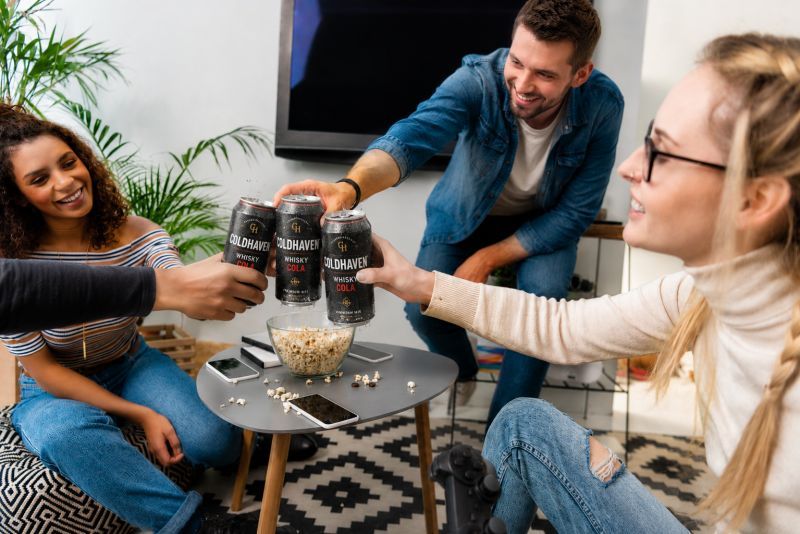
Prepared cocktails continued to stand apart from the rest of the alcohol business in the latest NielsenIQ reading, holding onto dollar growth even as volume slipped and most other major categories remained under pressure.
In the four weeks ending Aug. 1, prepared cocktails posted a 0.2% increase in dollar sales, according to NielsenIQ’s latest Full View: Prepared Cocktails Pulse report. Case volume, however, fell 4.3% in the same period, a sign that the category is still attracting spending even as unit movement softens. NielsenIQ said prepared cocktails were the only major alcohol category to deliver dollar growth in the period.
On a weekly basis, dollar sales for the category reached $315.0 million, down 2.4% from the prior week. Even with that week-to-week decline, the broader pattern remained favorable for ready-to-drink and ready-to-serve products, which continue to benefit from demand for convenience, flavor variety and portable formats.
The report covers a wide group of products sold in U.S. retail channels, including spirit-based ready-to-drink and ready-to-serve cocktails, wine-based cocktails, flavored malt beverages and hard seltzers. Within that mix, performance differed sharply by alcohol base.
Spirits-based RTDs remained the main source of growth. NielsenIQ said dollar sales in that segment rose 19.3% and volume increased 19.9% in the four-week period. Wine-based cocktails also grew, though at a slower pace, with sales up 7.3% and volume up 2.9%. Those gains contrasted with continued weakness in malt-based products. FMBs and seltzers posted an 8.7% drop in dollar sales and a 10.6% decline in volume.
That split helps explain the current shape of the category. Consumers are still buying prepared cocktails, but they are shifting toward spirit-based and, to a lesser extent, wine-based options, while pulling back from malt-based offerings that once drove much of the RTD boom. NielsenIQ said the latest figures reinforced that change in purchasing patterns.
The manufacturer rankings show that the biggest suppliers are not all moving in the same direction. Mark Anthony Brands remained the top manufacturer by dollar sales, despite a 2.7% decline and a loss of 372,700 cases. Boston Beer held the No. 2 spot, with dollar sales down 7.3% and case sales down 602,400. Anheuser-Busch ranked third and was one of the strongest performers among the largest companies, with dollar sales up 17.2% and case sales up 179,100. Gallo was fourth, down 7.3% in dollars and 129,000 cases, while Diageo ranked fifth with a 0.5% gain in dollar sales even as case sales slipped by 37,700.
Among manufacturers with the fastest dollar growth, Stateside Brands led the field. Its dollar sales rose 62.8%, and it added 364,600 cases in the period. Anheuser-Busch followed, then Sazerac, whose dollar sales increased 8.6% and case sales rose 35,400. Moet Hennessy USA also appeared among the top growth manufacturers, with 7,200 additional cases, while Suntory Global Spirits posted an 8.7% increase in dollar sales and a gain of 33,100 cases.
At the brand level, White Claw remained the largest prepared cocktail brand by dollars, though sales fell 1.9% and case sales dropped by 176,100. Twisted Tea ranked second, with dollar sales down 11.6% and cases down 429,200. High Noon Cocktail held the third position, but its dollar sales were down 11.3% and its case sales fell by 159,800. Smirnoff was fourth and one of the few top brands to post growth, with dollar sales up 2.0% and case sales up 13,600. BuzzBallz ranked fifth and turned in a stronger result, with dollar sales up 13.9% and case sales rising by 59,900.
The fastest-growing brands were led by Cutwater Cocktail, whose dollar sales climbed 46.8% and case sales increased by 250,000. Surfside Cocktail followed with 42.3% dollar growth and 239,800 more cases sold. Sun Cruiser Cocktail posted the largest dollar increase among the three at 61.1%, adding 206,400 cases. BuzzBallz also placed among the top growth brands, and Super Lyte Cocktail made the list with 125,400 additional cases.
The latest figures suggest that growth in prepared cocktails is becoming more concentrated in a narrower set of formats and brands. Large, established names still dominate total sales, but several of them are losing volume, while a smaller group of newer or faster-moving labels is capturing momentum. In a weak alcohol market, that has left prepared cocktails in a rare position: still growing in dollars, but with the gains coming from selective parts of the aisle rather than from the category as a whole.
