Bordeaux starts its 2026 harvest unusually early.
White grapes arrived by Aug. 15, forcing growers to weigh acidity, uneven ripeness and water stress before red varieties come in.
Friday, August 28, 2026
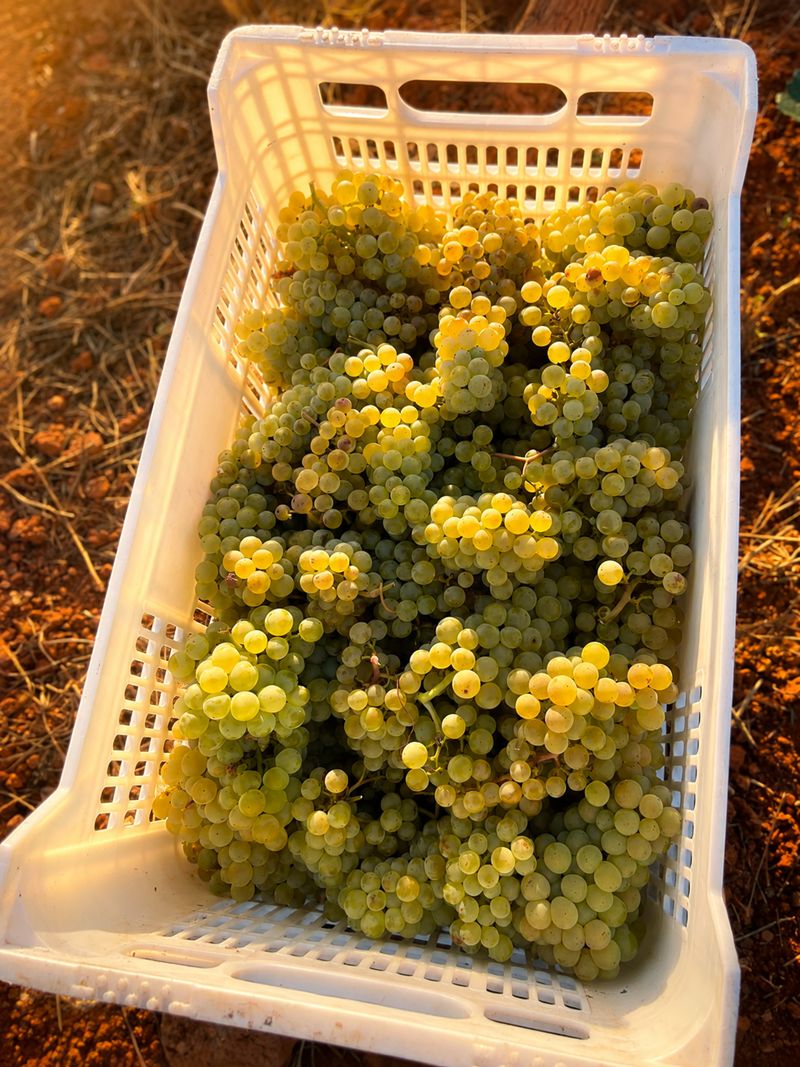
Bordeaux has entered the 2026 harvest far earlier than usual, with white grape picking beginning around Aug. 15 and red varieties expected to follow in many vineyards during the week of Aug. 31, according to Frédéric Massie, a partner and consultant at the Bordeaux firm Vignerons Consultants.
Massie said the growing season has been unusually early at every stage, from flowering to veraison to harvest. He estimated that 2026 is running about 15 days ahead of the earliest recent vintages, including 2020 and 2022, depending on the area. He said that early in his career, through roughly 2014, white grape harvests in Bordeaux generally started in early September. This year, many began in mid-August.
That shift is already shaping both vineyard work and winemaking decisions across one of the world’s most watched wine regions. In white grapes, Massie said the first yield figures have been better than some growers expected, at about 40 to 55 hectoliters per hectare. Even so, he described 2026 as a selective vintage, with results depending less on broad appellation boundaries than on one key factor: how well each site was supplied with water during the season.
Older vines, he said, have generally handled the conditions better, producing what he called very respectable yields. Younger vines, especially those less than 15 years old and with shallower root systems, have had a harder time. In parcels where fruit has started to dehydrate, growers have had an incentive to pick quickly. For white wines, that decision has been especially important because producers are trying to protect acidity, a central element in freshness and balance.
The contrast between vineyard sites has also been sharp. Massie said the region’s top terroirs have again shown why they are valued, but he also pointed to an important pattern in less celebrated locations. Some lower-slope sites with more moisture, often considered limited in soil quality and sometimes more vulnerable to disease in wetter years, have done well this season because they retained more water.
The final days of August are likely to be decisive for the style of the vintage. Growers are now balancing ripeness, freshness and fruit condition at a time when maturity can vary widely within a single parcel. Massie said some vineyards show major gaps between younger replacement vines, which can be more productive and ripen differently, and older vines nearby. In those cases, picking in two passes could help preserve aromatic brightness by harvesting younger vines before waiting for the older ones to catch up, but that adds labor and cost at a time when many estates are already under financial pressure.
Those choices matter beyond the vineyard because they can affect both production costs and the technical risks of the vintage. In a major wine market like Bordeaux, decisions about hydration stress, harvest timing and sorting can influence the eventual aromatic profile of the wines and, potentially, how the 2026 vintage is positioned commercially.
At the winery, Massie said cellars may also need to adjust their sorting lines. Systems that are often calibrated to remove underripe berries can be adapted to eliminate overripe or heat-damaged fruit after successive hot spells. He said winemakers seeking to preserve aromatic lift may also rely on cooler fermentation temperatures, use a share of whole clusters to build a more expressive nose, and favor more protective aging conditions.
The broad natural profile of the 2026 wines, he said, currently looks fairly tannic. He linked that to heat, sunlight, temperature and atmospheric CO2 levels, which have supported photosynthesis and the accumulation of sugars and polyphenols. Water stress has reinforced that trend. If those conditions remain dominant through the end of the cycle, the wines could show more concentration and structure.
But the picture is still changing. Massie said recent storms brought very heavy rainfall, and unstable weather could continue for about a week. That rain, he said, may significantly alter the development of grape skins and the pattern of ripening. Instead of a maturity driven mainly by sugar, alcohol and tannin, the fruit could move toward a more complete ripeness that keeps a more classical Bordeaux character.
For now, the early harvest has compressed the calendar for estates across the region. White grapes are already coming in, red picking is near, and growers are making fast decisions parcel by parcel. In a year marked by precocity, water stress and uneven maturity, the next several days are likely to determine whether Bordeaux’s 2026 wines lean more toward sheer power or toward a balance that combines concentration with freshness.