Extreme heat pushed English vineyards to harvest grapes up to a month early
The accelerated 2026 ripening raised fears that lower acidity could complicate sparkling production and alter a hallmark style
Saturday, October 17, 2026
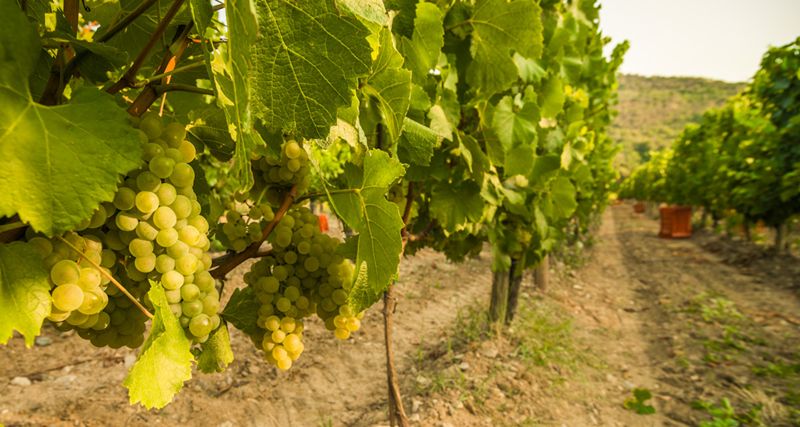
English winemakers are bringing in grapes weeks earlier than usual this year after one of the hottest and driest summers on record accelerated ripening and forced producers to reconsider one of the category’s defining traits: high natural acidity.
Across southern England, some vineyards began harvesting in late August and early September, and others were already making urgent decisions about picking dates by the first week of September, according to producers and industry figures cited by 67 Pall Mall. WineGB, the trade body for the English wine industry, took the unusual step of seeking permission for producers to acidify their wines, reflecting concern that the 2026 growing season could leave grapes with less freshness than English wine is known for.
That issue matters most for sparkling wine, which has driven much of England’s rise in recent years. Warmer weather can help still wines by increasing ripeness and flavor, but it can create problems for sparkling producers if sugars rise too far and potential alcohol climbs too high in base wines. Emma Rice, a consultant winemaker and former head winemaker at Hampshire producer Hattingley Valley, told 67 Pall Mall that once the potential alcohol of a base wine moves above 12%, the second fermentation in bottle can become difficult.
The result was an unfamiliar problem in a country where growers have long worried more about grapes failing to ripen than ripening too fast. Rice said some producers left fruit hanging too long and risked losing the option to make sparkling wine unless they blended with lower-alcohol reserve wines from earlier years. She described the need to think about acidification, and to worry about overripe fruit in early September, as something the industry had not faced before.
In many years, English growers wait as long as possible before harvesting, often pushed into picking by rain, disease pressure or falling leaves. This season, growers had to watch sugar levels closely and make active choices much earlier. Grapes in some parts of the country were picked as much as a month ahead of normal schedules, according to the report.
At Gusbourne in Kent, harvesting started on Aug. 26 and ended on Sept. 18, about two weeks earlier than in 2025. The producer described the vintage as an “exceptional” year with ripe and concentrated fruit. Head winemaker Mary Bridges told 67 Pall Mall she was especially encouraged by the quality of Pinot Noir, saying the fruit was clean, evenly ripened and concentrated. She said the still Pinot Noir looked so strong that the winery faced the unusual question of whether it could make enough of it without diverting fruit from sparkling production.
Other producers also reported benefits, especially in still wines. Ruth Simpson of Simpsons Wine Estate in Kent, where still wines account for about two-thirds of production, said the season had brought lower disease pressure and stronger natural sugar development, producing riper and more concentrated fruit. She said that was particularly helpful for a producer focused heavily on still wines because it reduced the need for green harvesting, yield control and weed control.
Rice said she has noticed a broader shift in the last couple of years as more English producers give still wines greater attention. Fruit that she would usually assess at the end of October or even in November was ready for review at the end of September this year. She said Pinot Noir remains difficult for top-level red wines in England, but the variety is capable of producing very good rosés under the right conditions.
For producers buying fruit rather than growing it themselves, the season has also created an unusual opportunity. Sergio Verrillo, co-founder and winemaker at London urban winery Blackbook, said 2026 could be an exceptional year, particularly for still wines, because of the combination of quality, ripeness and concentration in the fruit. At the same time, he said the season could not be discussed without acknowledging climate change, which is giving growers more flexibility in ripening fruit while also forcing them to adapt their vineyard and winery practices.
Not every producer responded by picking early. Domaine Evremond, the Kent venture backed by Champagne Taittinger, started harvesting in mid-September and brought in its last Pinot on Sept. 25. Christelle Rinville, Taittinger’s vineyard director, told 67 Pall Mall that flexibility was essential and that decisions had to depend on vine profile, house style and whether a producer wanted to manage aromatics through sugar or acidity. Rinville, who oversaw the English harvest after finishing in Champagne, said the 2026 season was the first clear example she had seen of climate change having a major effect on the English harvest.
She said the growing season has shortened sharply over time. Two or three decades ago, she said, there were about 100 days between flowering and harvest in England. Over the past 10 years, that interval had dropped to around 85 days, and now it is closer to 75.
The English experience is part of a wider European pattern this year. Harvests have also come early in France, Spain and Italy, with hot conditions and lower yields creating pressure across major wine regions. According to the 67 Pall Mall report, France’s Agriculture Ministry forecast the country’s lowest production in 70 years, while Bordeaux authorities approved emergency irrigation despite the region’s traditionally strict stance against watering vineyards.
That wider context is important for beverage companies and buyers because it shows that higher temperatures do not simply benefit cooler wine regions. In England, a warmer season may improve still wines and help some producers ripen fruit more consistently, but it can also change the profile of sparkling wines, alter alcohol and acidity levels, reduce yields and force faster decisions in vineyards and cellars. For merchants, restaurants and retailers that depend on English sparkling wine’s established style, those changes could affect blend choices, release profiles and supply planning from one vintage to the next.
Even so, producers are not treating 2026 as a settled turning point. Simpson said she had also been concerned by very dry conditions and the threat of water stress, which can cut yields. With a global surplus of wine still weighing on the market, some producers see lower volumes and higher quality as manageable in the short term, but they are also watching whether extreme heat becomes more common.
Bridges warned against assuming that one hot year defines a new pattern. She noted that only two years ago English producers dealt with an exceptionally wet and difficult season. In her view, strong vintage variation remains a basic feature of English wine.