Portugal’s Parliament urges government to fund distillation of surplus Douro grapes
The resolution recommends national and European support for growers, but it does not create an aid program or release funds.
Tuesday, October 13, 2026
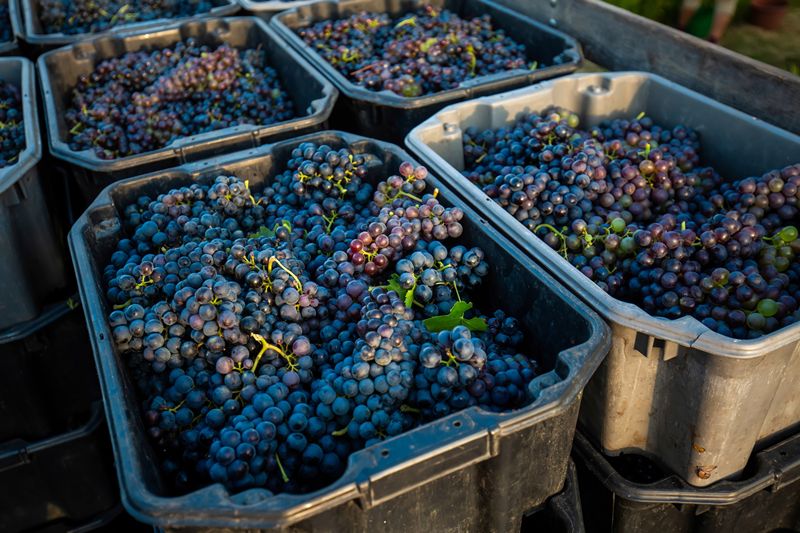
Portugal’s parliament has called on the government to support the distillation of surplus grapes from the Douro and to compensate producers through national and European funds, according to a resolution published Monday in the country’s official gazette, Diário da República.
The measure was approved by the Assembleia da República on Sept. 18 and published as Resolution No. 259/2026 on Oct. 12. The text is a recommendation from parliament rather than a law or an immediately operative aid program, which means it does not by itself release money or trigger payments to growers and wineries.
The resolution focuses on excess grape production in the Douro, a major wine-producing region in northern Portugal. By asking the government to finance compensation and distillation, lawmakers are pointing to a market problem that has direct implications for the wine business: too much fruit relative to what the market and cellar capacity can absorb in the near term.
In practical terms, distillation is often used as a crisis-management tool when large volumes cannot be sold or vinified under normal market conditions. Turning surplus grapes into alcohol for industrial or other nontraditional uses can reduce pressure on storage space and on the market for wine grapes. Compensation can also help soften the financial hit to growers whose harvest cannot be fully absorbed through regular commercial channels.
That matters beyond farm income alone. If wineries and cooperatives in the Douro are carrying more grapes or wine than they can easily process or store, the strain can spread across the broader beverage sector, affecting grape purchasing, cellar operations, and the balance between supply and demand in one of Portugal’s best-known wine regions. Any public intervention on distillation could therefore have a direct effect on inventories and on the cash flow of producers and wineries, even if the exact scale of any future program remains unclear.
The official publication available through Diário da República indicates that parliament’s action was framed as a recommendation. In Portugal’s system, resolutions of this kind express the legislature’s position and urge executive action, but they do not automatically create a funded scheme. The government would still have to decide whether to act, what form any support would take, and how to use national and European resources if it proceeds.
The resolution’s reference to both national and European funds is significant because it suggests lawmakers want any response to be built with more than one financing source if possible. That could matter for speed, scope, and administrative design. But the published text, as described in the official notice, does not by itself establish eligibility rules, payment levels, operational deadlines, or the exact public body that would manage the measure.
The timing of the resolution is also important. It was approved in mid-September, when harvest activity and immediate post-harvest decisions are especially sensitive for wine producers, and then formally published in October. For growers and wineries dealing with excess fruit, that gap underlines the difference between political support in parliament and actual implementation by the executive branch.
The Douro has long held a central place in Portugal’s wine economy, so any sign of stress there is closely watched by growers, cooperatives, traders, and beverage companies. Surplus grapes can push down returns for producers, complicate storage planning, and increase pressure on wineries already managing existing stocks. A compensated distillation program, if adopted, could be used to take some of that volume out of the normal chain and reduce the immediate burden on cellars.
For now, the main development is political rather than operational. Parliament has put its support on record for compensating and distilling surplus Douro grapes, and it has pointed the government toward using public funds, including possible European support, to do so. Whether that recommendation turns into a concrete aid measure will depend on decisions still to be made by Portugal’s executive authorities.