Study Finds Global Wine Slump Reflects a Lasting Supply-Demand Imbalance
Oversupply of lower-priced red wine is weighing on nearly every market segment except the very top end
Tuesday, October 20, 2026
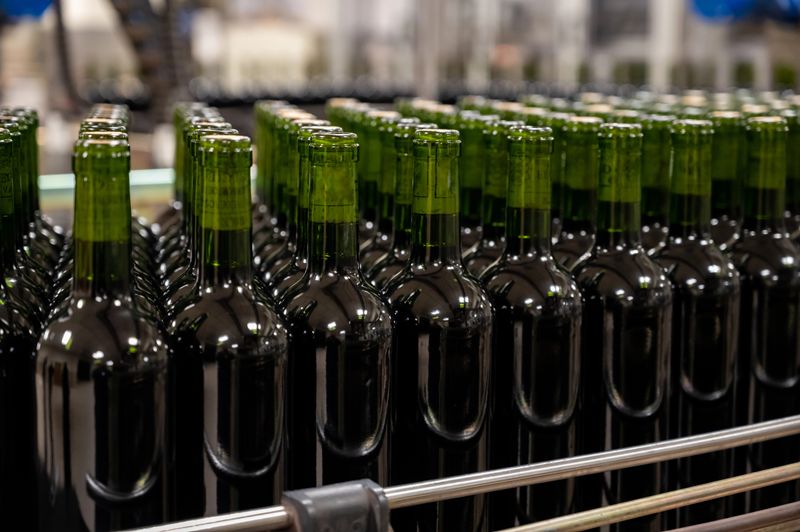
A new study says the global wine downturn is not a short interruption but a structural problem driven by too much supply and weak demand, especially for lower-priced red wine. The research, by Kym Anderson of the University of Adelaide and published in the Journal of Wine Economics by Cambridge University Press, says prices are now under pressure across all major producing countries and in nearly every segment except the very top end of the market.
Anderson argues that the usual pattern in wine has broken down. In past slumps, weakness in one producing country could be offset by strength in another. This time, the pressure is broader and more persistent. The world market, the study says, is carrying a large excess of unsold wine, with basic red wine at the center of the imbalance.
Part of the problem is a long shift in consumer behavior. Since the early 1960s, global consumption volume for beer and spirits has doubled, while wine consumption has fallen by a quarter, according to the study. Wine’s share of total global alcohol consumption has dropped from more than one-third to less than one-eighth in 2023. Total alcohol consumption has been flat for more than a decade, and per-adult consumption is down 30% from its peak about 50 years ago.
Within wine itself, the losses have not been evenly spread. Still red wine has lost the most ground, while white, rosé, and sparkling wines have gained. That has left many producers with vineyards and inventories tied to styles that are losing favor, even as some other categories remain more resilient.
The study also describes a widening split between the premium and mass-market wine business. Citing IWSR data, it says global sales value for premium wine priced above $10 a bottle rose at an annual rate of 3.1% between 2013 and 2022. Over the same period, sales value for wine below that price fell by 2.2% a year. That divide is also visible in grape prices.
In California, the gap between Fresno, a warm inland region known for lower-priced wine, and Napa, which is associated with fine wine, has widened sharply. The study says real grape prices in Fresno have been falling since the late 1990s, while Napa has posted strong gains. In Australia, it points to a similar contrast between Riverland, a hot region linked to bulk production, and Mornington, a cooler area associated with higher-end wines. After a jump in the 1990s, prices in Riverland fell hard in the 2000s, while Mornington continued to rise.
The global trade map has also changed. In 1985, Argentina, Australia, Chile, New Zealand, South Africa, and the United States accounted for 1% of world wine exports, according to the study. By the late 2000s, those six countries had reached 25% of global export value and 30% of export volume. Over the same period, the combined export share of France, Italy, and Spain fell to 58% by value and 53% by volume.
That rise was backed by a long production expansion. In the 20 years through 2012, the six newer export powers nearly doubled output and exported about 40% of what they produced, the study says. Worldwide, the share of wine production that entered export markets rose from 10% in 1965 to 43% in 2025. That made the industry more exposed to sudden changes in foreign demand and freight costs.
Several shocks then hit at once. The collapse in Chinese demand, the Covid pandemic, and a sharp rise in shipping costs added to the pressure on an already oversupplied market. In Australia, the study says, the current surplus is larger than an entire year’s harvest, and bulk wine is selling for less than $0.60 a liter. In California, one winery gave away bulk Pinot Noir to clear tank space before the 2026 harvest, according to the study’s account.
For the broader beverage business, the findings matter beyond vineyards and wineries. A long period of weak prices in wine could affect investment decisions, grape purchasing, and inventory strategy for producers, distributors, and retailers that also manage portfolios in beer, spirits, and other drinks. It could also force companies to decide whether to keep capital tied up in slow-moving wine stocks or shift more resources toward categories with stronger demand.
The study says the clearest remedy is to remove vineyards, but that process is slow and costly. Global vineyard area fell from 5.4 million hectares to 4.5 million hectares between 1990 and 2023, a reduction that took more than three decades. Anderson cites observers who say a cut of similar scale may now be needed again to bring supply closer to demand.
California has already started to shrink. In 2025, growers removed 38,000 acres of vines, or 7% of the state’s total vineyard area. Even so, producers cited in the study say that is not enough. Anderson warns that without substantial vine removals during this decade, low prices are likely to persist for a long time and may eventually weigh on some higher-quality wines as well.
The report says the strongest long-term growth hope is in Asia and Africa, where wine consumption remains very low compared with population size. India and Africa each have about 1 billion adults, but together they account for only 1% of global wine consumption. For producers facing full tanks, weak grape prices, and soft demand for red wine, that potential market is still distant rather than immediate.