New Green Mayor Blocks Alsace Wine Tourism Center by Withholding Key Parcels
Supporters say the land covers less than 5% of the site but stops an investment of 24 million to 27 million euros.
Wednesday, August 26, 2026
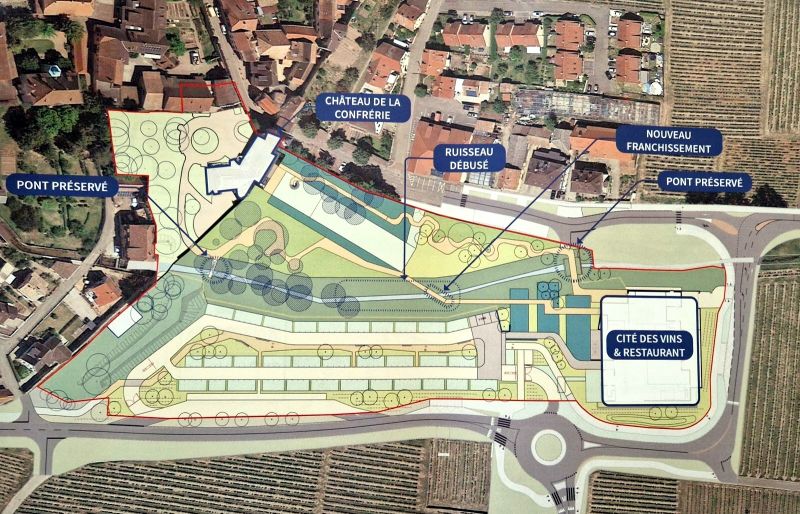
A planned wine tourism center in Alsace has been blocked after the new Green mayor of Kaysersberg Vignoble refused to transfer several small municipal parcels needed for the development, a decision that supporters say has effectively stopped a project nearly a decade in the making.
Gilles Neusch, director of the Alsace wine interprofessional committee, said the project, as it was designed, can no longer proceed. The proposed Cité des Vins d’Alsace had been under study for close to 10 years and had gathered support from the French state, local authorities and 18 partners brought together in a cooperative public-interest company set up to carry it forward.
The issue, according to Neusch, is not the scale of the municipal land involved but its location. He said the parcels represent less than 5% of the total land needed for the project, yet they are essential to completing the site. Without them, backers say, an investment estimated at 24 million to 27 million euros cannot move ahead in its current form.
The decision came from Henri Stoll, the recently elected ecologist mayor of Kaysersberg Vignoble, and his majority. Their position is that the town already receives enough visitors and should not add another major tourism draw. Stoll has argued that the development could intensify pressure on housing, contribute to the loss of a green buffer zone between several municipalities and create what he sees as a project disconnected from local needs.
Opponents of the plan have also raised the image of a large-scale tourist attraction built around wine, with some describing it as a possible “Europa-Park of wine,” a reference meant to suggest excessive commercialization. Supporters reject that description and say it misrepresents the concept.
Neusch said the project was not designed as a mass tourism facility but as a paid cultural and experiential destination aimed at broadening public understanding of Alsace wine and the region’s heritage. He contrasted it with existing visitor flows in the area, including free Christmas markets and general foot traffic in the town center, which he said already generate far more congestion than the planned site would have.
Project promoters had forecast about 300 visitors a day, or roughly 90,000 a year. They also expected the center to create around 30 jobs and to open by Easter 2029. The development was presented as a flagship initiative for the wine sector and for the territory more broadly. Last fall, the prefect of Haut-Rhin described the future Cité des Vins as a structuring project for both the wine industry and the region.
The setback is particularly sensitive because Kaysersberg Vignoble is closely tied to the local wine identity. Neusch said it was striking that the only municipality in Alsace carrying the word “Vignoble” in its name was the one to block a project backed by the sector. He also said the label “Cité du Vin,” used in discussions around the project, was more of a working name than a precise description of what was being planned.
According to its promoters, the proposed center was meant to go beyond wine tasting or retail. It was envisioned as a cultural and educational site, built to attract not only wine enthusiasts but also families, tourists and residents interested in the history, landscape and traditions of Alsace. Supporters say that broader ambition is one reason so many public and private partners agreed to join the cooperative structure behind it.
For now, backers do not appear to be considering a move to another town. Neusch said the project is closely tied to Kientzheim, where the Château de Kientzheim and the Confrérie Saint-Étienne are founding members of the cooperative company leading the effort. In his view, that local anchoring means the project cannot simply be relocated elsewhere in Alsace.
Instead, the group is studying two possible paths. One is to try to explain the project more clearly to local residents and then move forward in stages. The other is to reconsider the economic model and reduce the size of the development so it can fit within the land already available. Both options would mean reworking a plan that had been built over years of consultation and financial preparation.
The dispute reflects a wider tension seen in many wine regions and tourist destinations, where local leaders and residents weigh the economic benefits of new attractions against concerns about over-tourism, land use and housing costs. In Kaysersberg Vignoble, that debate has now moved from theory to a direct confrontation over land control, with a few municipal plots standing in the way of a project that had once appeared to have broad institutional backing.
Supporters of the center say the blocked land area is small enough that the decision feels disproportionate when set against the size of the planned investment and the expected employment. Critics, however, see the land question as part of a larger choice about the future of the town and how much additional tourism it is willing to absorb.
With the current municipal refusal in place, the original version of the Cité des Vins d’Alsace is on hold, and its promoters are left trying to decide whether they can salvage a smaller or phased project without the parcels they say are critical to the plan.