U.S. Retail Beer Sales Fell 4.5% in Late August
NIQ data showed volume dropped 5.5% in measured store channels, extending a retail slump that pricing could not offset.
Friday, September 4, 2026
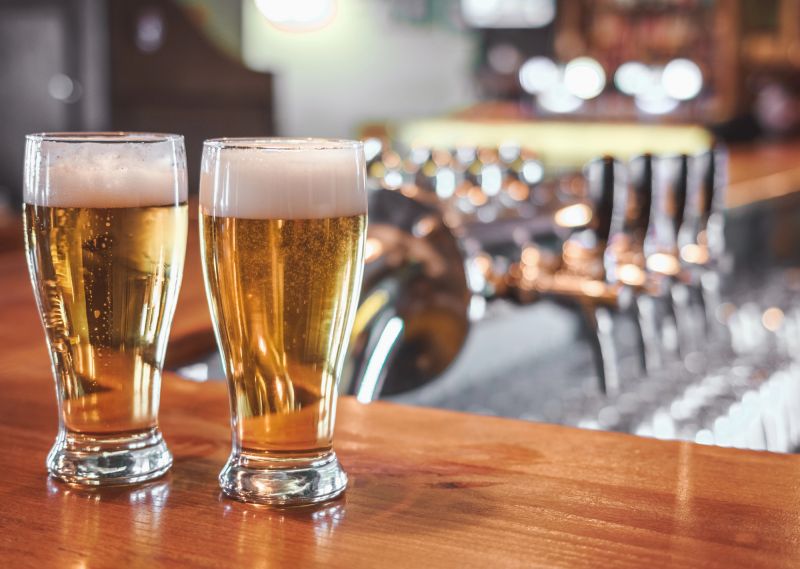
U.S. beer sales in retail stores fell again in late August, with dollar sales down 4.5% from a year earlier and volume down 5.5% in the four weeks ended Aug. 22, according to data published Sept. 3 by Brewbound based on NIQ retail tracking.
The figures point to continued pressure on beer in off-premise channels, the part of the market that covers stores rather than bars and restaurants. The NIQ panel measures selected retail channels and does not represent the entire U.S. beer market. It excludes on-premise sales such as restaurants, bars, and other hospitality venues.
The drop in volume was steeper than the decline in dollar sales, a gap that implies a roughly 1.1% increase in value per unit over the period. That does not necessarily mean beer prices rose uniformly across the board. The difference can also reflect changes in packaging, product mix, promotional activity, or consumers shifting toward higher-priced or lower-priced items within the category.
Even with that implied lift in value per unit, overall retail sales still moved lower, showing that pricing and mix were not enough to offset weaker demand in measured store channels. In practical terms, fewer units were sold, and total revenue also declined, though not as sharply as volume.
The new retail data also shows a weaker picture than a separate industry reading from July. Taxable removals, a factory-level measure often used as an indicator of shipments from brewers, were down 2.8% in July. That figure and NIQ’s retail sales numbers are not directly comparable because they measure different parts of the supply chain and cover different time periods. Still, taken together, they suggest that any moderation in declines at the production level has not yet turned into a recovery at the store level.
That distinction matters for brewers, distributors, and retailers trying to gauge the direction of consumer demand. A slowdown in factory declines can point to some stabilization upstream, but weak retail scans indicate that shoppers are still buying less beer in measured off-premise outlets. When retail volume falls faster than retail dollars, companies can also face questions about whether price increases have reached their limit or whether the category is being supported mainly by mix rather than broad-based demand.
The latest report adds to evidence that beer remains one of the weaker large beverage categories in U.S. retail. Brewbound said beer continues to lead declines among major categories, even as non-alcoholic beer remains one of the few segments still growing. The open report did not provide the exact growth rate for non-alcoholic beer, and it did not include absolute dollar sales or absolute volume for the overall beer category.
That leaves only a partial view of the market, but the direction of travel is clear in the available data. Traditional beer lost ground in both dollars and units during the latest four-week period, and the steeper drop in volume suggests consumers are pulling back in a way that pricing alone has not masked. The fact that non-alcoholic beer remains in growth, while the broader category declines, also points to changing consumption patterns inside the beer aisle.
Retail beer trends have been closely watched this year because they offer one of the clearest near-term signals of what shoppers are doing in supermarkets, mass retailers, convenience stores, and other measured outlets. Off-premise data does not capture the full picture of U.S. drinking habits, but it does provide a timely reading of take-home demand. In that context, the latest four-week NIQ figures show that the pressure on beer sales remained in place through late August.