Study Finds Store Lighting Alters Sparkling Wine Aroma Before Faults Appear
Researchers say bottle color, production method, vintage and lees aging shape how quickly subtle light damage develops.
Tuesday, September 1, 2026
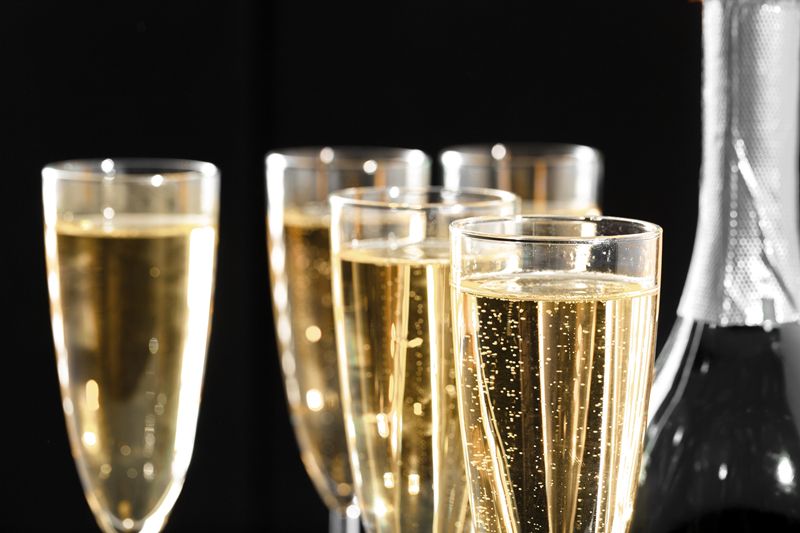
A study published Monday in OENO One found that light can change the aroma of sparkling wine before the well-known “light-struck” defect becomes obvious, and that the effect varies with the wine’s composition, production method and time spent aging on lees.
The research focused on a question that matters well beyond wine science: what happens to a bottle of sparkling wine as it sits under store lighting before a customer buys it. For producers, retailers and importers, the findings point to a practical risk for the drinks business, because even subtle light damage can affect perceived quality and may lead to avoidable costs, stock losses or changes in bottling and display practices.
The authors, Zsófia Laposa, József Balla, Károly Héberger and Ernő Keszei, said earlier sensory studies have mostly examined the moment when the classic light-struck fault becomes detectable. That fault is usually linked to sulfur compounds that can give white wines and sparkling wines notes resembling onion, cabbage, garlic or rotten egg. In this study, the team looked at an earlier stage, before those clear off-aromas appeared, to see whether tasters and chemical analysis could detect changes in aroma.
The work used sparkling wines from Törley Sparkling Wine Cellar in Budapest, with base wines from Hungary’s Etyek-Buda wine region. The researchers compared wines made by the Charmat method and by the traditional bottle-fermented method, using different bottle colors and several aging periods on lees.
One set of samples was Gála Sec, a Charmat sparkling wine made from Grüner Veltliner, Királyleányka and Olaszrizling. It had short aging, about 10 months, and was tested in both clear flint bottles and green bottles. Another set was François Brut Nature, a traditional-method sparkling wine made from Chardonnay and Pinot noir, tested in thick dark green bottles from the 2019, 2020 and 2021 vintages. Those wines had longer lees aging, about 45 months for 2019, 33 months for 2020 and 21 months for 2021.
The bottles were exposed to compact fluorescent light in a lab setting designed to imitate retail shelf lighting. Exposure times were adjusted by bottle type. Clear bottles were exposed for 2, 5, 10 and 20 hours. Green bottles were exposed for 3, 10, 20 and 30 hours. The dark green traditional-method bottles were exposed for 2, 10 and 20 days. After illumination, the bottles were wrapped to prevent more light exposure before testing.
In all, 22 samples were evaluated. Thirteen panelists took part in a fully randomized blind tasting using a 100-point sparkling wine score sheet approved by the International Organisation of Vine and Wine. Ten experienced tasters from that group also completed a second session using a 20-point system with descriptive aroma notes. That second session presented samples whose identity was known to tasters, but not the order of light exposure, in an attempt to reflect a real buying situation in which a consumer knows the wine but not how long it has been under light.
The panel included wine experts, winemakers, winery staff and one trained consumer. The tasters were 30 to 74 years old. The study noted limits to the design: panelists were chosen based on availability and motivation, the tasting sessions could not be repeated with the same groups, and only one consumer participated in the 100-point tasting.
The main sensory result was that, at moderate light doses and before clear fault aromas emerged, tasters generally could not identify significant differences related to the length of exposure in the blind test. In some cases, moderately illuminated wines were even scored higher than the unexposed control bottles. Tasters sometimes described those samples with pleasant notes such as mellow or honey-like aromas.
That finding supports earlier observations from other work suggesting that light damage does not always progress in a straight line from fresh to faulty. Instead, some aroma compounds may rise, some may fall and others may peak only at certain stages of exposure.
To measure that, the researchers also ran headspace solid-phase microextraction gas chromatography-mass spectrometry, or HS-SPME-GC-MS, on the wines. They performed three independent measurements per sample and tracked relative, rather than absolute, concentrations of volatile compounds. The chemical analysis supported what the sensory work suggested: the aroma profile changed in a non-monotonic way during exposure, rather than simply worsening step by step.
The study said those temporal patterns differed noticeably depending on the wine. Composition, production technology and vintage all affected how the aroma evolved under light. That matters because sparkling wines are sold in a wide range of bottle styles and production categories, from tank-made wines in lighter glass to long-aged traditional wines in darker bottles. A single protection strategy may not fit all of them.
The paper also places the findings in the broader context of packaging. Clear flint glass offers little defense against damaging light, while green glass provides only limited protection. Amber glass is far more protective, though it is less common in sparkling wine because of market expectations around appearance. The thicker, darker bottles used for traditional-method wines can reduce exposure, but the study shows that protection is not absolute.
The researchers said a stronger consumer protection approach would involve monitoring how much light bottles absorb and keeping wines off the market once they reach a critical dose that triggers a perceptible light-struck flavor. The study did not present a ready-to-use commercial threshold for all wines, but it suggests that shelf life for sparkling wine should not be treated as a fixed number without considering lighting conditions.
For the beverage sector, that could translate into practical changes in winery packaging choices, warehouse and retail lighting, bottle display time and stock rotation. Producers may also see value in matching bottle color more closely to a wine’s sensitivity, especially for premium sparkling wines where small aroma shifts can affect customer perception even before a bottle is clearly faulty.
The paper was received on March 9, accepted on June 17 and published on August 31.