Study Finds Cabernet Vines Develop Drought Memory
Repeated water stress helped Chilean Cabernet Sauvignon vines use water more efficiently and rebound faster after rewatering
2026-07-07
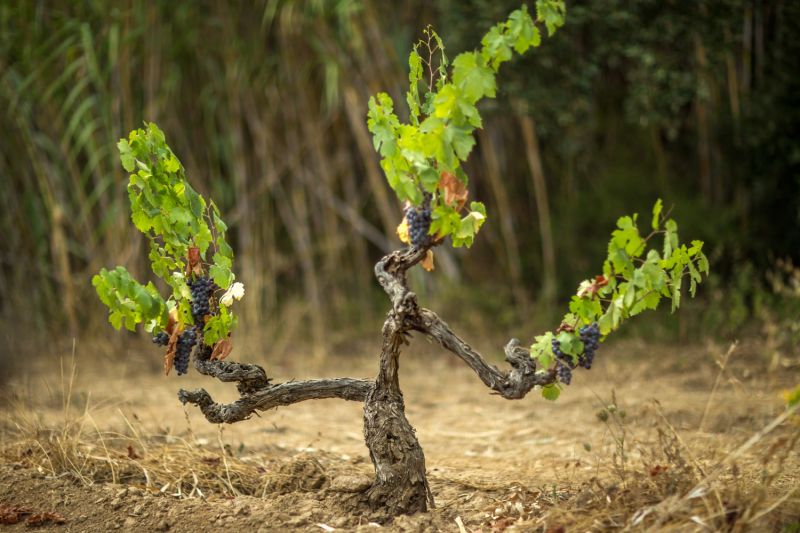
New research on Cabernet Sauvignon grapevines grown in Chile’s arid zone found signs that vines exposed to repeated drought may develop a form of “stress memory,” helping them use water more efficiently and recover more strongly when irrigation returns.
The findings were published by IVES OpenScience in an extended abstract presented in the GiESCO 2017 conference series. The study was led by Denisse Zamorano and colleagues from the University of Chile and the University of La Serena.
The researchers examined three-year-old, drip-irrigated Cabernet Sauvignon vines grown in 1-cubic-meter containers in an arid area of Chile. They compared three treatments during the second growing season: a well-watered control, a single-drought group that faced 40 days of summer drought only in the second season, and a double-drought group that faced 60 days of summer drought in the previous season and another 40 days in the second season.
The central question was whether grapevines can retain a physiological memory of earlier water stress and respond differently when drought returns. According to the abstract, examples of this kind of memory remain limited in plant research and had not been documented in perennial crops in the same way before this work.
During the second drought period, vines that had already experienced drought performed better on several measures than those facing it for the first time. The double-drought plants showed higher water-use efficiency than the single-drought plants across the day, with the strongest advantage in the morning. The researchers measured this through ratios tied to photosynthesis, stomatal conductance and transpiration.
When water was restored, both drought-treated groups recovered xylem water potential to levels similar to the well-watered control. But the vines exposed to repeated drought reached the highest photosynthesis rate after rehydration. Rewatering also triggered stronger resprouting and greater activation of energy transduction mechanisms in those plants, including photochemical and non-photochemical quenching, compared with vines that had undergone only one drought episode.
The authors linked those responses to changes in plant architecture and morphology. They said the pattern can be attributed to a stress memory that might be beneficial for grapevines under recurring dry conditions.
The work arrives as wine regions around the world face more frequent and more severe drought pressure tied to climate change. For growers and the broader beverage sector, the results suggest that repeated exposure to controlled water deficits may influence how some vines cope with future dry periods. That could eventually matter for irrigation strategies, vineyard resilience and grape supply in regions where water scarcity is becoming a larger production risk, though the study does not establish direct commercial outcomes.
The research also comes with limits that matter for interpretation. The experiment was conducted on young vines in containers rather than mature vineyard blocks under full commercial conditions. The publication is an extended abstract rather than a full paper, so it provides a concise summary of methods and results but not the same level of detail as a complete peer-reviewed article.
Even so, the study adds to a growing body of work on how grapevines respond to environmental stress beyond immediate damage control. Instead of treating each drought as an isolated event, the findings point to the possibility that prior exposure can shape later performance, at least in some varieties and conditions.
That idea is especially relevant for viticulture in dry regions such as parts of Chile, where irrigation decisions are increasingly shaped by shrinking water availability and hotter summers. If future field studies confirm these responses in commercial vineyards, growers may have better tools to predict which vines can rebound faster after water shortages and how deficit irrigation programs affect long-term plant behavior.
For now, the Chilean trial offers evidence that recurrent drought did not simply weaken these Cabernet Sauvignon vines. In this case, earlier stress appeared to prime them for a more efficient response when drought returned and for a stronger recovery once water was available again.
