Two Worker Deaths Put Champagne Harvest Conditions Under Scrutiny
The deaths came days after authorities closed a Damery lodging site over tents, sanitation failures and poor hygiene.
Monday, August 24, 2026
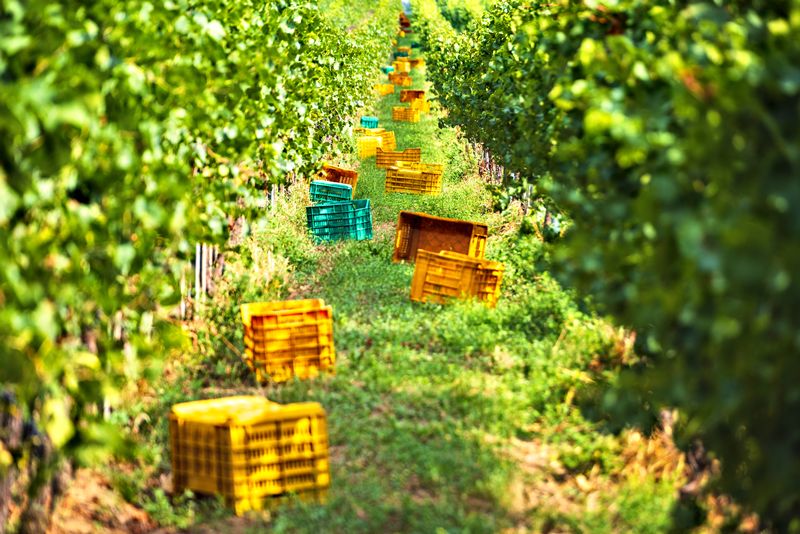
As the 2026 grape harvest begins in France’s Champagne region, two worker deaths and the closure of a housing site for seasonal laborers have renewed scrutiny of working and living conditions in one of the country’s most visible agricultural industries.
One worker, a 66-year-old man, was found unresponsive in a row of vines in the commune of Verzy on August 15 after helping friends pick grapes, according to the regional newspaper L’Union. The paper reported that the man had said he was feeling ill but declined offers to be driven home. He instead went to lie down in the shade and was later found dead after suffering cardiac arrest.
Two days later, a 55-year-old man was found dead in the cab of a harvest truck in Val-des-Marais, in the southern Côte des Blancs. L’Union reported that he had gone to the truck to rest. Local authorities have opened an investigation into that death.
Maxime Toubart, president of Champagne Winegrowers, said he was deeply saddened by the deaths. He said the cases appeared to have been caused by cardiac arrests rather than employer negligence or extreme heat. In comments reported by the French wine publication Vitisphere, Toubart said temperatures in the vineyards had recently been around 25C, or 77F.
That account has been disputed by some people working in the area, who said temperatures were still in the low 30s Celsius, or well into the 80s Fahrenheit, even if they were lower than the 39C to 41C highs seen earlier in the season.
The deaths came as prosecutors were already examining another issue tied to the harvest: the housing provided to seasonal workers. In Chalons-en-Champagne, the public prosecutor has opened an investigation into substandard accommodations that authorities shut down the previous week in the town of Damery.
According to Agence France-Presse, the problems were discovered during a joint inspection on August 12 by labor officials and the gendarmerie, the French national police force with rural jurisdiction. Investigators cited several violations, including the use of tents to house seasonal workers, poor sanitary and toilet arrangements, and inadequate overall hygiene.
AFP said the closure order was the first of its kind for the 2026 harvest season in Champagne. The agency noted that the move follows a series of criminal cases linked to the region’s 2023 harvest, when several people were later convicted and sentenced to prison for human trafficking after foreign grape pickers were housed and employed in inhumane conditions. That episode became known in France as the “harvest of shame.”
The new cases risk reopening a painful debate for Champagne producers, who have spent the past three years trying to show that the sector has tightened oversight of labor providers and housing. Toubart said the region has again deployed its “Together for the Champagne Grape Harvest” program, now in its third straight year. He said the plan includes a federation of vineyard service providers, a platform designed to verify providers’ commitments, an industry framework for seasonal hiring, and an updated handbook for incoming grape pickers.
Even so, Toubart said the scale of the annual harvest means risk cannot be entirely removed. In comments carried by Vitisphere, he said the Champagne region hosts about 100,000 people over a period of roughly two weeks during harvest. He said that even with adjusted working hours, access to fresh water, and frequent breaks, some incidents still occur, including cardiac arrests, strokes, and road accidents, whether or not they are directly tied to vineyard operations.
The labor concerns come during an unusual harvest season. The 2026 harvest has started especially early, but reports from the region suggest activity was slow at first. Caroline Henry, a regional correspondent, told Wine-Searcher that there had been very few pickers visible in the vineyards and that harvesting only really began on August 19.
Henry said low yields this year appear to be discouraging many workers who are paid by the amount they harvest rather than by the hour. Under that system, lower grape volume can sharply reduce daily earnings. She said a typical piece-rate harvester in a normal year can pick between 400kg and 580kg a day, while this year the range has been closer to 200kg to 300kg.
That drop matters in Champagne, where the harvest depends heavily on short-term labor brought in for a brief and intense period. The region’s producers need large numbers of workers to pick grapes quickly and by hand, a requirement tied to Champagne production rules. The system creates pressure not only on vineyard logistics, but also on transportation, lodging, sanitation, and oversight of subcontractors and labor brokers.
The latest developments leave several investigations moving at once. Authorities are looking into the death in Val-des-Marais, while prosecutors are also examining the accommodation site in Damery. The death in Verzy has added to concerns over worker safety at a time when harvests in Europe are increasingly shaped by heat, earlier ripening, and tighter labor conditions.
For Champagne, the timing is sensitive. The region is both a symbol of French luxury and a major agricultural employer, and the grape harvest is one of the few moments when that image depends so visibly on temporary manual labor. The two deaths and the housing closure have again placed those workers, and the conditions they face, at the center of attention.