Bollinger began its earliest Champagne harvest on record on Aug. 13
Heat waves and drought cut seven to nine days from the growing cycle, forcing some producers to pick in early August
2026-08-26
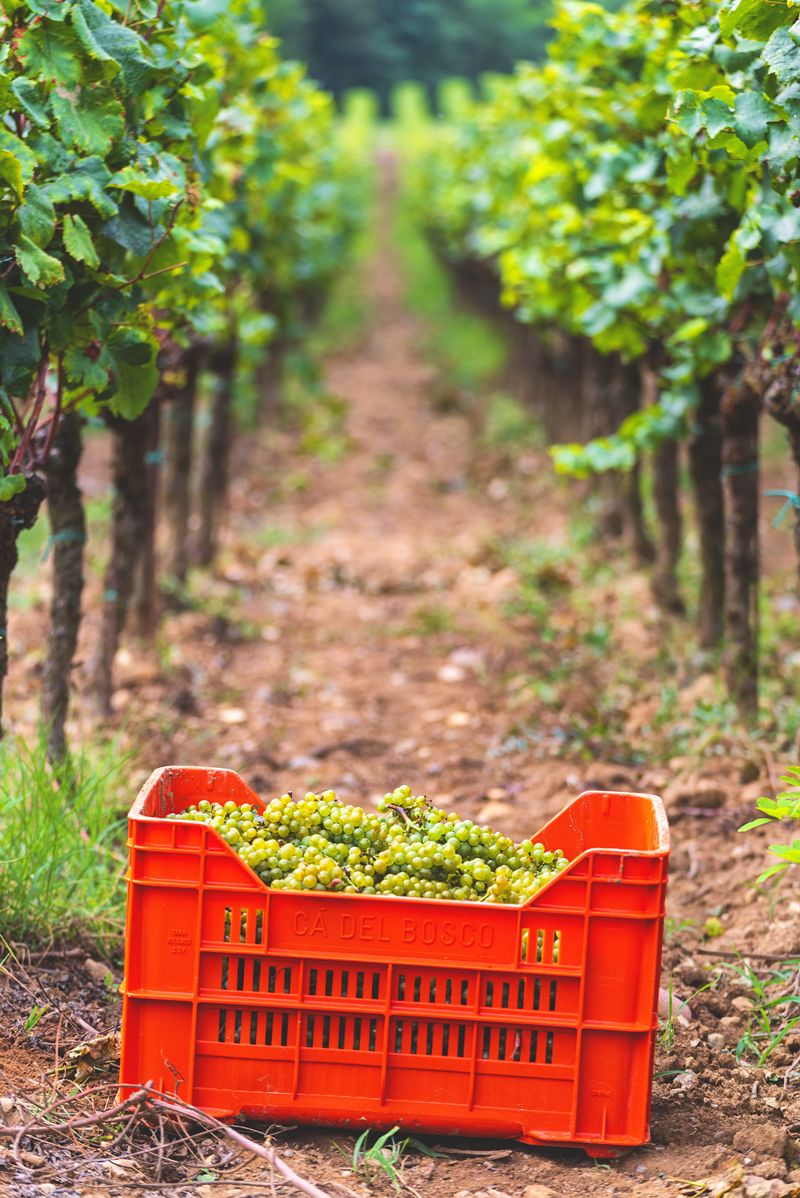
Bollinger said Wednesday that it began harvesting grapes for its 2026 Champagne on Aug. 13, just 76 days after flowering, marking the earliest start recorded by the house and underscoring how heat and drought have compressed this year’s growing cycle in parts of northeastern France.
The 76-day interval is sharply shorter than in recent vintages, when Bollinger said harvest usually began 83 to 85 days after flowering. That means the period between flowering and picking was reduced by seven to nine days. The house had initially expected to start on Aug. 20, but successive heat waves forced it to move the operation forward by a full week.
The shift is significant in Champagne, where harvest has historically taken place in September and where the timing of picking is critical to the balance of sugar, acidity and flavor that defines sparkling wine from the region. Bollinger said the change did not simply alter the date on a calendar. It also forced earlier hiring of seasonal workers, earlier equipment rentals and faster preparation of press facilities, all while growers and winemakers had less time to judge the right moment to pick.
Cyril Delarue, Bollinger’s global sales director and a member of the family that controls the house, said the conditions had pushed the vineyard into unfamiliar territory. He said the company had to react quickly as the grapes matured faster than expected under repeated periods of heat.
The early start at Bollinger is part of a broader pattern seen this year among some of Champagne’s earliest producers, though it is not a single, uniform date for the entire region. Bollinger said some producers began even earlier, with picking in early August. Harvest timing varies across Champagne depending on grape variety, vineyard exposure, village and producer strategy.
The acceleration of the season follows an unusually dry spring and summer in the region, according to several producers. Those conditions helped speed ripening, particularly in vineyards rooted in Champagne’s chalk soils, which can help vines reach water reserves even during dry periods. But the same conditions have also raised concern about smaller berries and reduced juice volumes.
Mathieu Roland-Billecart, chief executive of Billecart-Salmon, said the house had also seen rapid ripening after a dry season and several heat waves. He said the drought had left grapes very light and that overall yields were expected to be low. He also said spring frost had already reduced potential volumes before the summer heat intensified.
Neither Bollinger nor the other producers cited provided a quantified estimate for the production losses, but the concern over lower yields has become a key feature of the 2026 campaign. Smaller crops matter not only for volume but also for how winemakers read the fruit. In warm, dry years, grapes can show elevated sugar levels earlier, which can push up potential alcohol. That does not always mean the fruit has completed the full ripening process needed to deliver the aromatic and structural balance producers want.
Julian Goût, cellar master at Champagne AYALA, said the 2026 crop should be understood in terms of concentration rather than simple ripeness. He said berries with less juice can show more concentrated sugars and higher potential alcohol, but that full ripening also depends on time for aromatic development and acid evolution. In an early year, that creates a narrow window for growers who must decide when to pick before acidity drops too far while still waiting for flavors to mature.
That tension is especially important in Champagne, where freshness is central to style. A warm year can bring more expressive fruit and more consistent ripeness than the region once considered normal. That can be an advantage in a northern wine region where achieving maturity has historically been difficult. But producers still need enough acidity and tension in the base wines to preserve the precision and lift associated with Champagne.
The 2026 season shows how climate patterns are changing long-established schedules in the region. Earlier harvests have become more common in recent years, but Bollinger’s 76-day cycle stands out even against that newer backdrop. The house’s original forecast of an Aug. 20 start, made in June, suggests how quickly conditions changed once repeated heat waves arrived.
For producers, the consequences were practical as much as agronomic. Seasonal labor is essential in Champagne, where hand harvesting remains the rule. Bringing workers back from summer vacations on short notice can be difficult, especially when multiple growers need crews at the same time. Press centers also need to be staffed and opened earlier, and transport, bins and other harvest materials have to be secured days before many businesses had planned.
Even small delays can carry a cost. In fast-moving conditions, a few extra days on the vine can quickly change the balance between sugar and acidity. That is why Bollinger said the compressed season left little room for hesitation. Houses that expected to begin one week later had to reorganize nearly every part of the operation.
The early harvest also raises questions about how the 2026 wines may eventually taste. Warm seasons can produce broader fruit profiles and a more generous texture. Some producers and trade professionals say easier ripening has contributed in recent years to more frequent declarations of vintage Champagne, when a house chooses to highlight a single year rather than rely mainly on non-vintage blends. But that stylistic shift depends on whether winemakers can retain enough freshness in the final wines.
In that sense, the 2026 harvest has become a test of how Champagne adapts to increasingly compressed growing seasons. Bollinger’s record-early start offers one of the clearest signals yet that the traditional timeline for the region is moving, at least for some producers, and that the operational and winemaking decisions tied to harvest are becoming harder to separate from the pace of a warming season.
