Canada Hits $27.6 Billion of U.S. Goods With New Tariffs
Ottawa paired the move with a C$7.5 billion support package for workers and businesses hit by the trade dispute.
Tuesday, August 25, 2026
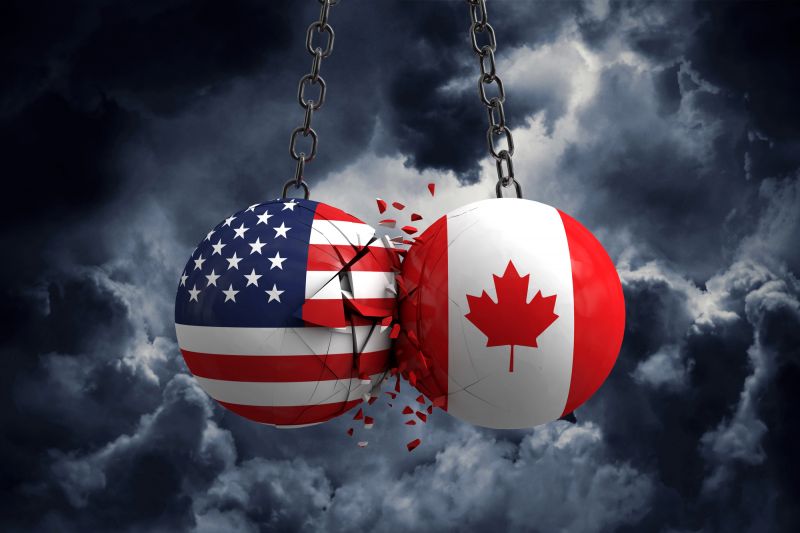
Canada said on Tuesday that it will impose new tariffs on $27.6 billion of U.S. goods beginning Sept. 8 and launch a C$7.5 billion support package for workers and businesses, after the United States raised tariffs to 50% on the same value of Canadian goods on Aug. 22.
The announcement, made in Ottawa by the Department of Finance Canada, marked a further escalation in the trade dispute between the two countries. Finance Minister François-Philippe Champagne said Canada would answer the latest U.S. move on a matching basis, with new Canadian tariffs of 15%, 25% and 50% on U.S. products, depending on the category and the U.S. rate applied.
The Canadian government said the duties would be drawn from the same broad product universe targeted by U.S. Section 338 and Section 232 tariffs and would focus on areas it considers most affected by American trade measures. Those sectors include steel, dairy, appliances, agricultural equipment, pulp and paper and electronics. Canada said the goal is to protect domestic workers, producers and manufacturers and improve their competitive position against U.S. goods in the Canadian market.
The move followed a breakdown in recent trade negotiations. Ottawa said it had been negotiating intensively with Washington toward a wider agreement, but suspended talks after the United States proposed terms that Canada said were not in its interest. In the government’s account, the U.S. side was asking too much and offering too little in return. Canada said it chose to halt negotiations rather than accept an agreement that, in its view, would harm workers, businesses and strategic sectors.
Under the new measures, some products will face a 50% Canadian tariff, including steel and aluminum items that had previously been subject to a 25% counter-tariff, as well as furniture, clothing and apparel. Other goods will face a 25% tariff, including appliances, dairy products such as cheese, fish and seafood, and certain steel and aluminum derivative products. The government said other existing counter-tariffs against the United States, including those on autos, will remain in place.
Ottawa paired the trade response with a large new support package aimed at easing the strain on companies and workers dealing with higher costs, disrupted orders and weaker cash flow. The C$7.5 billion plan builds on nearly C$25 billion in earlier support that the government says it has already provided since the first round of U.S. tariffs was introduced.
A central part of the new package is an additional C$1.5 billion for the Regional Tariff Response Initiative, which is delivered through Canada’s regional development agencies and is intended to help small and medium-size businesses, including through liquidity support. The government also created a new C$500 million liquidity stream within the Business Development Bank of Canada’s Pivot to Grow program to help companies manage immediate cash-flow pressure, while keeping separate targeted programs in place for the forestry, steel and aluminum industries.
Officials also said access to Business Development Bank tariff programs will be broadened by lowering the minimum revenue threshold for applicants to C$1 million. Another C$2 billion will go to the new Canada Strong Diversification Fund, which is designed to support tariff-affected businesses with shovel-ready projects and capital maintenance needs. The government said that fund will work closely with regional development agencies on intake and screening.
For workers and employers, Ottawa said it will provide C$3.5 billion in rapid response support. That includes temporary changes to employment insurance, new funding for workplace training, updates to the federal Job Bank platform and a new Worker Retention and Retraining Program intended to help employers keep staff during a period of weaker demand. The government also said it would add flexibility to the Large Enterprise Tariff Loan facility, which is administered by the Canada Enterprise Emergency Funding Corporation.
The measures reach beyond the industries named directly in the tariff schedules. For the beverage sector, the Sept. 8 timetable and the new tariff bands are likely to add another layer of uncertainty to cross-border supply chains. Wine and spirits importers, brewers, restaurants and beverage distributors often depend on U.S. packaging, equipment, transport networks and retail demand, even when the finished drinks themselves are not explicitly listed in a tariff announcement. Aluminum costs are especially important for beer and ready-to-drink producers, while shifts in border procedures and pricing can affect ordering decisions across the alcohol trade.
That uncertainty matters at a time when many operators are already managing narrow margins and volatile consumer demand. A restaurant group buying U.S. wine, a Canadian craft brewer sourcing cans or processing equipment, or a distributor moving products across the border could all face indirect effects from tariffs aimed at other categories. Canada’s announcement did not specifically identify wine, beer or spirits as target sectors, but the breadth of the measures and the surrounding trade dispute could still ripple through the beverage market.
Champagne announced the plan alongside Mélanie Joly, the minister of industry; Evan Solomon, the minister of artificial intelligence and digital innovation; and Patty Hajdu, the minister of jobs and families. In statements released by the government, ministers framed the package as both a defensive response to U.S. trade action and an effort to push Canadian companies to diversify markets and strengthen domestic production.
The Department of Finance said its tariff remission framework will remain available for requests for exceptional relief. It also said the government will continue reviewing programs and policies for sectors that remain under pressure and could extend existing support tools to newly affected industries as the dispute develops.