Brazil Invests R$2.63 Million to Shift Cachaça Exports Beyond the United States
The program will support 70 to 80 producers in Mexico, Canada and Europe after a 25% U.S. tariff raised entry costs.
Friday, August 14, 2026
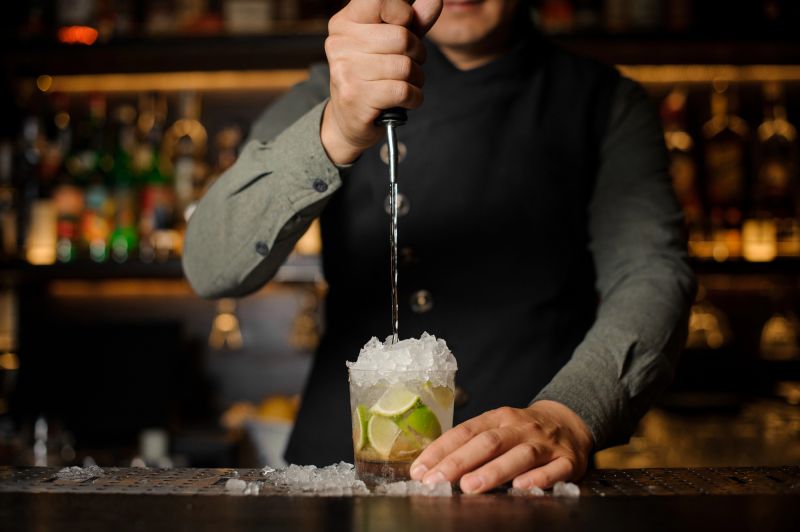
Brazil is putting R$2.63 million into a new push to broaden cachaça exports beyond the United States, as the country’s signature sugarcane spirit posts stronger shipment volumes but weaker unit prices and faces a new 25% U.S. tariff.
ApexBrasil, the Brazilian Trade and Investment Promotion Agency, and IBRAC, the Brazilian Cachaça Institute, said the funding will support commercial promotion in Mexico, Canada and Europe and is expected to serve 70 to 80 companies. ApexBrasil described the initiative in coverage published on Aug. 3, saying the program will finance participation in international trade fairs, outreach to foreign buyers and other business development efforts for producers.
The agreement is the fourth edition of a sector program focused on the internationalization of cachaça, a spirit that can only be produced in Brazil. The strategy is meant to reduce the industry’s exposure to the American market at a time when U.S. trade policy has become less favorable and when export growth has been driven more by volume than by price.
According to the 2026 Cachaça Yearbook published by Brazil’s Ministry of Agriculture and Livestock, the country exported 7.95 million liters of cachaça to 76 destinations in 2025, up 19.4% from the previous year. Export revenue reached $17.07 million, an increase of 17.4%. Based on those figures, Brazil exported about 6.66 million liters in 2024 for roughly $14.54 million, meaning last year’s gains amounted to about 1.29 million additional liters and $2.53 million in added revenue.
The average export price, however, slipped to $2.15 a liter in 2025 from $2.18 in 2024, a decline of 1.4%. That suggests exporters sold more product abroad, but at a slightly lower average value. Industry assessments cited in Brazilian trade coverage said exported volumes are still concentrated in industrial cachaça, which usually carries lower added value than premium artisanal brands.
The United States remained Brazil’s leading market by export value in 2025, while Paraguay led by volume, taking in 1.34 million liters. That market structure has taken on added importance since July 22, when the Brazilian spirit became subject to a 25% tariff imposed by the U.S. government under Section 301, according to ApexBrasil. The agency said the measure increased entry costs in one of the category’s main foreign markets and reinforced the need to look for new buyers elsewhere.
Laudemir Müller, the president of ApexBrasil, said the current trade climate calls for diversification. In remarks released by the agency, he said cachaça is also feeling the effects of a difficult moment in international trade, especially in the United States, and that the government is investing in promotion in Mexico, Canada and Europe to widen export opportunities.
Vicente Bastos, the president of IBRAC, said the new project should give the industry more force in its international expansion. He said the goal is to strengthen recognition of cachaça as a higher-value product in foreign markets. Bastos has also said publicly that exports remain modest when measured against the size of Brazil’s cachaça industry and the scale of the global spirits business.
The export push comes as Brazil’s domestic cachaça industry continues to expand. The agriculture ministry’s yearbook counted 1,538 cachaça-producing establishments in 2025, spread across 844 municipalities, an increase of 21.5% from 2024. Minas Gerais led with 564 units, followed by São Paulo with 230 and Rio Grande do Sul with 106. Declared production reached 234.4 million liters, and the related sugarcane spirit segment generated 6,232 direct jobs, according to the yearbook.
Those numbers show a much larger production base at home than the current export totals suggest. They also help explain why Brazil’s trade and industry groups are putting public and sector money behind foreign promotion. Cachaça production is still dominated by small producers, cooperatives and family-run businesses, many of which have limited reach abroad and need help navigating importers, trade shows, distribution and brand protection.
ApexBrasil said the project will also build on Brazil’s trade relationship with Mexico, where cachaça and tequila have been linked by a mutual recognition agreement on geographical indications since 2016. That arrangement states that only beverages made in Brazil may use the name “cachaça,” and only beverages made in Mexico may use the name “tequila.” Brazilian officials and the Mexican diplomatic mission have said the agreement helps protect both products against imitation and reinforces their value in international markets.
The cooperation with Mexico now goes beyond legal recognition and includes joint promotional efforts for both spirits, according to ApexBrasil. For Brazil, Mexico is not only a potential consumer market but also a strategic platform in North America at a time when access to the United States has become more complicated.
The new investment does not change the fact that the 2025 export figures were positive in headline terms. Shipment volumes rose at their fastest pace in several years, and revenue also increased. But the slight drop in average price points to a limit in the current model. If volume continues to grow faster than value, the sector may struggle to improve margins, especially if tariffs, freight costs or exchange-rate swings add pressure.
That is one reason the promotion plan is centered on market diversification rather than on a simple expansion of sales in existing destinations. Mexico, Canada and Europe offer different entry points for Brazilian producers, from cocktail and bar programs to specialty retail and premium spirits channels. For smaller distillers, success in those markets could mean better prices and less dependence on one buyer country.
Jeruza Aguiar, the owner of Cachaça Capueira in Paraúna, in the state of Goiás, and IBRAC’s finance director, said in comments released in Brazil that expanding international presence is also a way to add value to producers’ work. She said she believes cachaça can keep growing abroad because of the strength of the product and of Brazilian culture.
For now, the central message from the industry and the government is that cachaça’s export story is improving, but not yet on the scale Brazil wants. Sales abroad are rising, yet average value has softened and the largest market has become more expensive to enter. The R$2.63 million program is meant to address that gap by helping producers find new customers before dependence on the United States becomes a larger problem.