Franciacorta Begins Its 2026 Grape Harvest on July 30, Earliest Start on Record
Franciacorta producers moved early after heat, hail and 25% lower rainfall accelerated grape maturation.
2026-08-11
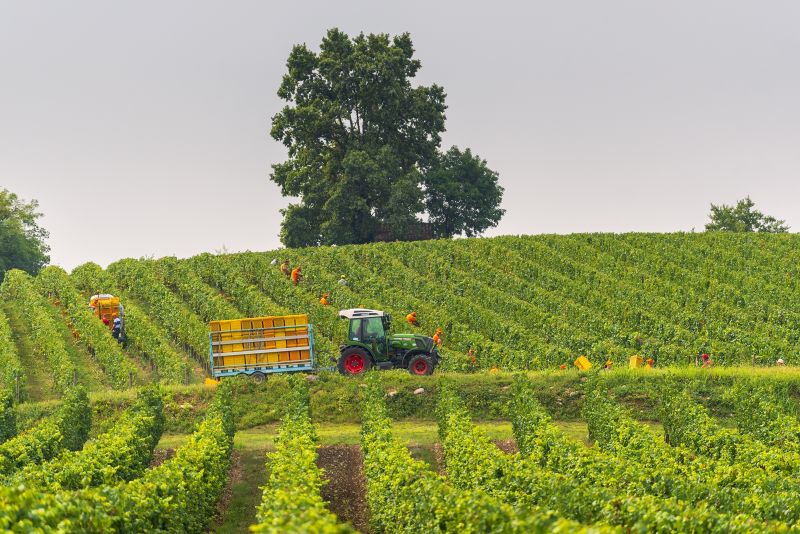
Franciacorta’s 2026 grape harvest began on July 30 in the Gussago and Monte Orfano areas, marking the earliest start on record for the sparkling wine region and the first time picking has opened in July, according to the Franciacorta Consortium.
The early start reflects a growing shift in vineyard timing as producers respond to warmer temperatures, uneven rainfall and more frequent weather swings. In a statement issued from Erbusco, the consortium said the accelerated harvest was a direct response to conditions that pushed the vines ahead of their usual cycle and required growers to move quickly to protect both yields and wine quality.
The 2026 season in Franciacorta, one of Italy’s leading traditional-method sparkling wine regions, unfolded under a pattern of rapid changes. The winter passed without major thermal anomalies, the consortium said, but temperatures rose sharply between February and April. That warmth sped up vegetative growth and advanced budbreak by more than a week compared with the historical average.
That earlier development put pressure on vineyard teams well before the usual harvest window. Growers then faced a difficult spring that included several hailstorms. The consortium said storms on May 6, May 11 and May 14, followed by another on June 10, struck different parts of the appellation with mixed effects. Even so, favorable weather from mid-May onward supported fruit set and allowed the growing season to continue on a generally regular path.
The heat deepened as the season moved forward. The consortium said May matched the historic record for the number of days with temperatures above 32C. June ranked among the hottest months in the last 29 years. Together, those conditions placed 2026 among the warmest vintages in recent decades for the area.
Rainfall did little to offset the heat early on. Although early summer precipitation improved the seasonal water balance, cumulative rainfall remained 25% below historical levels as of July 12, the consortium said. That shortfall, combined with elevated temperatures, slowed vegetative growth in the second half of the season, especially in vineyards planted on more draining soils and in younger sites with shallower root systems.
The consortium said the water stress did not derail ripening. Instead, it increased the need for close observation and site-by-site decisions in the vineyard. Producers had to adapt farming practices to the needs of individual parcels, an approach the group described as essential in a year when conditions varied sharply across the denomination.
Weather conditions shifted again from mid-July. Rain returned and helped restore some water reserves, though it also came with additional hail episodes. At the same time, temperatures moved back toward seasonal norms, which allowed the fruit to complete ripening under more balanced conditions in the days leading up to harvest.
“The weather sets the pace, and we adapt to it by watching closely what happens in the vineyards and intervening accordingly,” Emanuele Rabotti, president of the Franciacorta Consortium, said in the statement. He said the combination of high temperatures and limited water availability sped up grape maturation and forced the region to move harvest forward. He also pointed to local knowledge and the daily work of vineyard teams as the main tools for preserving fruit quality in a demanding year.
The timing is significant for a region whose identity is closely tied to precision in grape growing. Franciacorta is produced under strict production rules and is known for bottle fermentation, the same method used in Champagne. Harvest dates matter because sparkling wine producers typically seek fruit with a narrow balance of sugar, acidity and phenolic maturity. In warm years, that balance can shift quickly, especially when hot spells are followed by rain.
The early start in Gussago and Monte Orfano may also serve as a signal for the rest of the region as wineries assess fruit conditions parcel by parcel. Franciacorta’s vineyards do not ripen all at once, and producers often stagger picking based on altitude, exposure, vine age and soil type. In 2026, those differences appear to have been sharpened by the season’s sequence of heat, hail and uneven water availability.
The consortium framed the harvest as another test of how the region is adjusting to a more dynamic climate. In its account of the season, it emphasized not only the role of weather but also the importance of experience in vineyard management. That includes reading each plot separately, reacting quickly to changes in temperature and rainfall, and preserving quality through timely decisions rather than relying on a fixed calendar.
Founded in 1990 and based in Erbusco, the Franciacorta Consortium oversees compliance with the denomination’s production rules and promotes the region and its wines. It represents more than 200 members. The group said this year’s harvest once again shows how producers are trying to maintain standards while working under conditions that no longer follow traditional patterns.
