Survey Suggests Higher Dining Costs Push Some U.S. Wine Drinkers to Socialize at Home
Most respondents said a social outing outside the home costs at least $31 per person, a price that may be reshaping where they gather.
2026-08-25
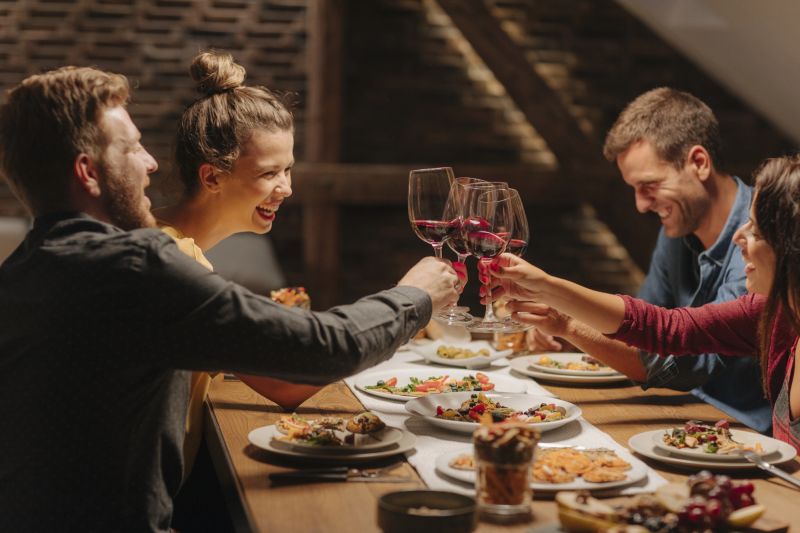
Higher costs for dining out are pushing some American wine drinkers to spend more of their social time at home, according to a new survey that points to a shift in where people gather and how they buy wine.
The survey, released Tuesday by Come Over October and reported by WineBusiness.com, found that 26.49% of respondents said they go to restaurants and bars less often than they did a year ago. At the same time, 28.84% said they are hosting more gatherings at home.
The findings come from a survey of 1,553 U.S. wine consumers. The publication did not specify when the fieldwork was conducted. It also said the sample was made up of volunteers drawn from an audience already interested in wine, which means the results are not representative of the full U.S. population and should not be treated as a measure of actual wine sales.
Even with those limits, the responses offer a clear picture of how price pressures may be changing social habits for a segment of consumers who already buy and drink wine. The main reason appears to be cost. According to the survey, 73% of respondents estimated that a social outing outside the home costs at least $31 per person.
That cost level matters because it affects how often people feel able to meet in public places. If going to a restaurant, wine bar or similar venue becomes too expensive, hosting friends at home can offer a less costly alternative. The survey suggests that this tradeoff is already shaping behavior among the people who answered it.
Wine remains central to many of those gatherings. The survey found that 61% of respondents said wine is almost always present at their social occasions, while another 21% said it appears frequently. That means more than four out of five respondents see wine as a regular part of entertaining, even as the setting shifts from restaurants and bars to homes.
The survey also found an opening for sellers and marketers trying to match wine purchases to tighter budgets. About 32% of respondents said they would welcome wine recommendations tailored to what they want to spend. That suggests some consumers are still interested in buying wine for social events, but may want clearer guidance on affordable options.
For the wine industry, that combination of responses points to a possible opportunity in products and messaging aimed at home consumption rather than on-premise drinking. If consumers are going out less often but entertaining more often, retailers, wineries and brands may find demand for bottles, packs or promotions designed for small group occasions at home. Budget-focused recommendations could also appeal to shoppers trying to balance hospitality with higher living costs.
The survey does not show how much wine people are actually purchasing, and it does not establish whether home gatherings fully offset reduced restaurant and bar visits. It measures self-reported behavior and spending perceptions, not transaction data. That distinction is important because stated intentions and habits do not always translate directly into sales.
Still, the results fit a broader consumer pattern that many sectors have been tracking as households manage elevated food, drink and entertainment costs. Social activities outside the home often carry added expenses beyond the main purchase, including transportation, taxes and tips. A gathering at home can give consumers more control over what they spend, especially if each person contributes food or drinks.
In that setting, wine can hold a practical advantage. A bottle can be shared by several people, and shoppers can choose from a wide range of price points. For consumers who still want a social ritual but are watching expenses, that flexibility may help explain why wine remains common at home get-togethers.
The survey’s release also reflects an effort by Come Over October to encourage at-home social occasions that include wine. Because the respondents came from a wine-interested audience, the findings are best read as a snapshot of sentiment among engaged wine consumers, not as a portrait of all Americans. People who do not drink wine, buy it only occasionally or do not follow wine-related media are not captured in the same way by a voluntary sample like this one.
Even so, the survey highlights a practical issue for the market in the United States. If cost continues to reduce the frequency of restaurant and bar visits, growth may depend less on traditional on-premise occasions and more on informal gatherings in living rooms, backyards and dining rooms. In that environment, price sensitivity, convenience and relevance to the home occasion may matter as much as brand image or restaurant placement.
The data released Tuesday do not settle how large that shift may become, but they do indicate that for a notable share of surveyed wine consumers, the place where people gather is changing. As some social spending moves away from bars and restaurants, the home is becoming a more important setting for wine consumption.
