Verdicchio Producers Seek 21.4% Cut in 2026 Yield Limits
The Marche petition would keep the cap at 110 quintals per hectare after a large 2025 harvest swelled inventories.
2026-08-12
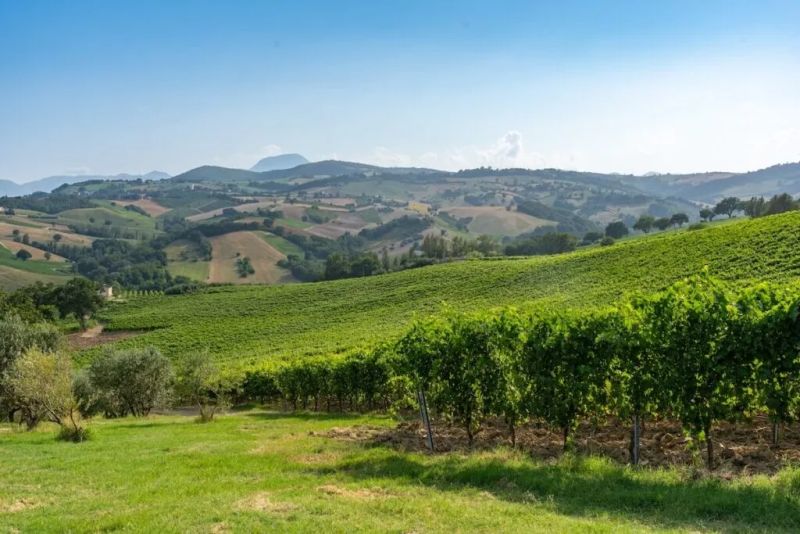
Verdicchio dei Castelli di Jesi producers in Italy’s Marche region are asking regulators to cut the allowed yield for the 2026 harvest by 21.4%, even as bottling volumes rose 2.7% in the first half of this year, a sign that the main concern is not current shipments but the stock left over after a large 2025 crop.
The request was approved by the assembly of the Istituto Marchigiano di Tutela Vini, or IMT, and submitted to the Marche regional government, according to information released on Aug. 10 and reported by WineCouture. It is not yet a final regional order. If accepted, the measure would keep the yield limit for Verdicchio dei Castelli di Jesi at 110 quintals per hectare, instead of the 140 quintals per hectare allowed under the denomination’s production rules.
The proposed cut amounts to 30 quintals per hectare, or 21.4%. IMT also asked for a second supply-control measure: grapes produced above the 110-quintal threshold, up to another 21 quintals per hectare, could be placed in storage and blocked until June 30, 2027.
The move is notable because it comes at a time when the denomination’s bottled output is still growing. Alberto Mazzoni, IMT’s director, said bottling in the first six months of the year was up 2.7% from the same period a year earlier. That suggests the pressure on the market is coming from accumulated inventories rather than a sudden drop in all sales channels.
IMT said the goal is to prevent excess wine from weighing on prices and producer returns. Michele Bernetti, the institute’s president, said the sector requires close attention at both the national and regional level and described the measures as a way to contain stock that increased after the abundant 2025 harvest while protecting the supply chain and aiming for sound price dynamics.
The institute’s language points to a defensive strategy that is common in European wine regions when production has outpaced demand. By limiting how much fruit can go directly into the appellation and by freezing part of the surplus, the denomination is trying to avoid a situation in which too much wine reaches the market at once and drags down prices for growers and wineries.
That choice also reflects the size of Verdicchio dei Castelli di Jesi within Marche wine. The denomination is one of the region’s best-known white wines and one of its largest economic engines. IMT said the area spans 25 municipalities and nearly 1,900 claimed hectares. Total production exceeds 103,000 hectoliters, about 90% of which is bottled, for roughly 13 million bottles. Annual bottled volume is about 90,000 hectoliters.
The supply chain includes 338 growers and 129 producers, according to the institute. Exports account for 51% of total sales, showing how dependent the denomination is on foreign markets as well as domestic demand. Europe takes 76% of those exports. IMT listed the United Kingdom, the Netherlands, the United States, Germany and Sweden among the main destinations.
That export mix helps explain why a rise in bottling does not automatically remove the need for supply controls. Even with steady shipments, a denomination of this scale can still face pressure if one large harvest adds to wine already in tanks and if demand growth is not strong enough to absorb it quickly. IMT did not quantify current inventory levels, and it did not provide a specific figure for the decline in Italian retail sales, referring only to a modest fall in the domestic market.
The request to Marche authorities therefore appears to be preventive. Instead of waiting for stocks to build further during the 2026 harvest, IMT is trying to lock in a tighter yield ceiling before picking begins. The institute said the aim is to preserve the denomination’s value, support the supply chain and maintain balanced market conditions.
Bernetti also argued that the region still has room to grow. He said the denomination has a contemporary, high-quality wine that can compete in domestic and international markets and noted the recent arrival of new operators in the area. His comments suggest that the institute does not see the current action as a retreat from growth, but as a way to manage timing and volumes more carefully.
Mazzoni tied that market management to a broader promotional effort. He said Verdicchio dei Castelli di Jesi represents an important share of the value of Marche denominations and that the region needs a unified, continuous campaign to promote its wines over a period of at least four years. That proposal indicates that IMT sees the stock issue as only part of a wider challenge that includes building stronger demand over time.
For now, the immediate issue is regulatory. Marche must decide whether to approve the request. Until that happens, the proposal remains a formal petition from the denomination’s governing body rather than an enforceable regional measure.
If the region agrees, Verdicchio dei Castelli di Jesi would enter the 2026 harvest under a tighter production regime than the one written into its standard rules, with part of any excess held back from the market until the middle of 2027. The contrast between that caution and the 2.7% rise in bottling underlines the central problem facing the denomination: sales have not collapsed, but inventories built up enough after the 2025 harvest to make producers seek an early brake on supply.
