Italy drives a fine-wine recovery on Liv-ex
The Italy 100 index rose 1.5% in 2026, with Tuscan labels providing the steadiest support for prices.
Thursday, August 13, 2026
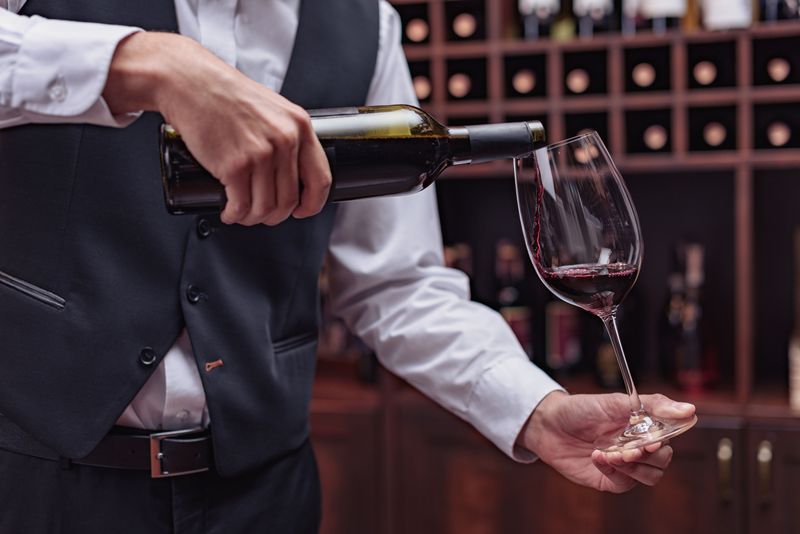
Italy is continuing to drive the modest recovery in the global fine-wine market, with Tuscany playing a central role in supporting prices and trade on Liv-ex, the benchmark marketplace for the secondary market in collectible wine.
The broader wine market is still moving at a slower pace than in past years. But data from the first seven months of 2026 and the last 12 months show that the top end of the market has been regaining some ground. A review of Liv-ex indices by the Italian publication WineNews found that the Liv-ex 100, the platform’s flagship index, rose 0.4% in the first seven months of 2026 and 3.3% over the last 12 months.
Italian wines now hold a strong place in that index. The current lineup includes bottles such as Bartolo Mascarello Barolo 2019, Bruno Giacosa Barolo Falletto Vigna Le Rocche Riserva 2016, Gaja Barbaresco 2019, Giacomo Conterno Barolo Monfortino Riserva 2015 and 2019, Masseto 2021 and 2022, Ornellaia 2021, Sassicaia 2016, 2021 and 2022, Solaia 2021, Tignanello 2021 and 2022, and Soldera Case Basse 100% Sangiovese Toscana IGT 2020.
The wider Liv-ex 1000 index also moved higher, though more slowly. It was up 0.3% in 2026 and 1.2% over the last 12 months. Within that broader universe, the strongest category gains came from Champagne and Italy. The Champagne 50 index rose 1.6% this year and 2.6% over 12 months. The Italy 100 index gained 1.5% since the start of 2026, despite a mild dip in July, and 2.9% over the last year.
That put Italy ahead of Burgundy and well ahead of Bordeaux. The Burgundy 150 index rose 0.8% in 2026 and 1.9% over 12 months. The Liv-ex Bordeaux 500, by contrast, was down 0.3% this year and down 0.4% over 12 months. In a market where buyers have remained selective and trading has been uneven, that difference has made Italy one of the clearest sources of support for the overall Liv-ex recovery.
The Italy 100 index is built around a narrow group of the country’s most traded and most collected labels. It includes multiple vintages of Bartolo Mascarello Barolo from 2012 through 2021, several Bruno Giacosa reserve Barolos, Gaja Barbaresco from 2013 through 2022, Giacomo Conterno Monfortino Riserva from 2002 through 2019, the major Super Tuscan names from 2013 through 2022, including Sassicaia, Solaia, Tignanello, Ornellaia and Masseto, and Soldera Case Basse from 2011 through 2020.
Liv-ex said the medium-term strength of the Italy 100 has been tied above all to the steadiness of Tuscan wines. The platform’s analysis found that while the best-performing labels in 2026 came from both Piedmont and Tuscany, the stability of Tuscan prices helped anchor the index. Piedmont wines, which are often rarer and more expensive, saw sharper declines in some cases, making them less stable support for the broader benchmark.
The top revaluations this year show that split clearly. Giacomo Conterno’s Barolo Monfortino Riserva 2005 led with a gain of 25.2%. Soldera Case Basse Toscana IGT 2020 followed at 20.5%. Masseto posted two of the strongest gains, with the 2016 vintage up 18.7% and the 2022 up 16.8%. Gaja Barbaresco 2022 was up 16.5%. Those numbers point to strong demand for a small group of prestige Italian labels, even while the wider wine market remains cautious.
Liv-ex said Tuscany’s price performance has also been backed by solid trading activity. Since the start of 2026, 157 Tuscan wines have changed hands on the market when different vintages of each label are counted separately. Even so, just nine wines accounted for more than 80% of the total value of Tuscan trading. That level of concentration has increased. In 2025, 21 wines represented 80% of the region’s traded value, out of 282 Tuscan wines exchanged. In 2024, the number was 24.
That pattern shows both the resilience and the limits of demand in the fine-wine segment. Buyers are still active, but they are focusing on a narrow set of labels with the strongest brand recognition, liquidity and pricing history. Liv-ex noted that in the early 2000s it was not unusual for the leading Super Tuscan wines to account for 100% of Tuscan trading. Between 2013 and 2021, the combined share of the five Super Tuscan components in the Italy 100, excluding Soldera Case Basse, fell as a broader range of Tuscan wines gained market share. The latest data suggest that the market is still wider than it once was, but that trading value is once again clustering around a small core of names.
In 2026, the nine Tuscan wines that together made up 80% of the region’s traded value were Sassicaia, Tignanello, Ornellaia, Masseto, Guado al Tasso, Biondi-Santi Brunello di Montalcino, Solaia, Fuligni Brunello di Montalcino and Soldera Case Basse’s 100% Sangiovese Toscana IGT.