England’s pub tax bills jumped after a property revaluation raised rateable values
New business rates took effect in April after pandemic-era relief ended, leaving many pubs facing sharply higher fixed costs despite targeted support
Tuesday, July 28, 2026
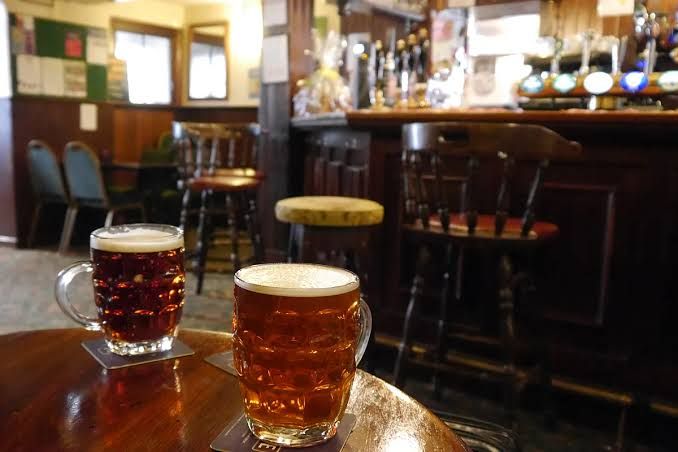
Pubs in England have been hit with higher business rates bills since April after a nationwide property tax revaluation took effect and earlier relief tied to the pandemic ended, increasing pressure on a sector that is already sensitive to labor, energy and supply costs.
A briefing published by the House of Commons Library said the changes stem from the way business rates are calculated: a property’s rateable value is multiplied by a tax rate known as the multiplier. The latest revaluation, which applies from April 1, 2026 through 2029, raised rateable values sharply for many pubs. At the same time, the government introduced lower multipliers for some retail, hospitality and leisure properties, including pubs, but in many cases not by enough to cancel out the increase in taxable value.
According to statistics from the Valuation Office Agency cited in the briefing, rateable values in England for “Public Houses/Pub Restaurants” rose by an average of 30% in 2026. For “Public Houses/Pub Restaurants (Including Lodge),” the average increase was 70%. That compares with an average increase of 19.4% across all properties in England.
The issue matters beyond pub operators because business rates are a fixed cost in the on-trade drinks market. If pub bills rise, operators may try to recover part of that cost through menu and bar prices, trim investment, reduce staffing or, in some cases, close sites. That can affect demand across beer, wine and spirits suppliers that depend on pubs as a major sales channel.
The government published the new rateable values in November 2025 alongside the 2025 Budget. Media reports began appearing the following month warning that pubs could face steep increases. The issue then became politically charged. Later reports described some publicans barring Labour lawmakers from their premises in protest over the expected tax burden.
The House of Commons Library said trade group UK Hospitality has estimated that “in 2027/28, an average pub’s rates will be £4,500 higher than today, and in 2028/29 £7,000 higher.” Those figures were cited as part of the wider debate over whether the new structure gives enough support to hospitality businesses after the end of temporary relief.
Business rates are charged on non-domestic properties and are revalued every three years in England. The Valuation Office Agency carries out that process independently of ministers. For pubs, valuation does not rely simply on standard rental comparisons. Instead, the VOA uses a method based on what it calls “fair maintainable turnover,” an estimate of trade that could be achieved by a reasonably efficient operator.
Under that approach, the agency estimates drinks sales, food sales, accommodation income and other receipts for a pub. It does not have to use a venue’s actual sales figures. It applies percentages derived from rental evidence to those estimated revenue streams. The valuation date is set two years before the revaluation takes effect.
That method helps explain why pubs have been especially exposed in this cycle. If estimated trading potential rose strongly at the valuation date, rateable values could climb faster than those for many other commercial properties. Different percentages are used depending on region and level of trade.
The government does not set rateable values, but it does decide the multipliers used to calculate final bills. In 2025/26, retail, hospitality and leisure properties in England received a 40% discount on business rates. That discount was removed after the Autumn 2025 Budget.
From April 2026, England moved to five multipliers instead of two. Two of them apply specifically to retail, hospitality and leisure properties. Pubs with a rateable value below £51,000 now use a multiplier of 38.2p. Pubs with a rateable value between £51,000 and £499,999 use a multiplier of 43p. Pubs with a rateable value above £500,000 fall under a higher multiplier of 50.8p that is not specific to retail, hospitality and leisure businesses.
Although those multipliers are lower than in 2025/26, they are not low enough to match the old 40% discount. The Commons Library said that for many pubs, as well as other properties, lower multipliers are outweighed by both the removal of that discount and higher rateable values.
Ministers responded early this year with extra support aimed at easing the immediate shock. On January 27, the government announced an additional 15% relief for pubs and live music venues for 2026/27. That relief is applied after other protections already built into the system.
Those protections include Supporting Small Businesses relief and transitional relief, both designed to limit how much bills can rise each year after revaluation. The Commons Library said pubs will qualify for Supporting Small Businesses relief rather than transitional relief. Under that scheme, annual increases are capped during the three financial years from 2026 to 2029.
The calculation starts from a property’s 2025/26 business rates bill. If that earlier bill had already been reduced because of transitional relief from the previous revaluation, that reduction is ignored when setting the starting point. The scheme also includes a minimum cap of £800 a year. That means if percentage calculations would otherwise limit an increase to less than £800, the cap applied would still be £800.
The support package was expanded again this month. On July 23, in his first week as prime minister, Andy Burnham announced an additional 20% relief for pubs, clubs and live music venues from 2027/28. According to the Commons Library briefing, that new measure would come on top of the existing 15% relief for 2026/27 and planned caps on bill increases in 2027/28 and 2028/29.
The government has said that this further 20% relief will not apply to “the very largest live music venues,” with details due to be set out in the 2026 Budget.
For pub operators, what happens next will depend on how these layers of support interact with each property’s new valuation and size band. Some smaller venues may see increases moderated by Supporting Small Businesses relief and sector-specific discounts. Others, especially those with larger jumps in rateable value or those above key thresholds, may still face materially higher bills over the next two years.
That uncertainty is important for drinks producers and distributors as well as landlords and tenants. Pubs remain one of the main outlets for draft beer and an important route to market for wine by the glass and spirits sold in mixed drinks. If operators respond to higher fixed costs by raising prices or cutting trading hours, suppliers could see weaker volumes even if consumer demand holds up elsewhere.
The Commons Library briefing presents the current picture as one shaped by three overlapping decisions: an independent revaluation that lifted taxable values for many pubs; a government decision to replace broad retail, hospitality and leisure discounts with new multipliers; and later targeted relief meant to soften the impact after complaints from operators intensified across England.