France Permits Temporary Changes to Protected Product Rules During the 2026 Drought
The INAO said AOP, IGP, organic producers can seek formal derogations when exceptional dry conditions block compliance.
Tuesday, September 15, 2026

Views › 2605
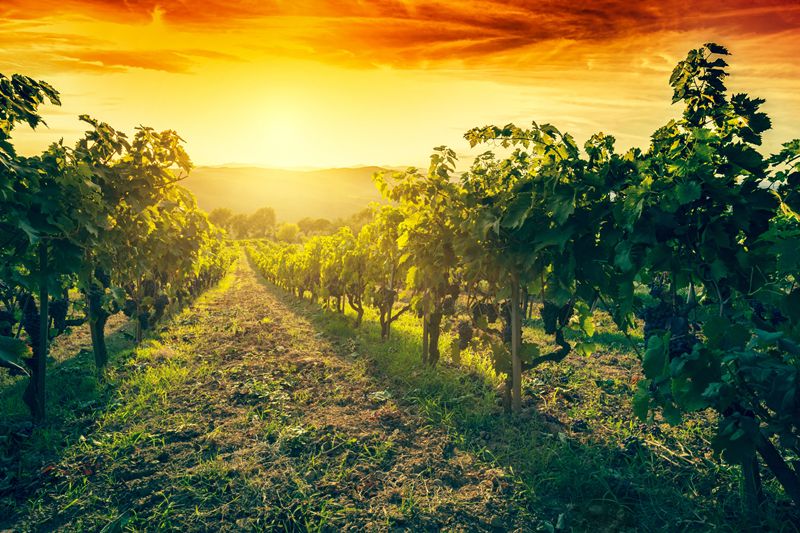
France’s National Institute of Origin and Quality, or INAO, said Monday that temporary changes to product specifications are being allowed because of drought, giving French producers under protected quality schemes a formal way to adjust some rules during the 2026 dry spell.
According to the agency, the measure concerns products covered by France’s official quality and origin labels, known as SIQO, including AOP and IGP designations, and also addresses drought-related derogations in organic production. The move is meant to deal with cases in which exceptional weather conditions make full compliance with existing rule books difficult or impossible for part of a season.
The announcement is significant because those specifications are central to how protected French agricultural products are produced and sold. An AOP or IGP label is tied to detailed requirements that define the product and its link to a place, a method, or both. In normal years, those rules are designed to protect consistency and consumer trust. In a drought year, they can also become a source of operational risk if farms or processors cannot meet them because of conditions outside their control.
INAO said the temporary changes follow a formal process rather than an informal relaxation of standards. Approved changes are to be published in the Journal Officiel de la République Française, or JORF, the French government’s official journal. When required, the measures are also notified to the European Commission, reflecting the fact that many protected designations and organic rules operate within a European regulatory framework.
The agency’s notice points to a dual objective. One is to preserve the integrity of quality labels that carry legal and commercial value in France and abroad. The other is to avoid penalizing producers when extreme drought disrupts production conditions. That balance has become more important as repeated weather shocks force regulators and agricultural sectors to adapt systems that were built for more stable patterns.
For the beverage industry, the practical effect could be important. France has a large number of wines and ciders produced under AOP and IGP rules, and some organic beverage producers may also be affected by drought-related constraints. Temporary changes can potentially reduce the risk that a producer loses compliance with a protected designation or organic requirements solely because climate conditions altered yields, raw material quality, or other production conditions tied to the rule book. That may help support continuity in supply and reduce disruptions in labeled beverage markets, even if the exact effect will depend on the scope of each approved measure.
The INAO notice did not present the drought response as a permanent rewrite of specifications. Instead, it framed the changes as temporary and linked to exceptional conditions. That distinction matters for producers and buyers alike. Protected designations depend on the credibility of their standards, and permanent changes usually require longer procedures and a broader policy debate. Temporary relief allows the system to respond more quickly while keeping the underlying framework in place.
The reference to organic derogations also widens the scope beyond origin-linked labels alone. Organic certification is governed by its own rules, and drought can create specific compliance problems in sourcing, feeding, crop management, or other operational areas depending on the sector. By setting out how drought-related derogations can be handled, the French authority is signaling that climate disruption is now a regulatory issue as much as an agronomic one.
The timing is important for producers making decisions around harvests, purchases, processing, and certification checks. If a drought event affects a region during a critical production window, uncertainty over whether a specification can be adapted may have immediate commercial consequences. A clear administrative route, combined with publication in the official journal and notification at the European level when needed, gives producers, control bodies, and buyers a clearer legal basis for how exceptions will be handled.
The French system of SIQO labels covers a wide range of products, but the impact is likely to be watched closely in sectors where origin claims are especially important to pricing and market identity. Wine is the clearest example, because appellation rules are deeply tied to production methods and geographic character. Cider producers and other beverage categories operating under protected designations may also follow the INAO process closely as dry conditions continue to test fixed standards.
The announcement adds to a broader pattern in European agriculture, where climate stress is pushing regulators to find more flexible ways to apply rules without dismantling the value of protected labels. In France, that pressure is especially sensitive because AOP, IGP, and organic certifications are not only regulatory categories but also major commercial assets for domestic sales and exports. As drought episodes become more frequent, the speed and clarity of these temporary approvals are likely to matter as much as their legal form.