Federal hemp THC ban threatens breweries’ fast-growing drinks business
Brewers in Minnesota, Illinois and Wisconsin say the Dec. 11 limit of 0.4 milligrams per container would wipe out most products
Sunday, November 22, 2026

Views › 461
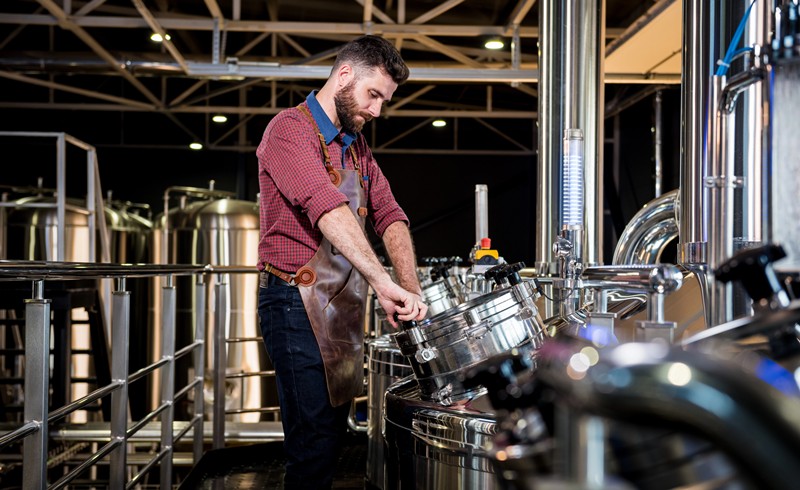
A federal ban on most hemp-derived THC products is scheduled to take effect on Dec. 11, threatening a fast-growing drinks business that breweries in Minnesota, Illinois and Wisconsin say has become an important source of revenue as alcohol consumption falls and consumer tastes change.
Under the federal change, hemp-based products with more than 0.4 milligrams of THC per container would no longer be legal for sale. Brewery executives say that threshold is so low that it would wipe out most of the THC seltzers and soft drinks now being sold through taprooms, retailers and wholesale channels.
The issue has become especially important for beverage makers that have used THC drinks to diversify beyond beer. Many brewers already have canning lines, production staff and distribution relationships in place, making hemp beverages a way to use existing capacity at a time when craft beer sales face pressure from weaker demand and higher costs.
In Duluth, Minnesota, Bent Paddle Brewing Co. said THC drinks account for about 40% of its business. Pepin Young, the company’s director of new business development, said a federal ban would be “devastating” after years of investment in staff, equipment, production and distribution. Young, who also serves on the board of Minnesota Hemp Beverage Producers, said the 0.4-milligram limit would effectively eliminate the products the company now makes and sells.
In Chicago, Marz Community Brewing Co. said state-level changes in Illinois in November already showed what those losses can look like. Co-founder Ed Marszewski said the brewery, which began as a craft beer maker in 2014, moved into THC seltzers after retailers and customers asked for an alternative to alcohol. He said the business did not expect the category to grow as quickly as it did.
After the Illinois changes took effect, Marszewski said Marz lost more than 50% of its wholesale revenue. He said the company reduced employee hours, laid off several workers and took a significant hit to both wholesale and on-site sales. Fox Chicago also reported that Craig Katz of the Illinois Healthy Alternatives Association said a court decision tied to the Illinois restrictions affects nearly 300 businesses represented by his group.
In Wisconsin, Sprecher, the Glendale-based beverage company known for its craft sodas and beer, said it has also invested in the category. The company sells four hemp-derived THC soft drinks, each containing 10 milligrams of THC, far above the planned federal limit. Chief executive Sharad Chadha said the rule would effectively end the company’s ability to sell those products through its current channels. He said Sprecher has invested in product development, manufacturing, compliance and distribution under the existing legal framework.
Chadha said THC drinks are still a relatively small part of Sprecher’s overall business, but he sees strong growth potential. He argued that the category has given brewers and other beverage makers a way to innovate and offset declines in beer consumption. He also said the impact of a ban would extend beyond breweries to laboratories, hemp processors, extractors, ingredient suppliers, packaging companies, transport providers, distributors and retailers that have built businesses around hemp-derived products.
The current market grew out of the 2018 Farm Bill, which legalized industrial hemp and removed hemp and certain low-THC cannabis derivatives from the federal definition of marijuana. That change opened the door for a national market in hemp-derived seltzers, sodas, gummies and other products that can intoxicate consumers. The hemp industry is now valued at an estimated $38.7 billion.
Critics of the market say that legal change also created a loophole that allowed poorly regulated products to spread quickly. They have raised concerns about inconsistent standards, youth access and copycat foods that resemble ordinary candy and snacks. In 2024, Samuel Levine, then director of the Federal Trade Commission’s Bureau of Consumer Protection, warned that edible THC products designed to look like familiar snack foods were putting young children at risk.
Some states later adopted their own rules for hemp products, but those laws did not settle the issue nationally. According to the Associated Press, Sen. Mitch McConnell, the Kentucky Republican who helped drive the 2018 hemp legalization, later backed efforts to close what critics call the hemp loophole. The current federal restriction stems from legislation approved in 2025 and is set to take effect on Dec. 11 unless Congress changes the law.
That deadline has set off a late push on Capitol Hill. Sens. Amy Klobuchar, Democrat of Minnesota, and Tim Sheehy, Republican of Montana, have introduced the Hemp Guardrails Act, which they say would keep hemp products on store shelves while imposing stricter rules. According to the bill’s backers, the measure would limit sales to people 21 and older, bar copycat marketing and ban synthetic products sometimes sold as “gas station weed.”
Klobuchar has argued that a blanket ban would hurt farmers, brewers and small businesses. Young of Bent Paddle said the proposal is encouraging and called on lawmakers to keep working toward what he described as a reasonable path forward for businesses already operating in the market.
Opposition remains strong. Sen. Ted Budd, Republican of North Carolina, has said Congress already decided to close the hemp loophole and should not create a new regulatory framework for products he says fuel addiction and put children at risk.
The timing leaves little room for compromise. Congress has few working days left before Dec. 11 because of the Thanksgiving recess, and lawmakers are also facing a federal funding deadline on the same day. That creates two pressures at once: the possibility that the hemp restrictions take effect as written, and the possibility that supporters try to attach a hemp measure to a broader year-end spending bill.
For beverage companies that moved into THC drinks, the stakes are immediate. Marszewski said Marz entered the market because adults wanted a drink that was not alcohol. Chadha said brewers have used the category to diversify at a difficult moment for beer. Young said Bent Paddle built a substantial business around those products under rules that companies believed would remain in place long enough to justify their investments. As year-end negotiations continue in Washington, those companies are pressing lawmakers to regulate the market rather than shut it down.