Di Stefano Unveils Christmas Panettone Capsule With a Plate Made From Pistachio Waste
The Sicilian pastry maker marked its 40th year by pairing Panettone Magnum with a limited-edition plate 3D-printed from processing residue
Monday, November 16, 2026

Views › 532
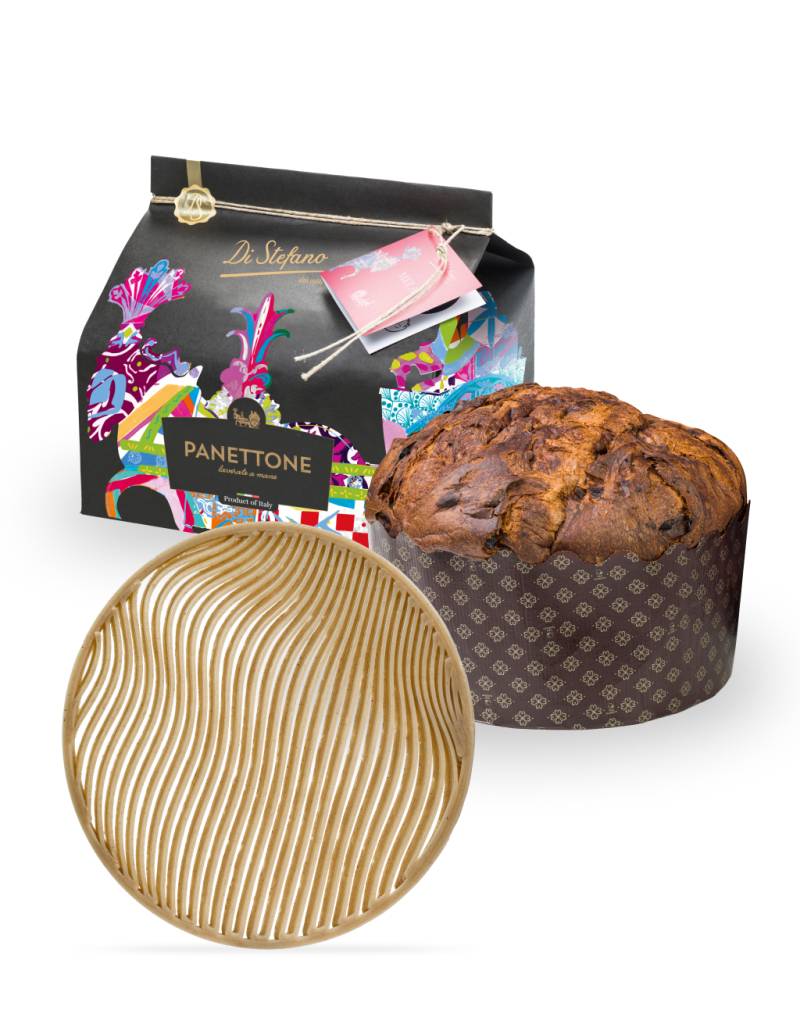
On October 12, Italian pastry maker Di Stefano Dolciaria said its 2026 Christmas season would center on two milestones for the family-owned company: 40 years in business and what it described as the 10th anniversary of its Christmas Capsule Collection, a holiday project that pairs its Panettone Magnum with a limited-edition design object.
The company, based in Raffadali in the province of Agrigento, was founded in 1986 as a family pastry workshop. According to company materials, it was started by Paolo Di Stefano with his sons Enzo, Benvenuto and Settimio. Four decades later, the business says it is using the anniversary year to highlight both its Sicilian roots and a broader product strategy that includes new flavor combinations, products aimed at consumers with dietary restrictions, and collaborations with contemporary designers.
At the center of the 2026 lineup is a new panettone called Panettone Fichi e Zenzero. The recipe combines candied Sicilian figs with ginger and is finished with a dark chocolate coating made with Ecuadorian chocolate, plus coffee powder and tonka bean. The company presented the product as the main food launch of its holiday range.
Di Stefano also put new emphasis on what it calls its free-from lines. Those products include gluten-free panettones made with gluten-free sourdough starter, Italian butter and fresh eggs. Among the varieties listed by the company are Panettone al Pistacchio da Farcire, Panettone al Cioccolato Siciliano in Gocce, Panettone Mandorlato Siciliano and Dolce Carrubo, Arancia & Cioccolato Siciliano.
The company said its lactose-free line is led by Dolce Carrubo, Arancia & Cioccolato Siciliano, a holiday cake made with extra-virgin olive oil instead of dairy fat. Di Stefano said the product received recognition in 2026 from AILI, the Associazione Italiana Latto-Intolleranti, an Italian group focused on lactose intolerance. The company framed the product expansion as part of a broader effort to make seasonal pastries available to a wider group of consumers without changing its production identity.
Enzo Di Stefano said in a statement that the anniversaries are both a milestone and a reason to continue investing in growth while keeping the company’s Sicilian identity at the center of its work. He said the business has focused on research, new flavor pairings and attention to different consumer needs, and described the capsule collection as a way to connect pastry making with art and design.
That design project is built around Traccia di vento, a limited-edition plate created for the 2026 holiday season by Luca Hugo and Iris Brucculeri of the Barcelona-based Studio Luca Hugo Brucculeri. Di Stefano said the plate will accompany the Panettone Magnum, continuing a format the company said it has used since 2015. The 2026 object was developed with LOWPOLY, a Madrid company that specializes in 3D printing and materials research.
According to the company, LOWPOLY created the plate using a new composite biomaterial made from waste generated during pistachio processing. Through its LOWIMPACT process, the company said, organic residue from pistachio production is turned into a resource for digital manufacturing. In practical terms, the collaboration turns one of Di Stefano’s signature ingredients into a second material stream, this time for design rather than food.
The piece itself was presented as an interpretation of wind, drawing on the landscape of the Agrigento coast. In the company’s description, the design uses layered and curved forms to evoke movement and change. While that artistic language is part of the brand’s holiday presentation, the manufacturing detail may be just as important commercially: the project gives Di Stefano a way to link a premium food product to a conversation about reuse of production waste and circular design.
The announcement shows how the company is positioning its Christmas range on several fronts at once. One is tradition, through a business history that began in western Sicily in 1986 and remains centered on Italian holiday pastries. Another is product diversification, especially through gluten-free and lactose-free items that respond to specific dietary needs. A third is brand extension through collectible design, where the panettone is sold not only as a seasonal baked good but also as part of a limited-edition object.
Di Stefano’s own background material says its products are still made in Raffadali and include panettones, spreads, Easter cakes and jams. The company says it avoids emulsifiers and preservatives and handles each phase of production internally, from mixing ingredients to packaging. In the 2026 Christmas campaign, that artisanal message sits alongside a different one: that a regional pastry business can use design partnerships and materials research to broaden its reach without moving away from the Sicilian identity on which it was built.