Cheaper bulk shipments cut Argentina’s wine export revenue despite higher volumes
Exports rose 5.4% to 169.16 million liters from January through October, but FOB revenue fell 2.6% to $540.38 million
Wednesday, November 11, 2026

Views › 369
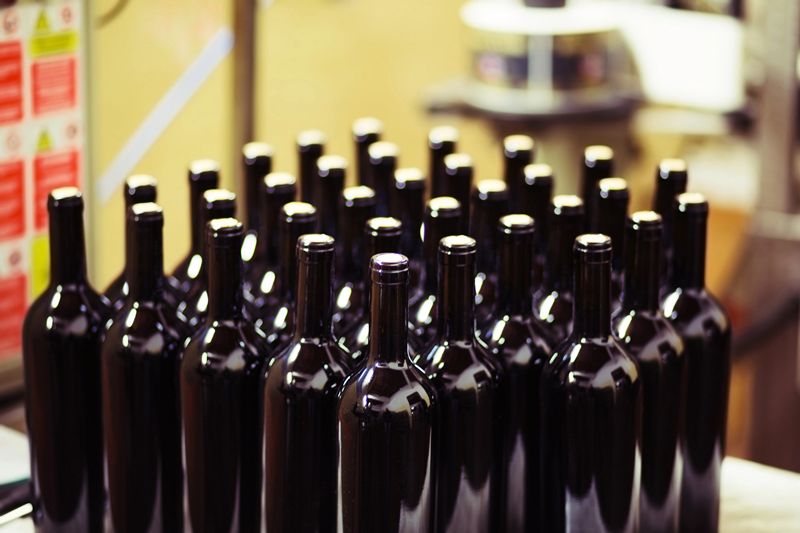
Argentina shipped more wine abroad in the first 10 months of the year, but earned less from those sales, as growth in lower-priced bulk shipments outweighed weakness in bottled exports.
Wine exports reached 169.16 million liters from January through October, up 5.4% from the same period in 2025, while export revenue on an FOB basis fell 2.6% to $540.38 million, according to Argentina’s National Viticulture Institute, or INV. The October foreign trade report, based on the SIM-INV database updated through Nov. 2, said the figures remain provisional and could change with late filings or corrections.
The mismatch between volume and revenue was large. Argentina shipped 8.61 million more liters than a year earlier, but collected $14.47 million less. The average export price fell 7.6% to $3.19 a liter from $3.46 in the same period of 2025.
Bulk wine accounted for all of the net increase in export volume. Bulk shipments rose 30.6% to 47.60 million liters, adding 11.15 million liters from a year earlier. But revenue from those sales increased only 7.4% to $37.58 million because the average price dropped 17.8% to $0.79 a liter from $0.96. Bulk wine made up 28.1% of Argentina’s exported wine volume in the period, up from 22.7% a year earlier, yet generated only about 7% of the sector’s export value.
Packaged wine, referred to in the report as fraccionado, continued to produce almost all export revenue. It brought in $502.80 million, or about 93% of the total, but that was down 3.3% from a year earlier. Volume in that category fell 2.1% to 121.56 million liters, and the average price slipped 1.3% to $4.14 a liter. The loss in revenue from packaged wine, at $17.06 million, was far larger than the $2.60 million gain from bulk wine.
White wines accounted for most of the increase in exported volume. Shipments of white wine rose 29.5% to 34.14 million liters, but revenue edged up only 1.2% to $84.87 million. The expansion was centered in bulk white wine, whose volume jumped 176.4% to 12.17 million liters. Packaged white wine was almost flat at 21.97 million liters, up just 0.03%.
By category, varietal wines remained the core of Argentina’s export business. They represented 88.2% of total export value, generating $476.61 million, down 2.8% from the same period in 2025. Their volume rose 1.1% to 138 million liters, but the average price fell 3.9% to $3.45 a liter. Within varietals, packaged exports brought in $443.06 million, down 3.1%, while bulk varietal revenue rose 1.6% to $33.55 million.
The gap between volume and revenue was even wider for wines without a varietal designation. Exports in that segment climbed 33.5% to 25.73 million liters, but revenue fell 3.2% to $40.23 million. The average price dropped 27.5% to $1.56 a liter as bulk shipments in that category nearly tripled. Sparkling wines posted gains in both measures, though at different speeds. They reached 5.40 million liters, up 12%, and $23.31 million in revenue, up 1.3%, while the average price fell 9.5% to $4.32 a liter.
Bottle shipments remained the dominant format for packaged wine. Bottles accounted for 96.8% of packaged export volume, with 117.67 million liters, down 1.6%. Tetra Brik exports fell 16.3% to 3.70 million liters. Bag-in-box shipments rose 320.5%, but from a very small base, reaching 166,000 liters, or just 0.1% of packaged export volume.
October improved the year-to-date picture, even though it was not enough to erase the decline in cumulative wine revenue. Argentina exported $68.09 million worth of wine in October, up 19.3% from October 2025, on volume of 21.85 million liters, up 28%. It was the second straight month of year-over-year revenue growth after a 17.8% increase in September. Those gains followed steep drops of 43.8% in July and 27.3% in August. Based on the report’s monthly figures, September and October together produced $22.32 million more in revenue than the same two months a year earlier.
Packaged wine led the October recovery in value. Revenue in that segment rose 16.1% to $62.75 million, while volume increased 10.9% to 14.73 million liters. Unlike the year-to-date trend, its average monthly price improved, reaching about $4.26 a liter, up 4.7% from October 2025. Bulk wine volume surged 87.8% to 7.12 million liters, and its value rose 76.2% to $5.34 million. Even so, the heavier share of lower-priced bulk shipments pulled the average export price for all wine down about 6.8% to $3.12 a liter.
October’s destination mix showed different leaders by value and by volume. The United States was the top market by revenue, with $18.39 million, or about 27% of the month’s export value, and 4.50 million liters. The United Kingdom ranked first by volume with 5.13 million liters, but generated $9.73 million. The difference reflected the composition of shipments: the British market took 3.68 million liters of bulk wine, more than half of all bulk wine exported by Argentina in October, while U.S. purchases were concentrated in packaged wine.
Brazil brought in another $9.37 million on 2.51 million liters, all of it packaged wine. Canada accounted for $4.98 million and 1.65 million liters. Among varietals, malbec represented 69.2% of varietal export volume in October, at 12.89 million liters, and generated $39.68 million. That was equal to roughly 58.3% of all wine export value for the month. Cabernet sauvignon contributed $7.40 million and chardonnay $3.84 million.
Mendoza dominated the origin of October shipments, with 20.09 million liters and $63.12 million, equal to 91.9% of national export volume and 92.7% of value. Outside Mendoza, Salta generated $1.98 million from 382,900 liters, while San Juan posted $1.06 million from 1 million liters. San Juan’s exports were led by bulk wine, while Salta’s were shipped in bottles, a difference that helped explain the gap in revenue per liter.
Wine was not the only export category in the report. Grape must helped offset part of the decline in wine revenue over the first 10 months of the year. Combined exports of wine and must totaled $657.96 million, down 1% from the same period in 2025. Concentrated and sulfited must brought in $117.59 million, up 6.8%, adding $7.49 million and softening part of the $14.47 million loss recorded in wine.
Concentrated must drove that increase. Exports rose 18.2% to 81,355 metric tons, while revenue climbed 8.1% to $111.62 million. As in wine, volume grew faster than value. The average price fell 8.5% to $1,372 a ton from $1,500. Sulfited must moved in the opposite direction, with volume down 8.8% to 201,713 hectoliters and revenue down 12.8% to $5.97 million.
October was weaker for must exports as a whole. Revenue fell 11% to $12.14 million. Concentrated must was nearly flat in value at $12.07 million and increased 4.5% in volume to 8,960 tons. The drop came from sulfited must, whose October revenue fell to $65,000 from $1.57 million in October 2025. Including both wine and must, total export value for the month reached $80.22 million, up 13.4%.
The United States was the top destination for concentrated must in October, with purchases worth $4.09 million. South Africa followed with $2.45 million, ahead of Japan with $2.02 million and Canada with $1.46 million. By origin, Mendoza contributed $8.11 million and San Juan $3.96 million, together accounting for all of the concentrated must export value recorded for the month.