Global bulk wine trade fell 14.5% in the first half of 2026
A Del Rey AWM report said the segment’s value dropped 12.5% to €1.11 billion, a steeper slide than the broader wine market
Thursday, November 5, 2026
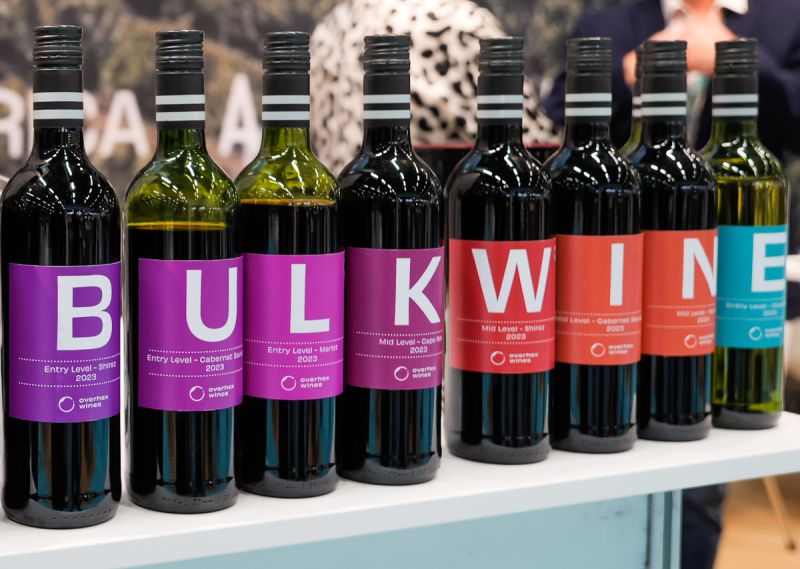
The global bulk wine trade contracted more sharply than the broader wine market in the first half of 2026, according to a Del Rey AWM report prepared for Vinexposium ahead of the World Bulk Wine Exhibition in Amsterdam on November 30 and December 1.
The report says bulk wine remains a smaller segment of the global wine business, but still accounts for 7% of world wine trade by value and more than 32% by volume. Even so, the segment has been shrinking for years. Between 2017 and 2026, bulk wine trade fell 21% in volume and 12.8% in value, with a steep slowdown in the 12 months ending in June 2026.
In that period, traded bulk wine volumes dropped 10.5% to 29.3 million hectoliters, while value fell 10.7% to €2.3 billion. Prices were described as broadly stable at about €0.79 a liter.
The report points to a market that is under heavier pressure than wine as a whole. In the first six months of 2026, the global wine market declined by about 4.5% in both volume and value. Bulk wine performed much worse, posting a 14.5% drop in volume to 14 million hectoliters and a 12.5% decline in value to €1.11 billion.
Spain remained the world’s largest bulk wine exporter by volume in the first half of 2026, despite a sharp decline. Spanish shipments totaled 4.7 million hectoliters, down 20.9% from the same period in 2025. Australia ranked second with 1.9 million hectoliters, down 5.1%, followed by Italy with 1.7 million hectoliters, down 2.5%.
Spain also led the market by export value, with €261 million, down 13.6%. Italy ranked second at €148 million, down 4.5%, and Australia was third at €132 million, down 3.5%. The report noted a particularly steep fall for New Zealand, whose bulk wine exports by value dropped 27.3% to €115 million.
On the import side, Germany, the United Kingdom and France were the main buyers by volume. Germany imported 3.4 million hectoliters in the first half of 2026, down 6.3% from a year earlier. The United Kingdom followed with 2 million hectoliters, down 2.4%, and France imported 1.7 million hectoliters, down 20%.
By value, the United Kingdom was the largest importer, with purchases totaling €262 million, down 8.8%. Germany followed at €231 million, down 4.8%, and France ranked third at €104 million, down 13.4%. The United States, in fourth place, recorded one of the sharpest declines, with bulk wine imports by value falling 36.4% to €86 million.
The figures add to signs of wider stress in the wine sector, where weaker demand, price competition and shifting consumption patterns have weighed on trade. In bulk wine, those pressures appear more intense because the segment is highly competitive and more exposed to price swings, even at the level of a few cents.
The report describes bulk wine as a market that is difficult to track, in part because pricing, inventories and trade flows are spread across many public and private sources. That lack of transparency has long been part of how the sector operates, with deals often driven by direct contacts and market experience rather than by centralized data.
A new tool called the Vrac Index is trying to change that. Founded by Michael Bennett, the platform compiles prices, volumes, inventories and customs flows for bulk wine from public sources in producing countries. According to the report, it currently covers 30 countries, including Italy, and draws from 14 official sources.
Bennett said the bulk wine trade has historically depended on phone calls, relationships and instinct, even though data exists. The problem, he said, is that the information is scattered across multiple official sources and different languages. The Vrac Index, he said, brings those data streams together in a single documented dashboard so commercial teams can check the market before signing contracts.
He said the goal is to replace opacity with open information and to help every part of the supply chain price wine more accurately. He also argued that open data can make the market fairer for both growers and buyers. According to Bennett, the platform’s coverage map is meant to show which producing countries already publish market data and which still do not, with the aim of encouraging greater transparency rather than assigning blame.
The report’s findings suggest that transparency may become more important as the market adjusts to weaker trade flows and tighter margins. For producers, traders and importers, the first half of 2026 showed that bulk wine is not only moving less than before, but also losing ground faster than the wine business overall.