New Research Recasts Wine Terroir as a Dynamic Microbial Process
Studies show ripeness, fruit health and early winemaking filter grape microbes, weakening the idea of a fixed regional fingerprint
Tuesday, November 3, 2026
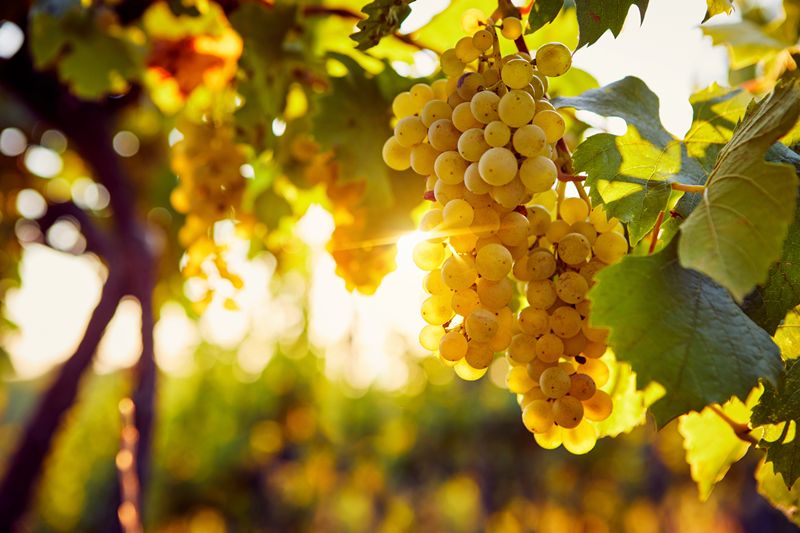
New research is reshaping how scientists understand terroir, the idea that a wine expresses the place where it was made. Alongside soil, climate, grape variety and vineyard practices, researchers now say the microbes that live on grape skins and move into the winery are part of that picture. But the emerging view is more complex than the early idea of a fixed “microbial fingerprint” tied to one vineyard or region.
Studies cited in a recent scientific analysis by researcher María Carmen Portillo and colleagues show that the grape microbiome is highly dynamic. Bacteria, yeasts and filamentous fungi on the surface of grapes change as berries ripen, respond to weather and farming conditions, and are reshaped again during harvest, crushing, pressing and the first hours of fermentation. The result, researchers say, is not a microbial community that passes unchanged from vineyard to bottle, but a series of ecological filters that allow only part of that diversity to survive and influence wine.
That shift matters for both growers and winemakers. If the microbiome is dynamic rather than fixed, choices such as when to harvest, how quickly grapes are processed, whether fruit is healthy or damaged, and how fermentation is started can all affect which microbes remain active and whether they leave a mark on the finished wine.
The traditional concept of terroir focused on interactions among land, weather, vines and human management. Over the past two decades, advances in DNA sequencing have allowed scientists to examine microbial populations in vineyards and wineries in far more detail. Those studies found recurring geographic patterns, leading to the idea of “microbial terroir,” or the possibility that local microbes contribute to regional wine identity.
Yet the new body of work suggests that geography is only one part of the story. Microbial communities on grapes are influenced by temperature, water availability, soil chemistry, topography, grape variety and vineyard management. They also come from multiple sources, including soil, air, insects, rain and other plant tissues.
In one earlier study in Spain’s Priorat region, Portillo and co-authors analyzed bacterial communities on Grenache and Carignan grapes from five vineyards. Even within one wine region, the communities differed by vineyard and showed links to origin, orientation and variety. In Carignan, vineyards that were closer together tended to have more similar bacterial communities. The findings suggested that microbial patterns can be structured at very small geographic scales.
Other work has found similar patterns in fungi. A 2019 study in four Australian vineyards reported that geographic origin had a stronger effect on grape fungal communities than either grape variety or harvest timing. The most abundant fungi were not always the best indicators of origin, suggesting that terroir signals depend on the balance among many groups rather than the simple presence of one dominant microbe.
Researchers say time is just as important as place. As grapes ripen, their sugar levels rise, acidity changes, skins soften and the berry surface becomes a different habitat for microbes. That means grapes from the same block harvested on different dates may not carry the same microbial starting point into the winery.
Berry health also plays a major role. In a study comparing healthy Macabeo grapes with fruit affected by sour rot or Botrytis, Portillo’s group found that damaged grapes had different bacterial and fungal communities and produced distinct spontaneous fermentation patterns. Must from damaged fruit contained higher levels of certain fungi and acetic acid bacteria, and those differences did not disappear right after pressing. Fermentations from damaged grapes kept higher microbial diversity for longer and showed different yeast successions, with later effects on organisms such as Oenococcus oeni, a bacterium important in winemaking.
The strongest disruption comes when grapes are crushed. Once berry skins break, microbes that were living on the fruit surface are suddenly moved into juice rich in sugar and nutrients. Oxygen levels, acidity and alcohol then begin to change quickly. Scientists describe that transition as a sharp ecological break. The must is not just carrying vineyard microbes into the cellar; it is creating a new environment that selects which organisms can grow.
Earlier work on spontaneous Grenache fermentations illustrated that succession. At the start, yeasts such as Hanseniaspora and Issatchenkia were common. Candida increased later, and Saccharomyces became more important toward the end. Bacterial communities also shifted, with acetic acid bacteria present through much of fermentation and lactic acid bacteria increasing later. The pattern supports a broader finding in wine microbiology: the microbes most visible on grapes are not necessarily the ones that dominate fermentation.
Nutrients help determine that outcome. In microvinification trials, Portillo’s team found that nitrogen and sugar levels changed the balance between Saccharomyces cerevisiae and non-Saccharomyces yeasts. Low nitrogen slowed fermentation and allowed non-Saccharomyces yeasts to persist longer. The timing of S. cerevisiae inoculation also affected the stability and diversity of the microbial community.
That issue has become more important as the wine industry shows growing interest in non-Saccharomyces yeasts for their role in aroma and acid production. Researchers say their effect depends not only on their presence, but on how they interact with S. cerevisiae and on the conditions under which mixed fermentations develop.
A recent study published in 2026 in the International Journal of Food Microbiology tied many of those ideas together. Using Muscat of Alexandria grapes harvested at three ripeness levels corresponding to about 10%, 12% and 13% potential alcohol, the researchers tracked bacterial and fungal communities on the fruit and through early winemaking stages with DNA metabarcoding.
They found that the sampling point itself was the main factor shaping microbial communities. In other words, the jump from grape to processing to early fermentation changed the microbiome more than any other single factor. Environmental and surface microbes were gradually replaced by groups better adapted to the conditions in must and early fermentation.
Still, when the researchers looked only at samples taken at the start of fermentation, grape ripeness emerged as the main factor associated with differences in both bacterial and fungal communities. The immediate effect of inoculation strategy was smaller by comparison. The finding suggests that the berry’s ripening stage can leave a detectable signal even after the strong filtering effects of processing.
Importantly, that signal was not simply a matter of more or less diversity. In fungal communities, the study did not find major differences in richness or Shannon diversity across ripeness levels. What changed was the identity and relative abundance of the microbes present. For scientists, that means terroir-related processes may appear as different community compositions rather than higher overall microbial diversity.
The question now is whether those microbial differences actually change wine in a meaningful way. Researchers say detecting biogeographic differences among vineyards and regions is not enough by itself to prove a functional terroir effect. For microbes to contribute to wine identity, they must reach the must, stay metabolically active long enough to matter, interact with other populations and produce compounds that alter fermentation or the wine’s chemistry.
Some studies suggest that link is real. A widely cited 2016 study of more than 200 commercial fermentations in Napa and Sonoma found that both microbial patterns and metabolic profiles could distinguish wine-growing areas and even individual vineyards. It also found associations between fermentation microbiota and the chemical composition of finished wines. Even so, scientists caution that correlation does not establish causation.
The new research also points to practical choices for wineries. Spontaneous fermentations can preserve more local microbial diversity, but they often bring more variability. Fermenting with a single commercial S. cerevisiae strain offers more control and repeatability, but may limit the role of native microbes. Between those options are intermediate strategies, including local starter cultures and “pied de cuve,” a small pre-fermentation made from native grapes and juice that is later used to seed the main tank.
According to the studies reviewed by Portillo and colleagues, pied de cuve can act as a tool for ecological selection. Factors such as sulfur dioxide, temperature and small ethanol additions during its preparation can change which yeasts develop. In their latest work, fermentations started with pied de cuve preserved more indigenous S. cerevisiae strain diversity than those inoculated with a commercial strain, while remaining more reliable than fully spontaneous fermentations.
The broader message from this research is that microbial terroir may be best understood not as a fixed set of organisms unique to one place, but as a local probability shaped by vineyard conditions and then narrowed by winery decisions. Scientists say future work will need to go beyond DNA detection alone, because finding microbial DNA does not prove the organisms were alive or active. They are calling for more studies that combine sequencing with metagenomics, transcriptomics, metabolomics, culture-based methods and multi-year sampling to separate durable regional signals from one-season effects.