France Lets Some 2026 Champagne Wines Exceed the 13% Alcohol Limit
Producers must seek individual approval from the INAO under an emergency rule tied to harvest conditions
Wednesday, October 28, 2026
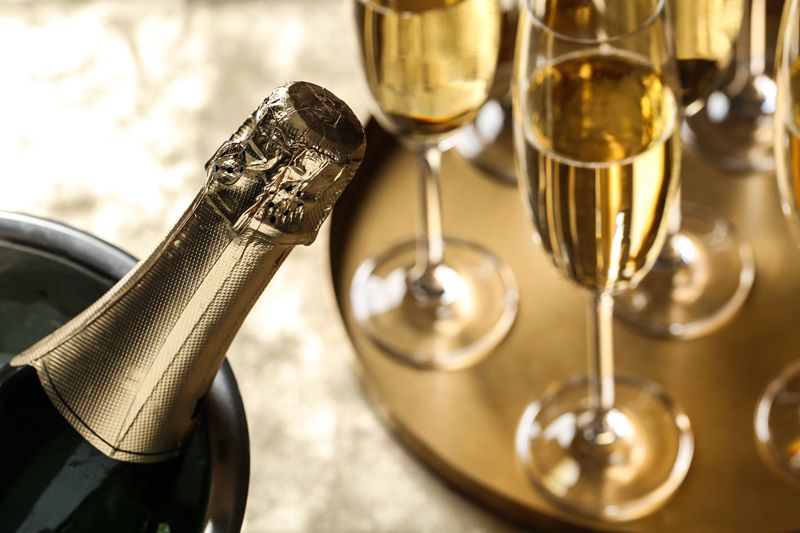
France has published an exceptional rule for Champagne that will let some wines from the 2026 harvest go beyond the usual 13% alcohol threshold if producers obtain case-by-case approval from the country’s appellation authority.
The measure appeared in the Journal officiel, the French government’s official legal bulletin, in an order dated Oct. 22 and published Wednesday. It applies to wine used in the production of sparkling wine sold under the protected appellation d’origine contrôlée, or AOC, “Champagne,” for the 2026 harvest.
Under the order, the natural alcohol content of the must or wine from the 2026 harvest cannot be lower than 9% volume or higher than 13% volume, unless a derogation is granted by the National Institute of Origin and Quality, known by its French acronym INAO. The text says any exception must be based on the “particular harvest conditions.”
That language gives Champagne producers a formal route to seek approval when grapes from the 2026 crop fall outside the standard ceiling. In practice, natural alcohol levels are closely watched because they reflect sugar accumulation in the grapes before fermentation, and high levels can create technical and stylistic issues in sparkling wine production.
The order does not grant a blanket exemption across the region. Instead, it sets a process for individual applications. Requests must be sent to the INAO by Nov. 10, 2026, and must include evidence justifying the request, including analyses and an agronomic report, according to the text.
The rule took effect immediately upon publication.
The decision is narrow in legal scope, but it matters well beyond a technical change in one French wine category. Champagne is one of the world’s most closely regulated and commercially important beverage appellations, and even limited flexibility there can signal how regulators are responding to harvest conditions that may be changing faster than long-standing production rules. For wine producers, importers, distributors, and other beverage companies, the move may be another sign that heat and ripening pressures are forcing adjustments in how premium wines are governed and made.
French appellation rules are designed to protect identity and quality, and they normally set tight parameters for grape growing and winemaking. In Champagne, those rules are especially important because the region’s global reputation rests on a defined production method and a legal framework that limits what can be sold under the name. A decision to allow exceptions, even only after review by the INAO, shows that regulators are willing to use emergency tools when the harvest creates unusual results.
The government order is written in concise legal terms and does not spell out the weather events or agronomic problems behind the measure. It says only that the derogation can be granted according to the specific conditions of the harvest. Still, the practical effect is clear: producers who can document their situation now have a path to use 2026 harvest wines that would otherwise exceed the standard 13% limit.
That could be significant for Champagne houses and growers because alcohol levels influence blending decisions, balance, and the style of the final sparkling wine. In a region where base wines are assembled with precision and where regulatory compliance is central to market access, a small legal adjustment can affect production planning across the supply chain.
The order applies specifically to wine entering the production of sparkling wine benefiting from the AOC Champagne designation for the 2026 harvest. It does not announce a permanent rule change for later harvests. Any producer seeking relief must still persuade the INAO, and the request must be supported by technical data rather than simple commercial need.
The French system gives the INAO broad authority over appellations and their specifications, and its role in this order is central. By requiring lab analyses and an agronomic report, the government is signaling that exceptions will be evidence-based. That approach may reassure producers and buyers that the derogations are intended to address documented harvest conditions, not to weaken the standards that define Champagne.
For the wider drinks industry, the measure is also notable because Champagne often serves as a reference point in discussions about premium wine regulation. When France makes room for exceptions in such a tightly controlled category, other wine regions and beverage regulators may watch closely. The change does not rewrite the identity of Champagne, but it does show how climate-linked production pressures can begin to reshape the fine details of beverage law.