German Court Bars Wine Sellers From Using QR Label Pages for Marketing
The ruling says logos and extra links violate EU disclosure rules, a standard that could force e-label redesigns
Tuesday, November 3, 2026
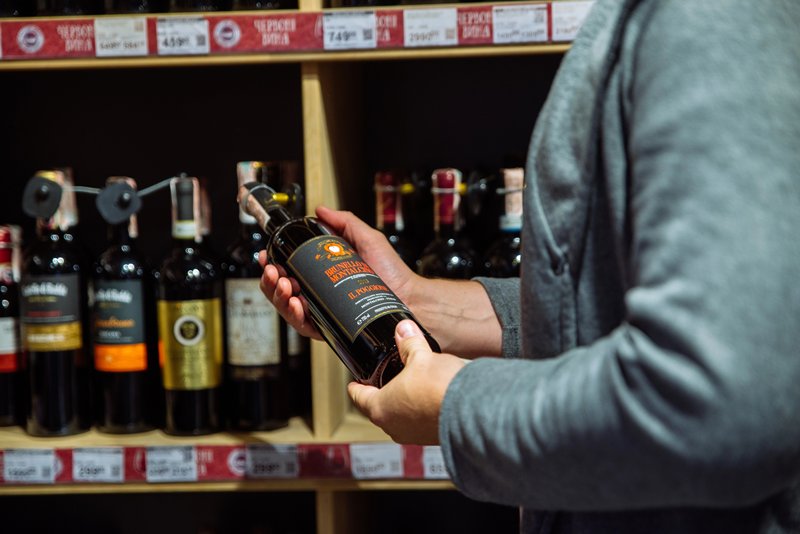
A German court has found that a wine seller violated EU labeling rules by placing a company logo and a button linking to additional product material on a webpage reached through a QR code on wine bottles, a decision that could force producers and retailers to redesign electronic labels used for mandatory consumer information.
According to a legal analysis published by IT-Recht Kanzlei, the Cologne Administrative Court ruled on September 24 that webpages used to provide wine ingredients and nutrition details electronically may not also serve marketing purposes. The case, filed under 4 K 6494/25, centered on how far a special advertising ban extends when wineries and merchants use QR codes instead of printing all required information directly on the bottle label.
The issue matters across the beverage business because many wine producers, importers, distributors and private-label sellers have adopted QR-based disclosures to meet EU labeling rules while preserving label space. A strict reading of the law could require changes not only to obvious promotions, but also to routine brand elements such as logos, links and product descriptions on those pages.
Under EU rules applying to wine products made from December 8, 2023, ingredient lists and nutrition declarations do not always have to appear in full on the physical label. They can be provided electronically, including through a QR code on the bottle, if certain conditions are met. But the linked page is subject to tighter limits than an ordinary commercial product page.
The Cologne case involved a food retailer that sold wines, including some bottled specifically for it. Consumers who scanned the QR codes on the bottles could access the legally required ingredient lists and nutrition declarations. The problem, the court found, was that the linked pages also displayed the retailer’s corporate logo at the top and included a button labeled “More information.”
When users clicked that button, additional material appeared, including customer reviews, descriptions of taste, grape varieties and other product-related information. According to the legal analysis, that extra content fully overlaid the ingredient and nutrition information.
The local food oversight authority objected to that design and ordered the company to remove both the logo and the button from the affected pages. It also required the company to ensure that future labeling pages were designed without those elements. The retailer challenged the order, arguing that the logo only identified the company and that the button itself was neutral because the extra material appeared only after another click.
The court upheld the authority’s removal order. Its reasoning rested on provisions in Article 119(4) and Article 119(5) of EU Regulation No. 1308/2013, which govern wine labeling. Those provisions say that mandatory information provided electronically must not be displayed together with other information used for sales or marketing purposes.
According to the court’s interpretation, that ban covers more than direct product advertising. It also includes information capable of promoting sales of a product or the marketing of a company.
That is why the court treated the company logo as a problem in itself. Even without an explicit sales message, a logo helps consumers recognize a business and can support future purchasing decisions, the court said, according to the legal analysis. The retailer’s argument that the logo helped users confirm they had reached the correct page did not succeed. The court said identification could also be achieved through more neutral means, such as the product name or the legal notice.
The ruling also addressed attempts to separate marketing content from mandatory disclosures by placing it behind an extra click. The court viewed the “More information” button and the material behind it as a single unit. In that view, the advertising ban cannot be avoided by hiding promotional content behind a link or button, even if the first screen looks less commercial.
The legal analysis said the court’s reading is in line with European Commission guidance on wine labeling published on November 24, 2023. That guidance indicates that even links to a winery website or an online store can be considered marketing when placed on a page dedicated to mandatory electronic labeling.
The case does not mean ordinary wine product pages in online stores must be stripped of logos, reviews or other lawful promotional material. The decision concerns a specific type of webpage: one created to provide legally required ingredient and nutrition information under wine law. Those pages serve an informational function and are therefore subject to a special advertising ban. A normal e-commerce product page can still be used to market the wine, although sellers must also comply with separate distance-selling rules that require mandatory food information before purchase.
The decision could still have broad practical effects for companies that rely on outside vendors to host QR-code landing pages. In the Cologne case, the retailer did not escape responsibility because a third-party service provider operated the linked pages. According to the legal analysis, the court relied in part on Article 8(5) of EU Regulation No. 1169/2011, the Food Information to Consumers Regulation, which requires food business operators to ensure and verify compliance with labeling rules within their area of activity.
The court found the retailer shared responsibility because it had arranged for the QR codes to be placed on the bottles, was identified as responsible for the data set and knew the circumstances behind the violations. The outsourcing of the technical setup did not change that, the analysis said.
That point may be especially important for beverage companies using private-label arrangements or centralized digital labeling services. A producer or merchant that controls the content of the QR-linked page may still be held responsible even if the page is built and hosted by an external compliance provider.
The legal analysis drew a distinction between those operators and a pure reseller with no influence over the electronic labeling of wines made by others. In that case, Article 8(3) of Regulation No. 1169/2011 becomes more relevant. A reseller that does not affect the food information may not sell products it knows, or should know as a professional, do not meet legal requirements. Still, the Cologne ruling described review duties broadly enough that authorities could try to impose closer scrutiny on resellers as well, even though that question was not directly decided in the case.
The enforcement risk is not theoretical. According to the legal analysis, the court upheld the authority’s demand that the retailer remove the logo and disputed button from existing labeling pages, design future pages in the same compliant way and prove implementation within four weeks. The court also upheld a threatened coercive fine of 10,000 euros in the event of renewed violations on future pages. It canceled only one part of the threatened fine, tied to changes on existing pages, because the authority had not set a deadline for compliance.
The analysis also pointed to other compliance points for wine sellers using QR codes. If nutrition information is provided electronically, the energy value must still appear on the bottle label. Required allergen information must also remain on the physical label. European Commission guidance further says the QR code should be accompanied by a heading containing the word “ingredients.” A simple information symbol is not enough.
Because the Cologne court did not rule on every design feature, some gray areas remain. The legal analysis said companies should be cautious with product photos, even though the court did not specifically address them, because images can also serve a promotional purpose. It also said repeating neutral information already shown on the label may be less risky, but that in the case before the court, references to grape varieties and grape origin were treated as sales-promoting in context.
The ruling is not yet final, according to the monitor summary of the legal analysis. Even so, it signals that German regulators and courts may take a narrow view of what is allowed on wine e-label pages. For beverage companies that have treated those pages as a mix of compliance tool and brand touchpoint, the decision raises the prospect of a much plainer format focused only on mandatory consumer information.