France Raises Occitanie Wine Harvest Forecast to 11.07 Million Hectoliters
Late-August rainfall improved yields in Languedoc-Roussillon, offsetting heatwaves and drought in one of France’s biggest producing regions
Tuesday, November 10, 2026

Views › 475
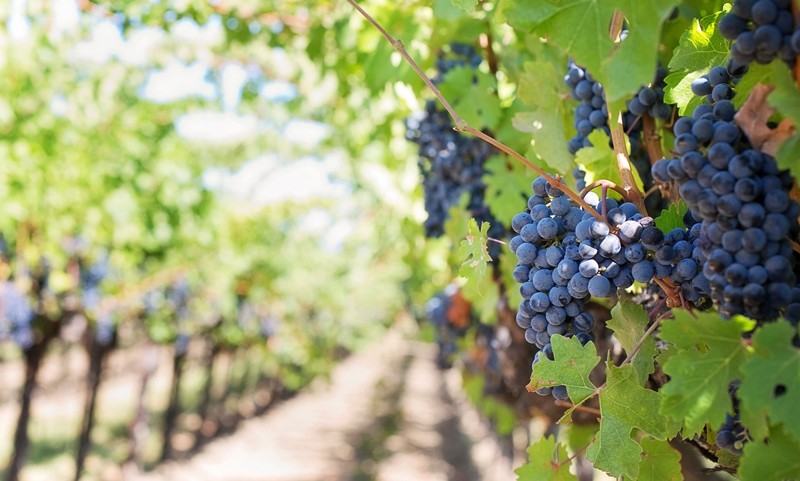
France raised its outlook for the 2026 wine harvest in southern Occitanie on Tuesday, November 10, after late-August rain improved yields in one of the country’s biggest producing areas, even though vineyards across the region endured repeated heatwaves and worsening drought through much of the summer.
In a report published Tuesday, November 10, DRAAF Occitanie, the regional arm of the French agriculture ministry, said total production in the Languedoc-Roussillon basin was now estimated at 11.07 million hectoliters in 2026. That was a sharp revision from the previous month and 25.0% above the weak 2025 harvest. The South-West area located within Occitanie was also revised higher, to 1.93 million hectoliters, up 11.6% from 2025.
For the whole Occitanie region, the agency said the harvest was expected to rise 18% from 2025 despite a drop of more than 6,000 hectares in productive vineyard area, equal to a 2.8% decline. The regional crop would stand slightly above the five-year average, by 1.5%, with yields close to those seen in the 2022 campaign.
The figures add an important signal for the wine trade because Languedoc-Roussillon is a major source of wine for both branded and bulk markets. A bigger crop there could shift supply expectations for wineries, merchants and other beverage companies that manage inventories or buy wine in volume, though the national harvest remains relatively weak by historical standards.
DRAAF Occitanie said the growing season began under favorable conditions. Winter and early spring rains replenished soil moisture reserves, and the absence of any significant frost allowed budburst to proceed well across the region. The pattern changed at the end of May, when an unusually early heat spike pushed temperatures above 95 degrees Fahrenheit, or 35 degrees Celsius, in some vineyards. From late June to early September, four separate heatwave episodes followed one another, while soil dryness intensified week after week.
According to the regional report, rainfall in the second half of August helped limit the damage from drought and extreme heat, leading officials to raise their estimate for yields. Even so, the agency warned that the broad regional picture masked potentially wide differences from one vineyard to another. It said local conditions, including access to irrigation, isolated storms and the capacity of soils to hold water, could create large variations that the overall estimate does not capture.
Department-level figures in the Languedoc-Roussillon basin showed Hérault as the largest contributor, at 4.71 million hectoliters, followed by Aude at 3.29 million, Gard at 2.63 million and Pyrénées-Orientales at 0.43 million.
The upward revision in Occitanie also fed into a broader increase in France’s national forecast. In a separate monthly estimate reported Monday, November 9, by Reuters and published by ESM Magazine, the French farm ministry put total 2026 wine output at 36.7 million hectoliters, up from 34.9 million hectoliters forecast in October. That new estimate would place production above the 2025 harvest, which the ministry described as the poorest of the century, but still 10% below the 2021-2025 average.
Reuters said the ministry attributed the national revision mainly to better-than-expected yields in Languedoc-Roussillon and Charentes, which together account for about half of French wine output, as well as improved prospects in Champagne and the South-East. France remains the world’s second-largest wine producer after Italy.
Even with the larger forecast, the national crop is still being held back by a smaller vineyard base and weather damage in several regions. The ministry’s statistics service, Agreste, said vineyard area fell because of a reduction plan, while summer heat and drought cut yields, especially in northern wine regions.
The pressure was uneven across France. Reuters reported that Champagne production was still expected to fall 38% from 2025 after frost, hail, drought and summer heatwaves. Burgundy-Beaujolais output was forecast to drop 22%, while Loire production was expected to decline 7%. In Bordeaux, production was seen rising 10% from 2025 but remaining 11% below the five-year average, partly because of vineyard removals.
The contrast with Languedoc-Roussillon was one of the clearest changes in the November data. Reuters said the farm ministry had expected only a 2% increase in the region in its October estimate, before late-summer conditions supported a much larger upward revision. That means one of France’s most important wine regions is moving against a national backdrop that is still constrained by a historically small crop, reduced vineyard area and the growing effect of extreme weather on yields.