Scotland’s whisky stockpile reaches 1.4 billion liters
Many distilleries have cut output by more than a third after supply moved well ahead of demand.
2026-09-07
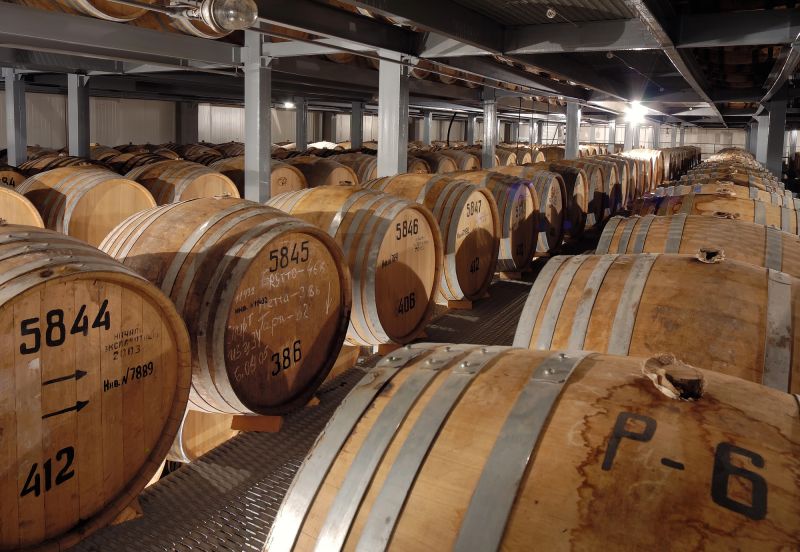
Scotland’s whisky industry is holding an estimated 1.4 billion liters of maturing whisky in 2026, a sharp increase from less than 400 million liters about a decade ago, according to the Financial Times, which cited estimates from Commercial Spirits Intelligence and industry consultations.
The reported stock level suggests that warehouses across Scotland now contain more than 1 billion additional liters of spirit compared with 10 years ago. That would put current inventories at at least 3.5 times the earlier level. The volume is also said to equal roughly three years of current consumption, a sign that supply has moved well ahead of demand.
The buildup has led many distilleries to scale back production. According to the report, numerous producers have cut output by more than a third as they try to slow the growth of stocks that can take years to turn into sales. In the whisky business, spirit must mature in casks before it can be bottled and sold as Scotch, which means producers often commit cash long before they generate revenue.
That long aging cycle can turn excess supply into a serious financial problem. Large inventories tie up capital in spirit that may not be sold for years. If demand remains weak or growth slows, producers can face pressure to offer discounts, suspend operations, sell assets, or seek new financing. The risk is particularly acute for independent distillers, which often have less access to cash than larger groups with broad international distribution.
One recent example is Holyrood Distillery in Edinburgh, which halted distillation indefinitely this spring, according to the same report. The company is said to be holding about 4,500 casks. A pause in distillation does not necessarily mean a distillery has stopped all business activity, since producers can continue to mature, market, or sell existing stock, but it is a clear sign that current market conditions are forcing some operators to conserve cash and limit further production.
The estimate of 1.4 billion liters is not an official inventory from the Scotch Whisky Association. The figure comes from a private analysis and does not break down how much of the whisky is of legal bottling age, who owns it, what share is readily marketable, or what it is worth. It also does not provide a detailed split by distillery size, region, or ownership structure. That means the headline number gives a broad picture of volume, but not a full measure of commercial health across the sector.
The production cuts cited in the report also come from industry sources rather than a single public dataset. That makes it difficult to know how evenly the pullback is being felt. Some producers may be trimming output modestly, while others may be cutting much more deeply or stopping production for a period. The effect is likely to vary depending on each distillery’s sales channels, export exposure, contract obligations, and cash position.
The stockpile matters because Scotch whisky is not produced in response to short-term shifts in demand. Distillers must make decisions years in advance, often based on expectations about future consumption in export markets. If those expectations prove too optimistic, the result is a large amount of spirit aging in warehouses without a clear near-term sales path. Since aging itself costs money through storage, insurance, barrel management, and financing, rising stocks can add pressure even before the whisky reaches bottling age.
The issue also raises the prospect of price competition. If too much whisky becomes available for sale at the same time, producers may be pushed to accept lower margins to move stock. That risk can be especially important in the wholesale and private-label parts of the market, where buyers may have more leverage and where independent distillers may be more exposed. At the same time, producers with stronger brands may try to protect pricing by holding inventory longer, though that keeps capital tied up.
For Scotland, the accumulation of maturing whisky is more than a warehouse statistic. Scotch remains one of the country’s best-known manufactured exports, and production decisions affect rural employment, coopers, logistics providers, grain suppliers, glass makers, and tourism businesses linked to distilleries. A broad slowdown in distilling can ripple through that network, even if mature stock remains high.
The reported numbers point to a sector adjusting after years of expansion. The increase from under 400 million liters to about 1.4 billion liters indicates that distilleries laid down large amounts of spirit over an extended period. That strategy made sense when growth expectations were stronger, but it becomes harder to sustain when current consumption no longer absorbs new supply at the same pace.
Because the estimate does not assign a monetary value to the whisky in storage, it does not show how much balance-sheet pressure individual companies are facing. Two distillers may hold similar volumes but face very different risks depending on debt levels, financing costs, brand strength, and the age profile of their casks. Older whisky can command higher prices, but it also represents a longer period of capital being locked away. Younger stock may be easier to value conservatively, but it cannot be sold immediately as older expressions.
The figures reported on Sept. 5 add to evidence that the Scotch whisky industry is entering a period of restraint. After years in which new distilleries opened and established producers expanded, the focus now appears to be shifting toward stock management, cash preservation, and a closer watch on how much spirit the market can absorb.
