Brazil’s at-home beer prices rose 0.83% in August despite falling consumer inflation
The gain outpaced easing food costs, marked a second straight monthly increase, left annual at-home beer inflation at 5.46%.
Tuesday, September 15, 2026
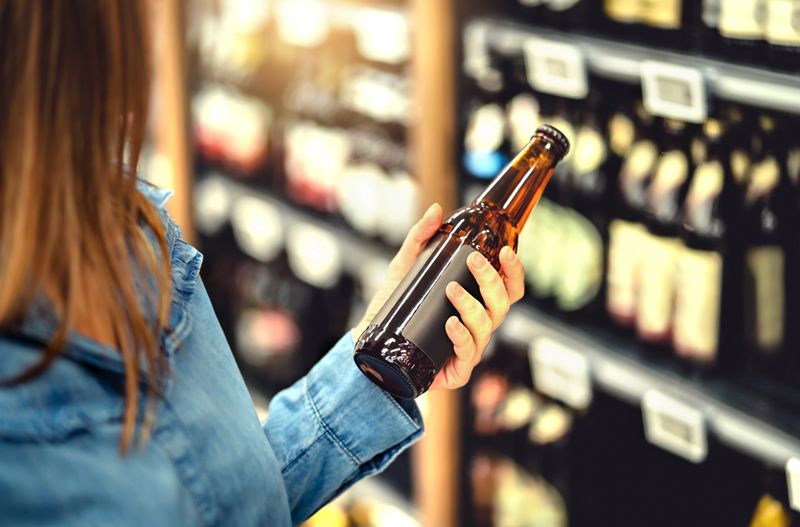
Beer prices paid by Brazilian households rose again in August, moving higher even as the country’s broad consumer inflation index declined for the month.
Data published Tuesday by Guia da Cerveja, based on the August IPCA report from the Brazilian Institute of Geography and Statistics, or IBGE, showed that beer consumed at home increased 0.83% from July. Over the same period, the overall IPCA fell 0.32%. The monthly gap between the two readings was 1.15 percentage points.
The August increase followed a 0.76% rise in July, meaning beer sold for home consumption has now posted two straight monthly gains. The pace also accelerated slightly from the previous month, by 0.07 percentage points.
The figures stand out because they ran against the broader direction of food prices in Brazil. The food and beverages group fell 0.34% in August, while food consumed at home dropped 0.61%. Beer bought in supermarkets and other retail channels moved the other way, rising 0.83% in the same month.
Beer consumed outside the home also became more expensive, though at a slower pace than beer bought for home use. Prices for beer in bars and restaurants rose 0.59% in August. That increase was closer to the broader movement in away-from-home food prices, which advanced 0.36% in the month.
Over the first eight months of 2026, at-home beer prices rose 2.50%. Beer consumed outside the home increased 3.21% over the same period. On a 12-month basis, the increase was steeper for both categories. Beer consumed at home rose 5.46% from August 2025, while beer consumed away from home climbed 4.15%.
That 12-month reading for beer consumed at home was above the upper end of Brazil’s continuous inflation target band. The central bank’s target is 3%, with a tolerance range of 1.5 percentage points in either direction, setting the ceiling at 4.5%. Beer consumed outside the home remained within that band at 4.15%, but close to the limit.
The divergence from the general inflation reading was also visible across categories tracked by the IPCA. While overall consumer prices were down 0.32% in August and the food and beverages group fell 0.34%, the subcategory for away-from-home food rose 0.36%. Beer prices increased in both settings, with a stronger rise in home consumption channels.
Regional data showed that the increase in at-home beer prices was broad, though not universal. Among the 15 capitals with available IBGE data for August, prices rose in 11. The largest monthly increases were in Curitiba, where prices climbed 2.60%, followed by Goiânia at 1.49% and Recife at 1.24%.
Four capitals recorded monthly declines. The sharpest drop was in Greater Vitória, at -1.44%. Brasília posted a -0.72% change, Belo Horizonte fell -0.40%, and São Luís declined -0.34%.
On a 12-month basis, Rio de Janeiro recorded the largest increase in at-home beer prices, at 9.97%. Curitiba followed at 8.60%, and Goiânia at 8.51%. At the lower end, Porto Alegre posted a 12-month increase of 2.08%, Recife 2.12%, and Belo Horizonte 2.41%.
Other capitals also showed notable annual increases. Belém rose 7.74% over 12 months, Aracaju 6.28%, São Paulo 5.45%, and São Luís 5.22%. Brasília posted a 4.02% increase, Fortaleza 4.01%, and Greater Vitória 3.94%. Salvador rose 2.88% over the same period. IBGE did not show available August data for Rio Branco in the beer item cited by Guia da Cerveja.
The August numbers refer to prices paid by consumers and reflect retail inflation, not factory prices or sales volumes. The data therefore show what households and customers in bars and restaurants paid for beer, rather than how much brewers produced or sold.
Even with that limitation, the figures point to sustained price pressure inside the beer category. Beer became more expensive in supermarkets and in bars and restaurants during a month when Brazil’s broad inflation index fell and grocery prices generally eased. That made beer one of the more visible exceptions within the August consumer price report.