Colli Orientali Draws Fresh Attention for Native Red Wines
Red wine now accounts for about a quarter of the area’s DOC output, led by a revival of Schioppettino, Refosco and Pignolo.
2026-09-02
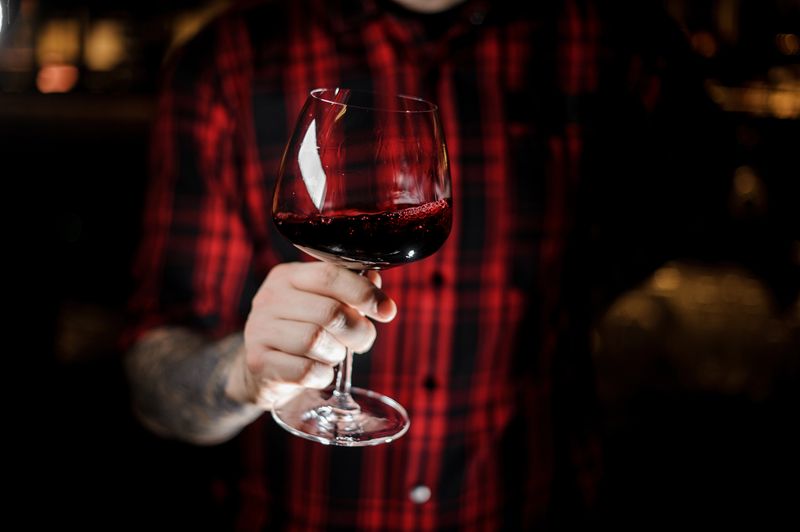
Colli Orientali, a wine area in Italy’s Friuli-Venezia Giulia region long associated with white wines, is drawing fresh attention for a growing lineup of red wines made from native grapes, according to a recent report by Decanter.
The shift matters because Friuli’s reputation outside Italy has been built largely on white varieties. In Colli Orientali, however, red wine now represents about a quarter of production in the local DOC, according to the Consorzio Tutela Vini Friuli Colli Orientali, the trade body cited in the report. Producers and wine observers say the area’s strongest point is not international grapes but a group of local red varieties that are closely tied to its hills and soils.
Colli Orientali, or “Eastern Hills,” sits next to the better-known Collio zone and shares many of its natural features. The two areas are separated by an administrative boundary, with Collio in the province of Gorizia and Colli Orientali in Udine. Both are defined by hilly terrain, similar elevations, and the calcareous marl soil known locally as ponca. Both also grow the white grapes that helped make Friuli one of Italy’s most recognized white wine regions.
What sets Colli Orientali apart, the Decanter report said, is the depth of its native red wine tradition. While red wines remain a limited part of production in neighboring Collio, Colli Orientali has preserved and expanded work with three local grapes: Refosco, Schioppettino, and Pignolo. Each has its own history, and each has faced periods of decline.
Refosco is the broadest category of the three, because it refers to a family of grapes rather than a single variety. The report said there are at least half a dozen types in Colli Orientali alone. Historical references to Refosco go back to the 18th century, though the wide use of the name has complicated efforts to define its exact lineage.
The most planted form today is Refosco dal Peduncolo Rosso, named for its red stems. It is a vigorous, thick-skinned grape that ripens late and needs strong sunlight. In cooler or less favorable years, it can produce wines marked by sharp acidity and firm tannins. But a series of warm vintages has improved conditions for growers, helping the grape reach fuller ripeness. When successful, the wines show deep ruby-violet color and flavors centered on cherry and raspberry. Decanter noted that the variety can be prone to reduction if it is aged only in stainless steel, making careful barrel aging an important tool for many producers.
Another member of the family, Refosco Nostrano, is less widely known but is treated separately in the local rules. The report said it is not closely related in style to Peduncolo Rosso despite the shared name. Wines from Nostrano are seen as more refined and less tannic, and the village of Faedis has its own sub-designation for them under Refosco di Faedis.
Schioppettino has one of the most dramatic histories among Friuli’s grapes. It was once widely planted in the upper Judrio valley, but it nearly disappeared after World War I. Growers and historians have linked that decline to the grape’s fragility, irregular flowering, and sensitivity to disease. By 1977, wine writer Mario Soldati reportedly found only a handful of producers still making wine from it.
A major turning point came with Paolo Rapuzzi of the Ronchi di Cialla estate, who is widely credited with helping save the grape from extinction. According to the Decanter account, he planted vines from old cuttings at a time when the vineyard was not authorized, taking the risk that authorities could order the plants removed. The effort survived, and Schioppettino was added to Italy’s national grape register that same year.
Today the grape remains strongly tied to a small area, especially around Albana and neighboring Prepotto, which has its own DOC sub-zone. Like Refosco, Schioppettino ripens late and keeps high natural acidity, but it generally has finer tannins. The wines are usually paler in color and known for dark berry fruit and a peppery finish. Decanter said they can be enjoyed young but often gain more texture and elegance with age.
Among the three native reds, Schioppettino appears to have made the clearest commercial and quality gains in recent years. Its rise reflects a broader effort by producers to distinguish Colli Orientali through grapes that are not widely grown elsewhere and that give the region a clearer identity in export markets and among wine professionals.
Pignolo is the rarest and most demanding of the group. Decanter described it as a grape grown by about 60 producers, yet covering only 44 hectares in the 2024 vineyard register for Colli Orientali. That small footprint helps explain why it remains less visible than other Italian reds despite strong support from specialists.
Its comeback began around the same period as Schioppettino’s recovery. Once praised in historical writing, Pignolo had largely vanished by the 1950s before surviving vines were found near the abbey of Rosazzo. Its return has been slower because the grape is difficult in both vineyard and cellar. It gives low and irregular yields, is vulnerable to disease, and needs the right site because it ripens late. The wines it produces are powerful, with high acidity, potentially high alcohol, and very strong tannin due to small bunches and thick-skinned berries.
That structure has also become part of its appeal. The DOC requires at least three years of aging for Pignolo, and supporters argue that the wine needs even more time to show its full character. Decanter reported that bottles often begin to show greater complexity after five or six years, with some of the most impressive examples appearing at eight to 10 years of age.
The renewed focus on native reds comes after a significant shift in local vineyard composition over the past two decades. The report said red grapes once made up 40% of the vineyard area in Colli Orientali, with Merlot as the leading variety. Even if red wines do not return to that level of plantings, current momentum appears to be moving away from international grapes and toward local ones with stronger regional identity.
The report also pointed to a network of producers now associated with the revival, including estates working across Refosco, Schioppettino, and Pignolo. Names cited included Ronchi di Cialla, Livio Felluga, Le Due Terre, Gigante, Petrussa, Pitticco, Vignai da Duline, Monviert, Guerra Albano, Rodaro, and Tunella, among others. Their work has helped expand the visibility of wines that were once treated as marginal next to Friuli’s whites.
That change is happening in a region where geography, climate, and history have long favored specialization. Warm recent vintages have improved the chances of success for late-ripening grapes such as Refosco and Schioppettino. At the same time, the market value of originality has increased, giving producers more reason to invest in varieties that can offer a profile difficult to copy elsewhere.
For Colli Orientali, the emerging message is that Friuli’s identity can no longer be explained through white wine alone. In the hills east of Udine, growers are betting that local red grapes once close to disappearing can now play a larger role in defining the region’s future, with bottles of Schioppettino from Prepotto, Refosco from Faedis, and long-aged Pignolo from Rosazzo drawing increasing attention from critics and buyers.
