Champagne pickers are gathering only 200 to 300 kilograms a day in the 2026 harvest
That is roughly half the usual volume, reducing piece-rate earnings for crews needed in an already early harvest.
Monday, August 24, 2026
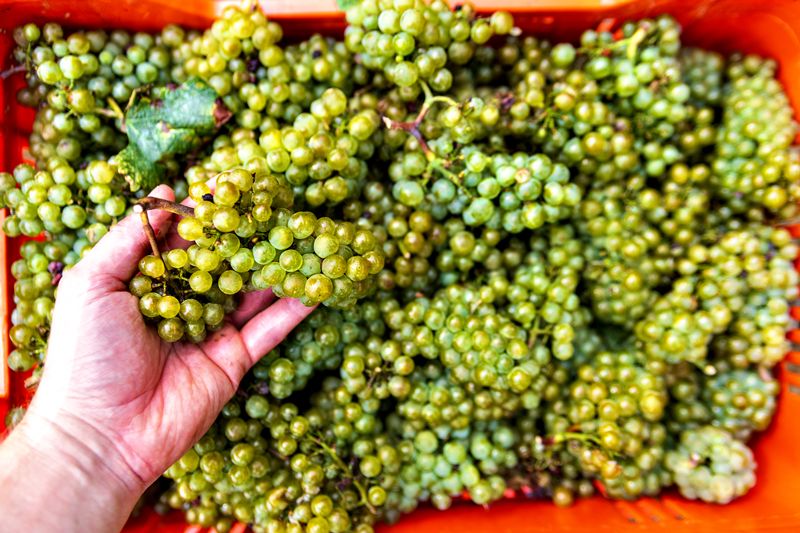
In Champagne’s 2026 grape harvest, some vineyard workers paid by the kilogram are collecting far less fruit each day than they usually do, according to estimates from a regional correspondent, a shift that is cutting earnings for some crews and adding strain to an already early harvest.
The reported daily output for piece-rate pickers has fallen to about 200 to 300 kilograms a day, compared with a more typical range of 400 to 580 kilograms. At the low end, that is a drop of 200 kilograms, or about 50%. At the high end, it is down 280 kilograms, or about 48%.
The estimates are not official statistics and do not measure all of Champagne. They also should not be read as showing an equal drop in vineyard yield per hectare across the region. Instead, they describe the physical daily productivity of workers who are paid according to how many kilograms they pick during the harvest.
Even so, the figures point to a direct problem for growers and labor contractors. When workers paid by weight gather only half, or close to half, of their usual volume, their pay can fall sharply unless rates are adjusted. That has led some laborers to turn down assignments paid by the kilogram, according to the report, creating new pressure on employers who need to bring in grapes quickly.
The issue matters because the Champagne harvest runs on tight timing. Grapes must be picked within a short window to protect quality, and labor shortages can slow that work. If fewer workers are willing to accept piece-rate jobs, growers may have to rely more on hourly pay, find replacement crews, or face delays in parcels where fruit is ready at the same time.
The lower daily picking totals also have implications beyond wages. Piece-rate work is often used because it can speed up harvest operations when fruit is abundant and bunches are easy to gather. When pickers have to spend more time moving through rows for fewer kilograms, labor efficiency falls. That can raise the cost of harvesting each kilogram of grapes and complicate planning for houses and growers who depend on rapid collection.
This year’s early harvest is adding to that pressure. An early start compresses schedules for vineyard owners, pressing houses, transport, and seasonal labor recruitment. In that setting, weaker daily productivity can quickly become a logistical problem, especially if multiple sites need crews at once.
The available information does not claim that all vineyards in Champagne are seeing the same results. Conditions can vary widely from one village to another and even from one parcel to the next. Some plots may still allow faster picking than others, depending on grape load, vine condition, row layout, and the timing of ripeness. The estimates cited here reflect field observations rather than a formal count across the entire appellation.
Still, the reported ranges suggest a meaningful change in what a day’s work yields for workers on a kilo-based contract. Under normal conditions, a picker who reaches 400 to 580 kilograms can earn enough to make such assignments worthwhile. At 200 to 300 kilograms, the same job may no longer provide an acceptable day’s pay, especially for seasonal workers who travel for the harvest and face housing, food, and transport costs.
That creates a practical conflict between labor organization and crop conditions. Growers may prefer piece-rate systems when they want to reward faster work and move fruit quickly. Workers may accept those jobs when the amount available to pick is high enough to generate strong daily pay. But if the volume of grapes accessible to each worker falls, the arrangement becomes less attractive, and the incentive built into the system weakens.
The report also highlights a broader economic link in the harvest: lower grape availability in the rows can translate directly into lower worker output, lower pay under piece-rate contracts, and a reduced ability to finish picking quickly. That does not automatically mean the vineyard’s total production has fallen by the same share, but it does mean the human effort needed to gather the crop is producing fewer kilograms per day in at least some areas.
For Champagne, where the timing and handling of the harvest are central to production, such a shift can ripple through the chain from vineyard to press. If crews move more slowly, transport schedules can be harder to manage. If workers reject kilogram-based jobs, employers may need to renegotiate terms or reassign teams. In a harvest that is already starting early, those adjustments leave less margin for error.
No regional body has presented these estimates as a formal benchmark for the whole of Champagne, and the numbers remain field-based observations rather than verified statistics. But they have drawn attention because they go to the center of how the harvest is organized: how much fruit a worker can physically bring in each day, how that labor is paid, and how quickly the region can complete picking when grapes are ready.