Researchers find cross-continental gene flow in a wine yeast species
Genomic analysis of 151 Hanseniaspora uvarum strains also found region-specific selection that may shape fermentation traits
Tuesday, July 28, 2026
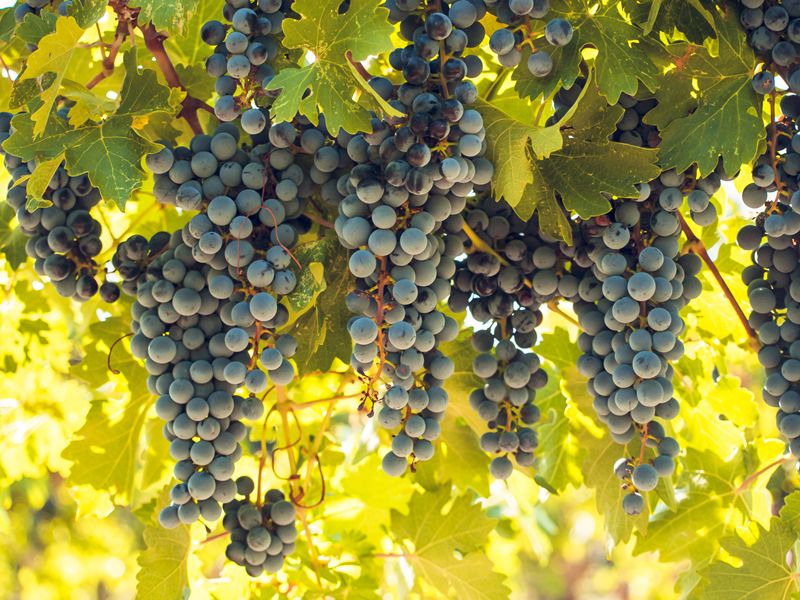
Researchers have mapped the population genomics of Hanseniaspora uvarum, a yeast commonly found on grapes and in the early stages of spontaneous wine fermentation, and found evidence of cross-continental gene flow, introgression and region-specific positive selection that may help explain how the species adapts to different environments tied to fermentation.
The study, published July 27 in Stress Biology, analyzed 151 strains of H. uvarum and built a pangenome from 159 strains. The dataset included 45 strains from Ningxia in northwestern China, 21 from other parts of China, 67 from Australia and 18 from other regions or with unspecified origin. The authors said the work offers one of the clearest genomic pictures so far of a non-Saccharomyces yeast that has drawn growing interest in winemaking and food engineering.
H. uvarum is not the main yeast that completes alcoholic fermentation in wine. Its abundance usually falls as ethanol rises later in the process. But it is common at the start of spontaneous fermentations and has been studied because it can shape aroma and texture. The paper notes that inoculation with H. uvarum has been associated in earlier research with higher ester and volatile phenol content, lower volatile acidity and improved sensory traits in wine. The species is also found in fermentations involving fruit, cocoa and coffee, and has been studied as a biocontrol agent in agriculture.
To carry out the new analysis, the researchers sequenced 65 wine-related strains collected from major wine-producing areas in northwestern China and combined those data with 86 publicly available sequencing datasets. After filtering repetitive and low-complexity regions from the reference genome, they identified 575,222 high-quality variants across the 151 strains, including 512,977 SNPs. Their downstream population analyses focused on 483,564 biallelic SNPs.
Several methods pointed to a broad geographic split between Chinese strains and those sampled on other continents. Phylogenetic analysis, ancestry coefficient analysis and principal component analysis all generally separated Chinese isolates from non-Chinese ones. At the same time, the separation was far from complete.
The researchers reported substantial post-divergence gene flow and introgression between clades sampled on different continents. In one TreeMix model that used eight migration edges, they inferred gene flow from one Chinese clade to an Australian clade, from another Chinese clade to a European clade and from a European clade to a Chinese clade. Additional models suggested more exchanges involving Australian, Chinese, European and U.S. clades.
A second test based on excess allele sharing supported that picture. The highest intercontinental f-branch value was 49.84% between one Chinese clade and one Australian clade, which the authors interpreted as a sign of introgression. Other relatively high values linked Chinese clades with European clades and one Chinese clade with an Australian clade. Taken together, the paper describes H. uvarum as showing widespread intercontinental gene flow and introgression, suggesting complex dispersal over time rather than isolated regional evolution.
Even with those exchanges, overall genetic differentiation between the main Chinese and Australian wine-related populations was low. After removing clonal strains, the average nucleotide diversity was 0.00780 for Chinese wine-related strains and 0.00784 for Australian wine-related strains. The average nucleotide divergence between the two regional populations was 0.00832, while Hudson’s FST was 0.03376.
The study also looked for signs of positive selection in subsets of strains from Ningxia and Australia. Using loci in the top 0.5% of RAiSD scores, the researchers identified 117 candidate genes under positive selection in the Ningxia subset and 141 in the Australian subset, with 23 genes shared by both groups. Regions containing these candidate genes showed significantly higher FST values and significantly lower nucleotide diversity than background coding regions across the genome.
What stood out was that selection signals were not identical across regions. In Ningxia strains, enriched Gene Ontology terms were tied to stress responses, metabolism, RNA processing, translation, chromatin remodeling and histone acetylation. Among them were terms related to positive regulation of filamentous growth in response to external stimuli such as starvation, pH stress and biotic stimulus. The authors highlighted these as significantly enriched in Ningxia strains.
In both Ningxia and Australian strains, the stress-related term “cytoplasmic stress granule” was significantly enriched, but it involved different sets of genes in each region except for two shared genes. In Australian strains, enriched terms also pointed to rRNA maturation, ribosome assembly, RNA surveillance and decay, DNA unwinding, transcriptional elongation, translational elongation, histone and protein ubiquitination, redox metabolism, fatty acid biosynthesis and cellular transport.
The paper also points to possible adaptation around genome maintenance functions. Among positively selected candidates, seven genes in the Ningxia subset and four in the Australian subset were annotated with “DNA repair,” though only one gene was shared between them. That matters because earlier work on Hanseniaspora has shown losses of some genes related to the cell cycle and DNA repair compared with other yeasts.
Another major finding came from the pangenome analysis. Although most samples came from human-associated environments such as vineyards and fermentations, H. uvarum showed what the authors described as an open pangenome. In practical terms, that means new genes continue to appear as more strains are added to analysis rather than leveling off quickly into a fixed gene set. The result suggests broad adaptive capacity under varied stresses and conditions.
For beverage producers, that kind of genomic diversity could become useful beyond basic evolutionary biology. A better understanding of how non-Saccharomyces yeasts differ by lineage and region may support future strain selection for more controlled fermentations or for specific aroma and texture goals in wine and other fermented drinks. The study does not test commercial performance directly, but it provides a genetic framework that could guide later applied work on starter cultures or mixed fermentations.
The authors present the work as a foundation for future ecological and industrial research on H. uvarum at a time when interest is rising in yeasts outside Saccharomyces cerevisiae. In wine especially, producers and researchers have been paying closer attention to microbes that influence fermentation before S. cerevisiae takes over or that can be used alongside it to alter style.
By combining newly sequenced Chinese isolates with public genomes from several continents, the study adds detail to that picture: H. uvarum appears geographically structured at a broad level, but also shaped by repeated exchange across regions; it carries local signatures of adaptation; and its gene repertoire remains flexible enough to suggest further evolutionary potential under agricultural and fermentation-related pressures.