Brown-Forman Expects Jack Daniel’s to Stay Off Shelves in Most of Canada
The company says tariff retaliation, coupled with provincial liquor bans, could shut out its U.S.-made spirits for the rest of its fiscal year.
Friday, September 4, 2026
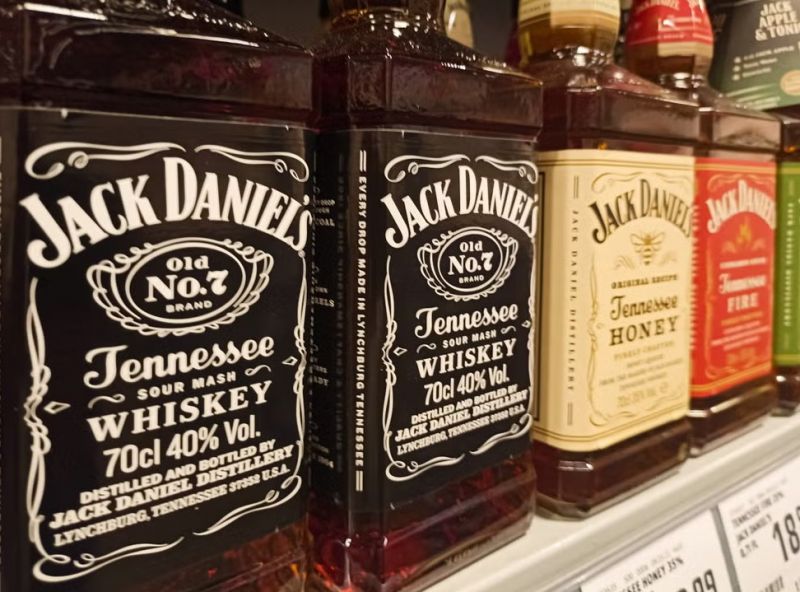
Brown-Forman, the Kentucky company behind Jack Daniel’s, said its U.S.-made spirits are likely to remain off store shelves in most Canadian provinces for the rest of its fiscal year, extending a trade disruption that has become one of the clearest business effects of the widening tariff fight between the United States and Canada.
The company gave that warning as it reported weaker sales and said demand for alcohol remained soft in several markets. In its latest update on Sept. 2, Brown-Forman said first-quarter sales fell 1% to $911 million. Chief executive Lawson Whiting said Canada was still a major problem because American-made spirits had not returned to shelves in most provinces.
That leaves one of the best-known American whiskey brands largely shut out of an important export market at a time when the company is already dealing with slower consumer spending and weaker alcohol demand in the United States and parts of Europe.
The dispute goes beyond whiskey. On July 20, President Donald Trump signed three proclamations imposing an additional 50% tariff on selected Canadian imports tied to alcohol, dairy and the motor vehicle sector. The duties took effect on Aug. 19. The administration used Section 338 of the Tariff Act of 1930, a rarely used law that permits duties of as much as 50% if a president determines that another country is discriminating against U.S. commerce.
The White House said the move was a response to actions taken by Canadian provincial liquor boards, which had already removed or stopped buying many U.S. alcohol products after earlier rounds of tariffs and trade threats. According to the administration, every Canadian province and territory halted the purchase, distribution or retail sale of U.S. alcoholic beverages beginning in March 2025. Alberta and Saskatchewan later lifted their restrictions, the White House said, but most provinces did not.
Those restrictions have had a measurable effect on trade flows. The White House said Canadian imports of U.S. alcoholic beverages fell about 81% in the 12 months ending in February 2026, dropping from roughly $718 million in the comparable prior-year period to about $137 million. That is a decline of about $581 million.
For Brown-Forman, those aggregate figures have turned into a direct commercial loss. Canada is not the only reason its sales weakened, and the company has pointed to broader softness in alcohol consumption. Still, losing access to a neighboring market where American spirits once had a regular place on shelves adds pressure to volumes and planning. For the broader beverage business, that matters because tariffs and provincial bans do more than raise prices. They can abruptly cut off distribution, distort inventory decisions and squeeze margins for distillers trying to manage shipments, production and promotional spending across borders.
The White House has argued that Canadian provincial policies treated U.S. alcohol unfairly because products from other countries were not subject to the same restrictions. The administration said the new tariffs were meant to answer that discrimination and protect American producers. Whether that approach will help U.S. distillers is less clear. The current dispute has followed a cycle in which U.S. tariffs prompted Canadian retaliation, and that retaliation then became the basis for another American response.
That sequence is now showing up in company results. Brown-Forman’s warning suggests the disruption is lasting longer than producers may have hoped when Canadian provinces first pulled many U.S. bottles from retail systems. In Canada, where provincial liquor boards play a central role in purchasing and distribution, being removed from the system can mean losing not just price competitiveness but physical market access.
The latest U.S. tariffs also reach far beyond spirits. According to the White House proclamation on alcohol, the list includes products such as beer, wine, whiskey, rum, vodka and gin, along with some nonalcoholic goods. A separate analysis by the Federal Reserve Bank of Chicago said the three July proclamations together covered about $2 billion in monthly Canadian imports, based on May 2026 trade data. That was equal to about 5.5% of all U.S. imports from Canada in that month.
The breadth of those measures raises the stakes for beverage companies on both sides of the border. Importers may absorb some of the higher costs, pass them along to retailers and consumers, or reduce orders. In the case of Canada’s provincial restrictions, the effect has been sharper for some U.S. alcohol brands because the issue is not only price. In many places it is the absence of products from the shelf altogether. That can hurt sales immediately and also weaken brand presence over time, especially in a market where shelf placement and distribution contracts are tightly controlled.
The conflict is particularly sensitive because the U.S. and Canadian economies are deeply tied together. Supply chains in food, agriculture, energy, autos and consumer goods have been built over decades. The tariff escalation also comes as pressure builds around the scheduled 2026 review of the U.S.-Mexico-Canada Agreement, the trade pact that governs much of North American commerce.
For beverage producers, Canada is not a distant or marginal market. It is a close, established destination for American spirits, wine and beer, and one where changes in provincial buying policy can quickly alter national sales patterns. The current standoff is forcing companies to rethink forecasts and inventories at a time when the sector is already facing slower growth and cautious consumers.
Canada has announced retaliatory tariffs in response to the latest U.S. action, and the dispute could widen if negotiations remain stalled. Brown-Forman’s latest guidance suggests it is not expecting a quick return to normal. For now, the company’s outlook indicates that Jack Daniel’s and other U.S.-made spirits will remain unavailable in most Canadian provinces long enough to affect another fiscal year of business planning.