Spain’s Nordés became China’s best-selling premium gin brand in 2025.
IWSR data placed the Galician label atop a small but growing category shaped by urban cocktail culture and online sales.
Thursday, September 3, 2026
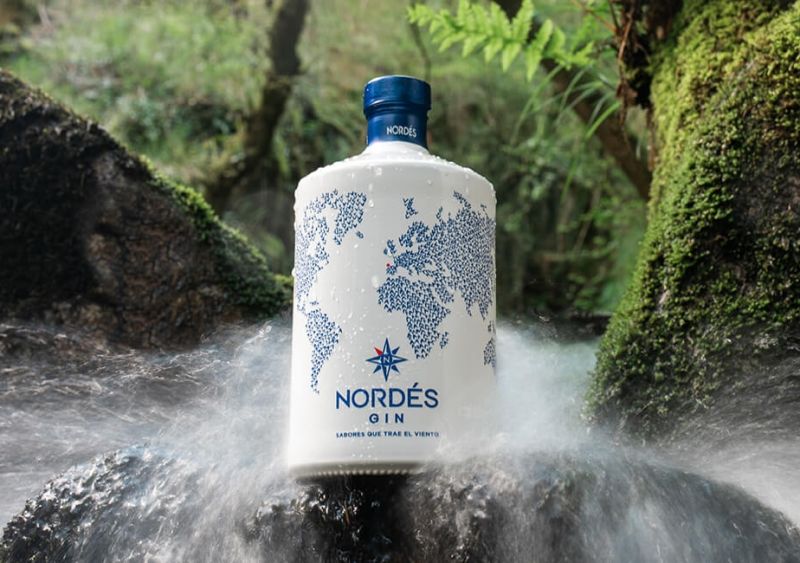
Nordés, a premium gin from Spain’s Galicia region owned by Osborne, was the best-selling brand in China’s premium gin segment in 2025, according to annual data released by IWSR, the global drinks market analysis group. The company said the result cements a decade-long expansion in one of the world’s most competitive spirits markets, where Nordés has multiplied its sales volume by 100 since entering the country 10 years ago.
The ranking gives Nordés a leading position in a category that remains relatively small in China but has been growing as cocktail culture expands in major cities. The company said demand has been supported by changing urban drinking habits, with younger consumers moving away from traditional nightlife venues and showing more interest in cocktail bars, specialty outlets, and imported brands with a distinct identity.
IWSR’s latest figures also show Nordés gaining ground globally. In 2025, the brand moved up one place from the previous year to become the world’s 15th best-selling gin across the premium, super premium, and ultra premium segments, according to the market researcher. Osborne, one of Spain’s oldest drinks groups, acquired the brand in 2015 and has since used it as part of a broader international premium spirits strategy.
The company attributes its performance in China to a product profile that differs from more traditional spirits. Nordés is made on a wine-based spirit rather than the neutral grain spirit more commonly used in gin, and it is flavored with botanicals linked to Galician traditions as well as ingredients from abroad. Osborne said that combination, along with the bottle’s design and the brand’s Atlantic image, has helped it stand out with Chinese consumers looking for imported products that signal quality and originality.
That positioning has mattered in a market where baijiu and whisky still dominate much of the premium spirits business. China’s gin category is far smaller by comparison, but it has benefited from the rise of cocktail programs in cities such as Shanghai, Beijing, and Shenzhen, where bars and hotels have broadened their imported spirits offerings. Nordés said it has tried to place the brand inside that trend by increasing its presence in cocktail venues, bars, and clubs while also investing in digital channels and e-commerce.
The company said sales in China are now becoming more evenly split between the on-trade, including bars and restaurants, and retail and online sales. That change reflects broader shifts in how imported alcohol is bought in China, where e-commerce has become a central route to market for many consumer brands. Osborne said it has worked closely with local distributors to improve availability and brand recognition and has used volume-based agreements to expand distribution across the country.
Those efforts come at a time when competition in China has intensified. The company said the market is marked by restrained consumption and a renewed commercial push by major international brands, many of which have increased their investment in China as they seek growth in premium categories. In that environment, distribution reach has become a key factor, especially for brands operating in a niche segment such as premium gin.
Nordés said its near-term objective is to keep its leadership in China and deepen distribution beyond high-end cocktail bars. The company’s next major target is to double its presence in the country by 2030. To do that, it plans to widen its footprint in higher-volume channels, including clubs, bars, and other drinking venues, while maintaining its position in more specialized accounts where premium imported spirits often first build visibility.
The China result is also being used by Osborne as a signal for broader international expansion. The company said it plans to speed up growth for Nordés in Italy and Portugal and continue building the brand in the United States. At the same time, it intends to push further into Asian markets that it sees as promising for premium gin, including Thailand and Singapore.
The company did not disclose sales figures for China or provide a value estimate for the market, but the leadership claim is significant because it comes from IWSR, whose data is widely used by producers, distributors, and investors in the global alcohol industry. For Nordés, the result suggests that a European premium gin with a regional identity can gain scale in China even as the category remains overshadowed by larger spirits segments.
For China’s imported spirits market, the brand’s rise also points to a more fragmented premium landscape than in the past. Consumers between 25 and 40 years old, a group highlighted by the company, have increasingly shaped demand in urban centers, especially through social drinking occasions tied to cocktails rather than traditional banquet-style consumption. That shift has opened room for brands that are not global mass-market leaders but can offer a recognizable image and a clear story.
Osborne’s challenge now will be to turn category leadership into lasting scale. Premium spirits brands that grow first in trend-setting bars often face a second test when they try to move into wider retail and higher-volume channels without losing their image. In China, where imported alcohol can quickly move in and out of favor and where competition from global producers remains strong, maintaining visibility and distribution may matter as much as product positioning. Nordés is betting that the momentum it built over the past decade can carry it into that next phase.