France Forces Roederer to Give Up 3 Hectares in Burgundy Deal
The Champagne group can still acquire Domaine Damoy after officials used a 2021 anti-concentration law to cut its footprint.
Monday, August 31, 2026
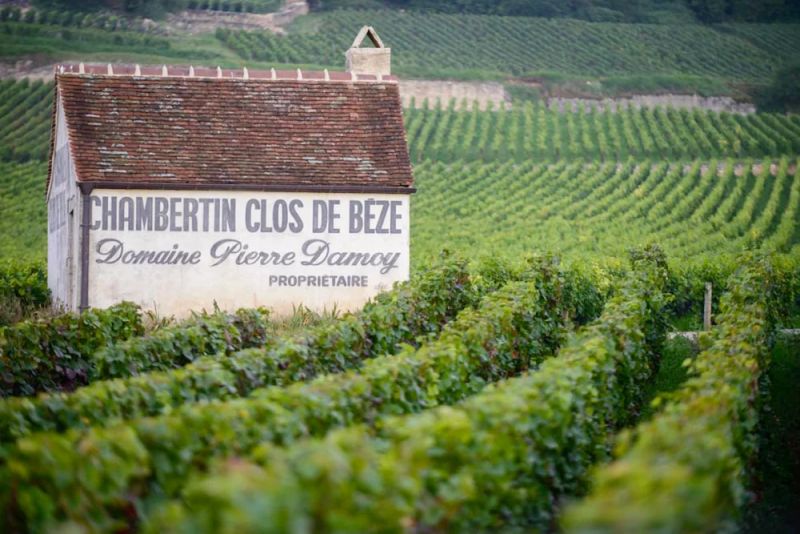
Louis Roederer’s planned purchase of Domaine Damoy in Gevrey-Chambertin is moving forward, but only after French authorities forced the Champagne group to give up part of the vineyard holdings tied to the deal.
The sale, which had been under exclusive negotiations, drew scrutiny from the prefecture in Côte-d’Or, the state authority that oversees agricultural operating permits in the department. According to people involved in the discussions, the prefecture was not prepared to authorize Roederer to operate all of the vines included in the acquisition. Officials relied on the Sempastous law, adopted in 2021 to limit excessive concentration of agricultural land, and required the buyer to relinquish part of the estate.
The case has become a test of how far France’s newer land-control rules can shape ownership in Burgundy, where vineyard prices have surged for years and where family estates have faced growing pressure from wealthy investors and large wine groups. Domaine Damoy is a small but highly prized property of about 10 hectares, including roughly 8 hectares in Grand Cru sites, mainly Chambertin Clos de Bèze as well as Chapelle-Chambertin and Chambertin.
Thiébault Huber, president of the Confédération des appellations et des vignerons de Bourgogne, or CAVB, said the professional body had pushed for measures that would free up about one-quarter of the estate. He said that request included a small share of Grand Cru land, but that the final outcome centered on the vineyards classified at the village level.
“Our requests were heard for all the village-appellation vines, 3 hectares in total,” Huber said. He said those parcels will be leased out under the supervision of Safer, the public-interest land agency that plays a central role in French rural transactions. Safer can intervene in sales and leasing arrangements to influence who farms agricultural land and how it is distributed.
Huber said he had direct contact with Frédéric Rouzaud, Roederer’s chief executive, during the process. “We worked in a constructive way,” he said, presenting the outcome as a negotiated compromise rather than a confrontation.
He also said Burgundy’s winegrowers are not trying to block large groups or prominent families from buying into the region, but want limits when already powerful owners continue to expand. Referring to Roederer’s existing vineyard footprint, Huber said there is room for agreement “particularly when a group already has 980 hectares.”
As part of the broader adjustments linked to the approval process, Roederer is also divesting other vineyard land, according to Huber. He said the group is shedding 4 hectares in Champagne, around 10 hectares more in Bordeaux, and a smaller amount in Bandol. Those disposals show that the review went beyond the Burgundy purchase itself and took into account the buyer’s wider agricultural holdings.
Neither the Côte-d’Or prefecture nor Roederer immediately appeared to frame the matter as a rejection of the acquisition. Instead, the intervention amounts to a conditional approval shaped by French rules on land concentration. In practice, that means the group can still enter Burgundy through the Damoy purchase, but with a smaller operating footprint than initially planned.
The financial terms of the transaction have also been closely watched because Burgundy vineyard deals can set benchmarks that ripple through the region. Huber said the land value agreed in the Damoy sale was in line with the market and may even have come in below some previous transactions in Burgundy. That point matters to local growers because exceptionally high sale prices can push up tax valuations and complicate estate transfers for families trying to pass vineyards to the next generation.
For years, Burgundy producers have warned that repeated purchases by outside investors can change not only land prices but also the social structure of the region’s wine economy. Small domains, often built around inheritance and family labor, face rising costs at the same time as scarce land becomes harder to access. The Damoy case suggests that the legal tools created in recent years are beginning to have practical effects, even in top-tier appellations where demand is intense and buyers often have deep financial resources.
The Sempastous law was introduced to address a gap in French oversight of farm concentration. Traditional controls did not always catch transactions structured through company share sales rather than direct land transfers. The law expanded the state’s ability to review those deals when they would result in significant control over agricultural land. Burgundy growers have looked to the measure as one way to slow consolidation in a region where even a few hectares can carry very high economic and symbolic value.
Domaine Damoy’s size helps explain why the case has drawn such attention. Though small in area, the estate includes some of the most prestigious vineyard names in Burgundy. Any change in ownership of those parcels is closely followed by growers, merchants, investors, and local officials. The estate’s concentration of Grand Cru vines makes it especially sensitive in a region where ownership patterns are fragmented and where access to elite terroir is extremely limited.
The outcome leaves Roederer with a foothold in Gevrey-Chambertin while preserving part of the property for leasing outside the group’s direct control. It also gives Burgundy’s professional organizations a concrete example of state intervention in a market many growers believe has tilted too far toward concentration. Whether similar scrutiny will shape future deals in the region may depend on how aggressively authorities continue to apply the law and how often local organizations press for limits when major buyers seek to expand.