Chateau Troplong-Mondot started its earliest red harvest on record on Aug. 19
The Saint-Emilion estate moved nine days ahead of last year, seeking freshness during a highly uneven Bordeaux season.
Tuesday, August 25, 2026
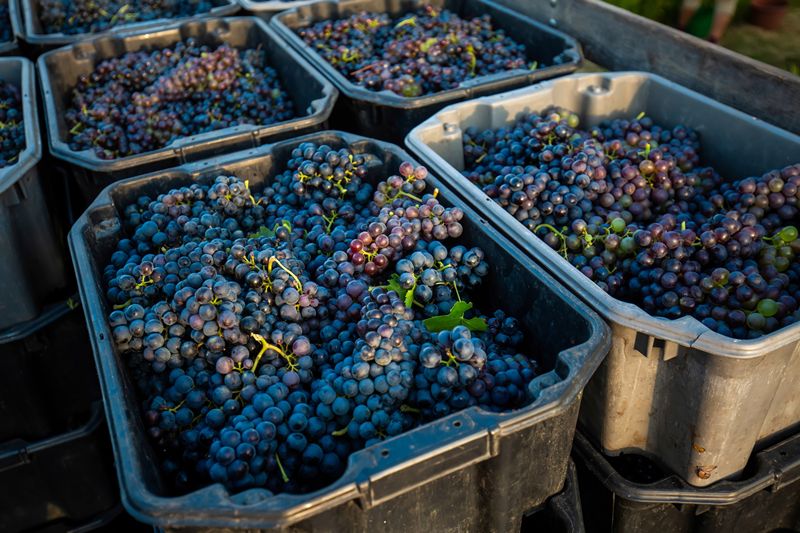
Bordeaux’s 2026 red grape harvest has begun unusually early at Chateau Troplong-Mondot in Saint-Emilion, where workers started picking on Aug. 19, nine days earlier than the estate’s Aug. 28 start for the 2025 vintage and the earliest red harvest date recorded there.
The move has drawn attention across the region because Troplong-Mondot is one of Bordeaux’s best-known classified growths and because the date is so far ahead of the estate’s recent schedule. According to Wine-Searcher, which cited remarks published by the regional newspaper Sud-Ouest, estate director Aymeric de Gironde described the start as historic for the property. He said the goal was to bring in fruit while it still held enough acidity, a key factor for balance in the finished wine.
The early start does not mean all of Bordeaux is harvesting red grapes at the same time. It is a development at specific estates, not an official opening date for the whole region. Ripening remains highly uneven from one appellation to another and even from one parcel to the next inside the same property, according to producers and local wine officials. No regional forecast for total 2026 output in hectoliters has been issued with these reports.
The contrast inside Bordeaux is sharp. Chateau Margaux had already begun harvesting white grapes on Aug. 11, and other estates with white varieties, including Chateau Montrose, have also started bringing in fruit. On the red side, Clos Cantenac in Pomerol was among the estates that also moved early, picking Merlot intended for rosé on Aug. 19. But not all leading properties were ready to follow. Alain Vauthier of Chateau Ausone told Sud-Ouest he did not expect to begin harvesting until around Aug. 31 after tasting the grapes.
That gap between estates points to one of the main operational problems created by an early and uneven season. Vineyard teams, temporary labor, transport, and cellar space all have to be adjusted quickly when some plots ripen well ahead of others. A winery may need to process fruit from one block while waiting days or weeks for another parcel to reach the desired balance of sugar, acidity, and phenolic maturity. That can complicate staffing schedules and fermentation planning at a time when tanks, sorting lines, and picking crews must be available at short notice.
It also raises blending questions. If part of an estate is picked in mid-August and the last fruit does not arrive until much later, winemakers may end up with lots that show very different flavor profiles, alcohol potential, and tannin structure. Troplong-Mondot’s own harvest last year stretched for about a month after the first pick, illustrating how a very early start does not necessarily mean a short campaign. A long picking window can give winemakers more options, but it also reflects large differences in development across the vineyard.
Growers have linked this year’s timing to the season’s weather pattern. Jean-Marie Garde, president of the Pomerol appellation, told Sud-Ouest that some plots were clearly ahead of others and that vines had lacked water during the growing cycle. In that context, estates must decide whether to pick early to preserve freshness or wait for rain and additional ripening, knowing that conditions may not advance evenly across all parcels. For red Bordeaux, where final blends often rely on several grape varieties and multiple vineyard blocks, those decisions can shape both quality and style.
The current pattern fits a longer trend that producers and wine observers have been discussing for years. Earlier harvest dates have become more common in many French wine regions as warmer growing seasons speed up vine development. Wine-Searcher said the 2026 start at Troplong-Mondot is another data point in that broader shift. Sud-Ouest, in its reporting, described the date as part of a statistical reality that has been building for more than two decades as average harvest timing moves forward in France.
For Bordeaux, the immediate significance is practical as much as symbolic. An early red harvest at a major Saint-Emilion estate signals that some vineyards are now entering a phase that used to come later in the calendar, while others nearby are still waiting. That split forces chateaux to manage a harvest with more pronounced differences between parcels, a challenge that can affect everything from picking order to tank allocation. At the same time, the varied pace across estates shows why producers are treating the Troplong-Mondot date as a notable property-level record rather than a single marker for the entire Bordeaux vineyard.