Prosecutors Charge Contract Worker in Napa’s Pickett Fire
Investigators said improperly discarded hot ashes ignited the 6,820-acre blaze, which caused $56 million in grape crop damage.
Tuesday, September 1, 2026
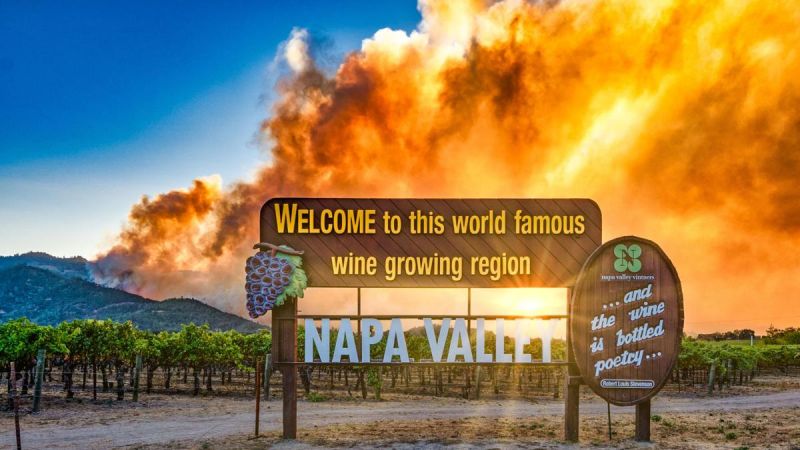
A wildfire that broke out near Calistoga last year has entered a new legal phase in Napa Valley, with felony charges filed against a contracted worker after state investigators concluded that improperly discarded hot ashes started the blaze, and with wineries pursuing civil claims over smoke-damaged grapes.
The Pickett Fire began on Aug. 21, 2025, on Pickett Road in the hills northeast of Calistoga. It spread quickly through northern Napa Valley and burned for more than two weeks, ultimately consuming 6,820 acres, according to Cal Fire. While much of Napa Valley’s vineyard land avoided direct fire and heavy smoke exposure, Howell Mountain and Pope Valley were among the areas hit hardest. Cal Fire estimated that the fire caused $56 million in damage to local grape crops alone.
State investigators have now completed their inquiry into the cause of the fire. Cal Fire said the blaze started when hot ashes were disposed of in a burn pile between contiguous properties owned by Hundred Acre Wines, the company tied to vintner Jayson Woodbridge. Based on that investigation, the Napa County District Attorney’s Office filed felony charges on Aug. 27 against Juan Luis Gutierrez Marfil, a contracted worker hired by Hundred Acre Wines.
According to the investigative findings cited by authorities, Gutierrez Marfil told Cal Fire officials that he had improperly disposed of hot ashes, which then ignited the fire. The filing of charges does not determine guilt, and the case will proceed through the courts.
The criminal case is unfolding alongside civil litigation from the wine industry. Several wineries whose grapes were exposed to wildfire smoke have filed lawsuits against the vintner who owns the property where the fire began, seeking compensation for losses tied to the 2025 growing season. Those claims reflect one of the most difficult parts of wildfire damage in wine country: vines may survive and wineries may remain standing, but smoke can still reduce grape quality enough to make fruit far less valuable or unusable for premium wine production.
That issue has broad significance in Napa, where grape prices, winery operations and tourism are tightly connected. A large legal dispute over smoke exposure can affect more than one harvest. It can influence how growers and wineries structure contracts, how insurers assess risk and how property owners manage burn debris and fire prevention on vineyard land. In a region where wine production supports hospitality businesses, tasting rooms and seasonal labor, the financial effects of a fire can spread well beyond the original burn area.
The Pickett Fire did not engulf most of Napa Valley’s vineyards, but the damage estimate shows how expensive a more limited fire can still be when it strikes high-value winegrowing districts. Howell Mountain, in particular, produces grapes that command premium prices, and losses there can quickly add up. For wineries that depend on those sites for estate wines or vineyard-designated bottlings, smoke damage can disrupt supply plans, vintage releases and revenue in ways that extend into future years.
The case is also likely to be watched closely by other wine regions in California, where fire prevention has become a central operating issue for vineyard owners and wineries. The mix of a state fire investigation, felony charges and private lawsuits over grape losses may serve as a test of how accountability is assigned when a wildfire begins on vineyard property and causes downstream crop damage to neighboring producers.
Neither the criminal matter nor the civil cases has yet resolved the financial liability tied to the fire. What has become clearer is the scale of the economic exposure in a major wine and tourism region when a blaze reaches vineyards during the growing season, even if flames do not destroy most of the vines in their path.