Bordeaux Vineyard Prices Plunged by More Than 80% in Parts of the Médoc
New land data shows the wine region’s crisis has spread from weak sales and oversupply to the value of vineyards themselves.
Wednesday, July 22, 2026
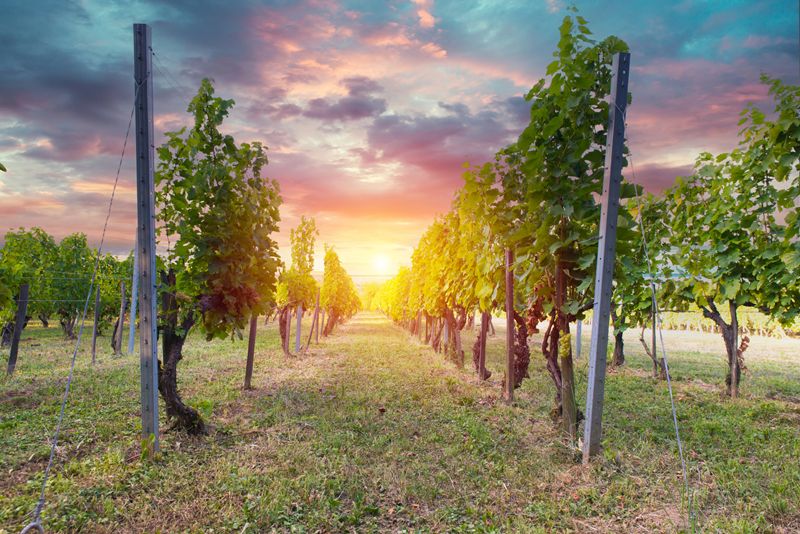
Vineyard land prices across Bordeaux have fallen sharply over the past eight years, according to new figures highlighted this week by the regional newspaper Sud-Ouest, underscoring the depth of the economic strain facing one of France’s most important wine regions.
The declines reach from entry-level vineyard land to some of Bordeaux’s best-known appellations. In the Médoc, average prices dropped by more than 80%, falling from €55,000 per hectare in 2018 to €10,000 in 2025. In Pauillac, one of the region’s most prestigious names, vineyard land fell from €2.2 million per hectare to €1.7 million, a decline of nearly 25%. Margaux dropped 27%, from €1.1 million to €800,000 per hectare.
Other areas also posted steep losses. Saint-Émilion fell about 25%, from €270,000 per hectare in 2018 to €200,000 in 2025. In Lalande-de-Pomerol, prices slid from €240,000 to €130,000 per hectare, close to a 46% drop. Saint-Émilion satellite appellations were down by almost 75%, moving from €95,000 to €25,000 per hectare.
Sweet and dry white wine zones were not spared. Sauternes and Graves, which had held relatively steady at around €30,000 per hectare, both fell by about one-third in recent years and now stand near €20,000 per hectare. Fronsac and Bordeaux blanc vineyard prices were cut roughly in half over the same period.
In several less celebrated parts of Bordeaux, the correction was even more severe. The Haut-Médoc, Blaye Côtes de Bordeaux and generic Bordeaux Rouge vineyards all lost around 60% of their value since 2018. At the bottom end of the market, average Bordeaux rouge vineyard land now sells for about €6,000 a hectare.
Sud-Ouest said the figures show how sharply values can change over very short distances in Bordeaux, where appellation boundaries still define market worth. The newspaper noted that in the Médoc, two plots separated only by a path can carry dramatically different prices depending on which appellation they belong to. A parcel in Pauillac, it said, can be 56 times more expensive than one in neighboring Saint-Sauveur in the Haut-Médoc.
The drop in land values comes as Bordeaux continues to deal with weak wine demand, heavy inventories and structural pressure on growers and estates. Many producers are still carrying unsold stock in their cellars, and Sud-Ouest reported that some need to clear space for a 2026 harvest that is expected to be large despite repeated heatwaves during the growing season.
That prospect adds another layer of pressure to a market already struggling with oversupply. Earlier concerns that extreme heat might reduce yields have not prevented expectations of a sizable crop. For growers already facing lower grape prices and slower sales, a generous harvest could deepen the imbalance between supply and demand.
The land-price data also reflects broader changes in vineyard area across southwestern France. In Gironde, the department that includes Bordeaux, vineyard surface has contracted by almost one-quarter since the late 2010s. Sud-Ouest reported that total vineyard land fell from well above 100,000 hectares to just over 91,000 hectares by 2025, with about 23,000 hectares of vines removed.
That reduction follows years of crisis measures aimed at shrinking production capacity in response to falling consumption and export difficulties. Bordeaux has been one of the clearest examples of this adjustment, with vine-pull schemes and abandoned parcels becoming part of the landscape in some sectors where growers have struggled to make vineyards profitable.
A similar pattern has emerged farther south in Languedoc. In the Aude and Hérault departments, more than 18,000 hectares are no longer in production, according to the figures cited by Sud-Ouest. The contraction points to a wider challenge for French wine regions producing large volumes at a time when domestic drinking habits have changed and competition has intensified.
One notable exception appears in Cognac country. Despite recent concern about overproduction there, vineyard plantings in Charente and Charente-Maritime increased by just over 18,000 hectares between 2017 and 2025. That expansion stands apart from the retrenchment seen in Bordeaux and Languedoc and suggests that planting decisions made during stronger market conditions are now colliding with a weaker commercial environment.
For Bordeaux, however, the immediate picture is one of falling asset values across nearly every level of the market. Even elite appellations have lost ground, while lesser-known zones have seen prices collapse to levels that would have been difficult to imagine less than a decade ago. The figures published this week offer one of the clearest signs yet that the region’s wine crisis is no longer limited to bottle sales and cellar stocks but is now fully visible in the value of the land itself.