France Faces One of Its Weakest Wine Harvests in 30 Years
The Agriculture Ministry forecasts 33.9 million hectoliters for 2026 after drought and heatwaves slashed yields in Champagne and Burgundy.
Monday, September 7, 2026
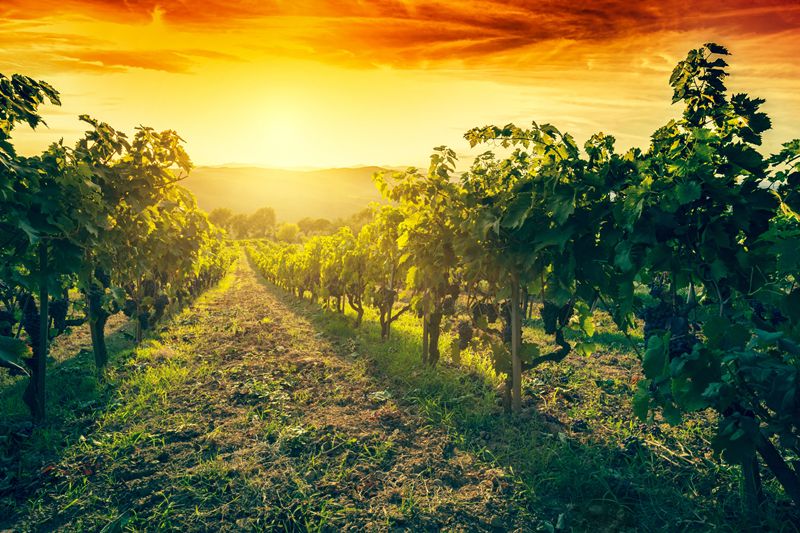
France is heading for one of its three weakest wine harvests in the past 30 years, after a summer of drought and repeated heatwaves cut yields across much of the country, according to the French Agriculture Ministry’s first estimate for the 2026 vintage released Monday.
The ministry’s statistics office, Agreste, said national wine production is expected to reach about 33.9 million hectoliters this year. That would be 6% below 2025 and 17% lower than the average for 2021 through 2025. In absolute terms, the estimate points to roughly 2 million fewer hectoliters than last year and nearly 6.8 million fewer than the recent five-year average. The harvest is still under way, and the ministry said the figures remain provisional.
The decline extends a run of weak harvests in France after reduced crops in 2024 and 2025. France is usually the world’s second-largest wine producer after Italy and remains the leading exporter by value, so another small crop has consequences well beyond vineyards. Lower output can help reduce oversupply in parts of the market, but it also limits future sales volumes and adds pressure on growers already dealing with weak demand and lower income.
The ministry said the shortfall is being driven by two factors. The first is a smaller productive vineyard area. Land in production is estimated to be down 2.5% from a year earlier, reflecting the continued removal of some vines as winemakers respond to oversupply and falling consumption. The second is the weather. After a favorable start to the growing season, with good spring soil moisture and limited disease pressure, summer conditions turned sharply against producers. Heat and lack of rain dried soils across the country and damaged vines and grapes, causing sunburn, leaf loss and shriveled fruit in some areas.
Those conditions also accelerated the harvest. Most wine regions began picking in August, earlier than usual, after exceptionally high temperatures from spring onward. The dry weather reduced disease pressure, but that benefit was outweighed in many vineyards by smaller berries and lower cluster weight.
The national figures mask strong regional differences. Champagne faces one of the sharpest drops. Production there is expected to fall 49% from 2025 and 47% from the five-year average. The ministry said the region entered harvest in mid-August with exceptional ripeness, but frost in Aisne, hail and months of drought sharply cut volume. Cluster weight in Champagne is at its lowest level in 20 years, according to the ministry.
Bourgogne-Beaujolais is also expected to post a steep decline, with output down 33% from both 2025 and the five-year average. Hail, drought and heatwaves hit the region after an initially promising season. In Burgundy, Pinot Noir was especially damaged, with losses above 50% in some cases. In Beaujolais, harvest began around Aug. 13 and confirmed historically low yields.
The Loire Valley is forecast to produce 12% less wine than last year and 18% less than its recent average. The ministry said drought and heatwaves caused leaf loss, berry shriveling and browning of grape clusters, with the last heatwave proving especially damaging. Young vines were among the hardest hit, notably in Loire-Atlantique.
In Charentes, where much of the crop goes to eaux-de-vie such as Cognac, production is expected to fall 6% from 2025 and 24% from the five-year average. Growers had entered the season with abundant bunch formation and a strong early outlook, but repeated heatwaves led to sun damage and drying of leaves and berries, limiting growth. The number of bunches was not enough to offset the lower grape weight.
Bordeaux is one of the few major regions expected to recover from last year’s low base. Output there is forecast to rise 10% from 2025 after late August rain eased part of the drought stress and helped support yields. Even so, production would still remain 11% below the five-year average. The region is also dealing with a sharp reduction in vineyard area. The ministry said the productive surface in Bordeaux fell by nearly 5,000 hectares, or 5%, from the previous harvest, helped by a national program to reduce vineyard potential.
Languedoc-Roussillon, France’s largest wine-producing area by volume, is also expected to post a modest year-over-year increase. Production is forecast to rise 5% from the weak 2025 crop as yields improve, though it would still be 8% below the five-year average. The ministry said the increase conceals large local differences, especially between vineyards with access to irrigation and those in drier zones such as Roussillon that were hit harder by water stress.
Elsewhere, Alsace is expected to fall 6% from 2025, with drought limiting berry size despite late rains. Jura is forecast to drop 36% from last year, while Savoie is expected to hold steady after summer rain helped preserve its production potential. In the Southwest, output is seen down 2% from 2025 and 12% below the average. In the Southeast, production should be close to last year, up 2%, though still well below normal after drought and hail losses. Corsica is expected to slip 4% from an exceptionally strong 2025 crop and return roughly to its five-year average, helped by effective irrigation.
By wine category, all major segments except protected geographical indication wines are expected to decline from last year. Appellation wines are forecast at 14.2 million hectoliters, down 10% from 2025. Wines for spirits are seen at 7.1 million hectoliters, down 7%. Protected geographical indication wines are the exception, rising 4% to 10.3 million hectoliters, largely because of the relative resilience of Languedoc-Roussillon, though that category would still remain 7% below its five-year average. Other wines are expected to drop 13%.
The pressure on growers comes at a difficult moment for the wider French wine sector. Domestic wine consumption has been in long-term decline, and producers have been trying to adjust to weaker demand and excess supply in several regions. The industry was also hit last year by U.S. tariffs. A smaller crop may help reduce inventories, but it also means less wine to sell in coming months and more financial strain in regions where low yields coincide with weak market conditions.
French agriculture more broadly has been affected by the country’s hottest summer on record in 2026. Scientists say climate change is making heatwaves and droughts more frequent and more severe, and Europe is warming faster than any other continent. Against that backdrop, the French government on Friday announced more than €1 billion in emergency aid for farmers after this summer’s extreme heat and lack of rain.