Bordeaux wine sales fell below three million hectoliters for the first time in decades
Vineyard values across much of the region kept sliding in 2025 as growers uprooted nearly 30,000 hectares to confront weak demand
Monday, July 20, 2026
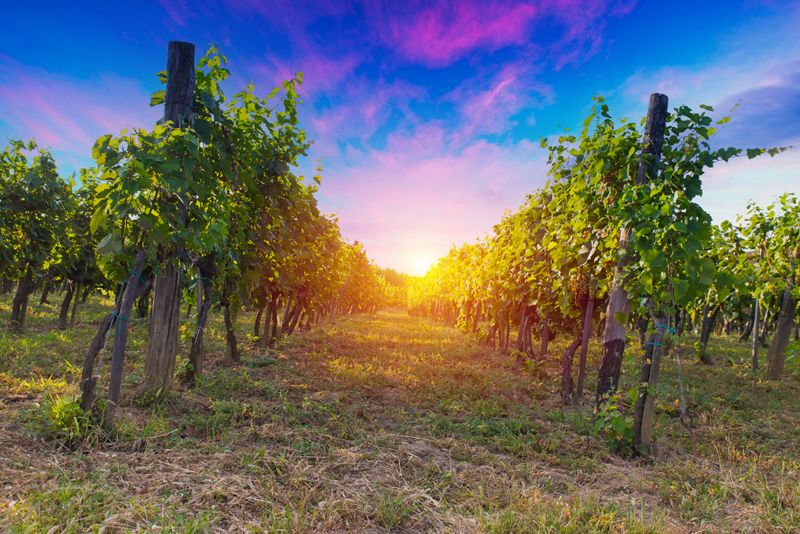
Bordeaux’s wine downturn has pushed annual sales below three million hectoliters for the first time in decades, while vineyard values across much of the region continued to fall in 2025, according to figures reported by the French regional newspaper Sud-Ouest and cited by The Drinks Business.
Shipments from Bordeaux producers totaled 2.98 million hectoliters in the 12 months through the end of March 2026, down 12% from a year earlier. The drop marks a symbolic threshold for France’s largest wine-growing department and adds to pressure on growers already dealing with weak demand, lower profitability and a broad restructuring of vineyard land.
The decline has spread across most of Bordeaux’s main appellations, though top names have held up better than the wider market. In Pauillac, average vineyard land prices fell 22.7% between 2018 and 2025, from €2.2 million to €1.7 million per hectare. Margaux dropped 27.3%, from €1.1 million to €800,000 per hectare, while Saint-Émilion fell 25.9%, from €270,000 to €200,000.
Outside the most prestigious areas, the losses were much steeper. Lalande-de-Pomerol was down 45.8% over the same period and Fronsac fell 50%. Prices for Bordeaux Blanc vineyards dropped 51.5%, while Bordeaux Rouge land declined 60.6%.
Some of the sharpest corrections hit appellations that were already under economic strain. Médoc vineyard land fell 81.8%, from €55,000 to €10,000 per hectare. Saint-Émilion Satellites dropped 73.7%, from €95,000 to €25,000. Haut-Médoc declined 62.5%, Blaye Côtes de Bordeaux fell 60%, Graves Rouge was down 37.5% and Sauternes lost 33.3%, according to the data cited in the report.
The fall in land values comes as Bordeaux carries out one of the biggest vineyard restructuring efforts in its history. Between 2023 and 2026, nearly 30,000 hectares of vines are expected to be uprooted across the region. About two-thirds of that area was removed through government-backed compensation programs that paid growers either €6,000 or €4,000 per hectare, depending on the scheme. The rest was uprooted without financial support.
Even after those removals, Gironde remains France’s largest wine-growing department, with 91,264 hectares of vineyard in 2025. That still puts it ahead of Hérault, with 72,901 hectares, and Aude, with 53,986 hectares.
The restructuring reflects a broader shift in strategy among producers who are trying to match supply to weaker demand and protect margins by focusing on their best sites. Xavier Buffo, director of Château de la Rivière in Fronsac, told Sud-Ouest that the estate had removed about 20 hectares as part of an effort to concentrate on its strongest terroirs while also acquiring vineyards in better-performing locations.
A proposed Foncière d’avenir, or Future Land Fund, is expected to help struggling growers complete land sales and support the conversion of former vineyard sites to other agricultural uses.
The market pressure has been compounded by climate stress. Bordeaux producers have faced repeated heatwaves, drought, frost and hail in recent years. In parts of France, temperatures reached as high as 44C in June, according to previous reporting cited by The Drinks Business. Viticulture specialists have warned that prolonged heat can reduce yields, hurt fruit quality and raise production costs at a time when many growers are already under severe financial strain.
For the beverage sector, the downturn matters beyond Bordeaux itself. The region remains one of France’s main wine hubs, so a sustained fall in shipments and a sharp reset in vineyard values could affect growers, négociants, bulk suppliers, distributors and longer-term expectations for wine supply from one of the industry’s most important origins.