Six baijiu groups captured 93% of listed producers’ first-half profit in China
A Beijing News review of 20 companies found three producers in the red, with Moutai’s direct channel surpassing wholesale sales.
2026-09-08
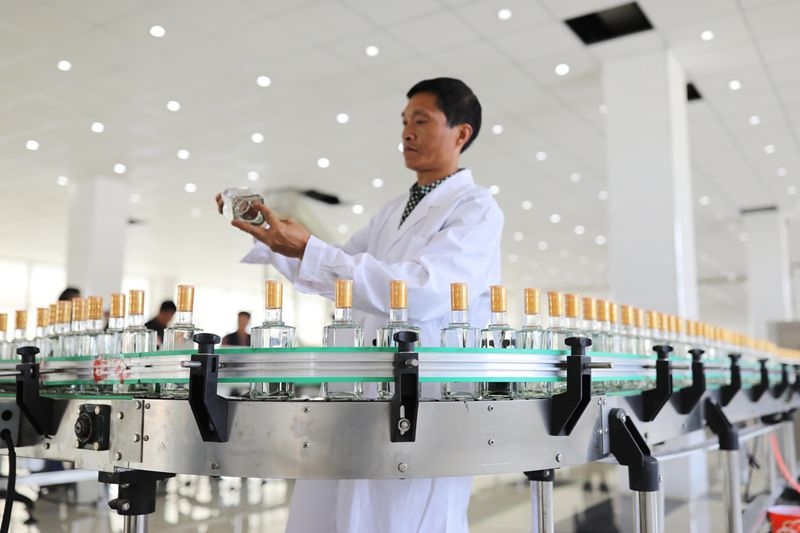
Six groups generated 93% of the profit reported by 20 listed baijiu producers in China in the first half of 2026, according to a Beijing News review of the companies’ semiannual reports published on September 4. The data shows how strongly earnings in the sector remain concentrated at the top even as distribution models shift, especially at Kweichow Moutai, the country’s largest baijiu maker.
The six companies were Kweichow Moutai, Wuliangye, Shanxi Fenjiu, Yanghe, Luzhou Laojiao and Gujing Gongjiu. Together, they reported CNY171.307 billion in revenue in January through June, equal to 86% of the total revenue of the 20 listed baijiu companies included in the review. Their combined profit reached CNY68.814 billion, or 93% of the group total.
Baijiu, the dominant distilled liquor in China, has long been led by a small number of large brands with broad pricing power and stronger distribution networks. The latest half-year results suggest that this pattern has become even more pronounced. While the biggest producers continued to capture most of the sector’s profits, three companies in the 20-company sample fell into losses, adding to signs of pressure on weaker players.
The most notable change in the period came from Moutai’s sales channels. Direct sales at Moutai rose 29.87% from a year earlier to CNY51.962 billion, while revenue from wholesalers and agency channels fell 21.58% to CNY38.697 billion. Based on the reported growth rates, the implied prior-year comparison was about CNY40.010 billion for direct sales and roughly CNY49.350 billion for wholesale and agency sales, though those absolute changes are approximate because they rely on rounded percentages.
That means Moutai added about CNY11.950 billion in direct sales revenue and lost about CNY10.650 billion in wholesale and agency revenue compared with the same period a year earlier. The company’s direct channel accounted for 57.32% of its main business revenue in the first half, overtaking the wholesale channel for the first time.
The shift matters because Moutai has been one of the clearest examples of a structural change in how premium baijiu reaches consumers. Direct sales usually allow producers to keep a larger share of the final selling price and exercise tighter control over pricing, inventory and customer data. A smaller role for distributors can also reduce channel dependence, though it may put pressure on traditional intermediaries that once handled a larger share of volume.
The Beijing News review did not present the figures as a measure of the full Chinese baijiu market. It was a journalistic aggregation of earnings from 20 listed producers, not an official industrywide statistical release. Even so, the sample covers many of the country’s best-known publicly traded names and offers a clear view of how revenue and profit are being distributed among listed companies.
The numbers suggest that scale remains decisive in a market facing uneven demand and a widening gap between premium brands and smaller producers. Top companies continue to benefit from stronger brands, better access to high-end buyers and greater flexibility in managing sales channels. Lower-tier companies, by contrast, have had less room to defend margins or absorb market pressure, which helps explain why some have slipped into the red.
Moutai’s channel change stands out because it combines two trends at once: rising concentration of profits at the top of the industry and a move away from traditional wholesale distribution toward direct selling. For investors and industry analysts, that shift is closely watched because Moutai often sets the tone for pricing and channel strategy across the premium end of the baijiu market. Its latest half-year figures show that the company is not only maintaining its dominant position but also changing the route through which that dominance is expressed.
Other leading groups in the top six remained the core of the listed sector’s earnings base in the first half, though the available summary did not provide a detailed company-by-company breakdown beyond Moutai’s channel data. What it did show is that the listed baijiu business in China became more concentrated in the first six months of 2026, with a small group of large producers taking the vast majority of profits while the rest of the field accounted for only a narrow share of earnings.
