Rioja begins its earliest harvest on record with signs of a very strong vintage.
Officials say 185.1 million kilograms picked by Sept. 11 arrived in good condition, though the final crop size remains uncertain.
Tuesday, September 15, 2026
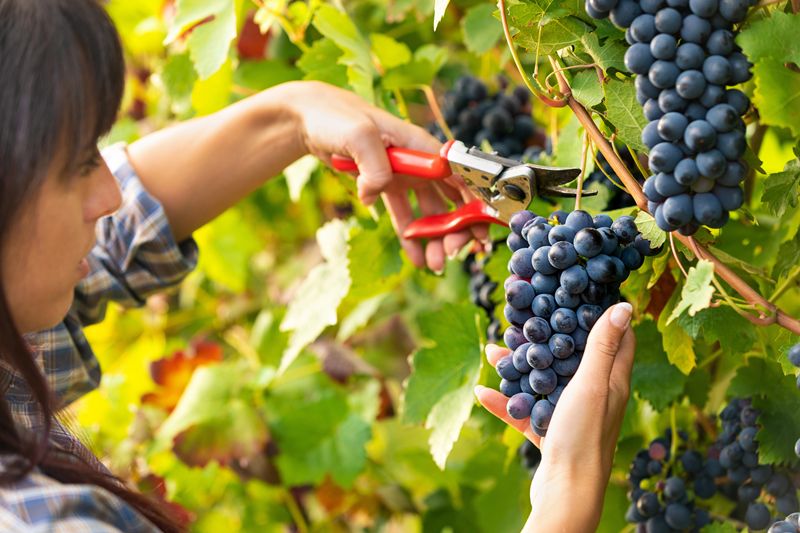
The grape harvest is now underway across Spain’s Rioja appellation, with 185.1 million kilograms of grapes collected by Sept. 11 and officials saying the crop so far supports the prospect of a very strong vintage in quality.
Alejandra Rubio, technical director of the Regulatory Council for DOCa Rioja, said the grapes arriving at wineries are in good sanitary condition and that current weather is helping preserve quality as picking expands across the region. She said the recent pattern of sunny mornings and much cooler nights has favored the quality indicators being seen in fruit already received at wineries.
Of the grapes collected through Sept. 11, 146.8 million kilograms were red varieties and 38.3 million kilograms were white, according to official figures cited by Rubio. She said there is still no need to rush the rest of the harvest because conditions remain favorable in the vineyards.
Rubio also said it is still very difficult to provide a firm estimate for the final size of the 2026 crop. At this stage, the expectation is that production could come in somewhat above the 2025 harvest, which the appellation classified as excellent in quality but unusually short in volume. Last year’s crop totaled 225.4 million kilograms of grapes and 155 million liters of wine eligible for the Rioja designation, down 18% from the previous year.
Even so, current expectations are below what many had projected at the start of the growing cycle. Rubio said vine fertility was good, but episodes of intense and sustained heat reduced grape size and weighed on output. She also pointed to the effect of climate change on the season. The 2026 harvest began in the first days of August, making it the earliest in the recorded history of DOCa Rioja.
Rioja covers 66,405 hectares across 144 municipalities in the regions of La Rioja, the Basque Country and Navarre. The appellation includes nearly 13,000 growers and about 600 wineries, a scale that helps explain both the diversity of vineyard conditions and the tensions that often emerge between grape producers and wineries during harvest.
Farm organizations said they also expect high quality from this year’s crop, but they warned that quality alone does not solve the economic pressure on growers. Igor Fonseca, secretary-general of Arag-Asaja, said the work done by growers in the vineyards should be reflected in the prices they receive for their grapes, especially after rising costs for treatments and other inputs.
Fonseca pointed to data from the La Rioja regional government’s price observatory for the 2025 campaign, which showed average payments to growers of €0.83 per kilogram for red grapes and €0.79 per kilogram for white grapes. He said those figures show, in clear terms, that growers have been losing ground from one harvest to the next.
Roberto Ruiz-Clavijo, union coordinator for UAGR-COAG, said the group has detected prices that are somewhat lower than last year in many cases. He said that even with red grape yields reaching up to 90% of the maximum allowed, growers again will not recover their production costs, which he said would mark the seventh straight campaign in which that has happened. He called for full compliance with Spain’s Food Chain Law, which requires written contracts with payment terms and price.
Another concern for growers is whether they have a winery ready to receive their grapes. Néstor Alcolea, organization secretary for UPA La Rioja, said some growers are still trying to find last-minute solutions because they do not have a guaranteed destination for their fruit. He said the situation is especially troubling in parts of Rioja Alta, where some wineries have reportedly rejected grapes assessed above 14% potential alcohol, leaving growers without an outlet after a full year of work in the vineyard.
That issue could matter beyond the farm gate. For wineries, distributors and other businesses tied to wine, the combination of a record-early harvest, uncertain final volume and selective grape intake can affect supply planning, contract negotiations and the wines that ultimately reach the market. If fewer grapes are accepted by some buyers or if alcohol levels limit intake in certain areas, that could complicate the flow of fruit into wineries during a key part of the season.
Growers working in the vineyards say the fruit quality is strong. Enrique López de Alda, a grower harvesting in the Viña El Pozo area near Oyón in Álava, said the grapes from his roughly 60-year-old vineyard are in good condition. He was harvesting with a crew of seasonal workers and said the year’s quality supports building wine stocks.
Wineries, for their part, rejected criticism that they are not meeting their obligations. Íñigo Torres, director-general of the Rioja winery association Esencia Rioja, said wineries have complied with the rules, signed contracts before grapes entered the cellar and set prices using objective criteria. He said prices will remain stable compared with the previous harvest.
Torres added that yields this year are expected to be noticeably higher than in 2025, which he said should improve profitability for growers, unlike what is happening in many other wine regions in Spain. On the commercial side, he said wineries are still facing difficult sales conditions because wine consumption continues to contract worldwide. He said Rioja is making a strong promotional and commercial effort to preserve its market share in Spain and abroad.