Rioja grape growers lost €38,227 per 10-hectare vineyard over six harvests
ARAG-ASAJA said average grape prices lagged costs by €0.142/kg, a 16.5% shortfall that deepened pressure before harvest.
2026-08-28
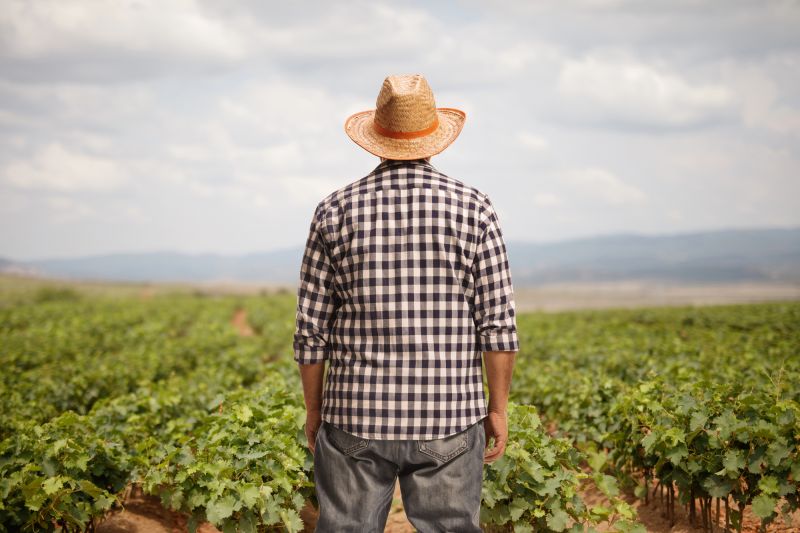
Winegrowers in Spain’s Rioja region have lost an estimated €38,227 per professional 10-hectare vineyard over the past six harvests, according to calculations released by the farm group ARAG-ASAJA as the 2026 grape harvest begins and growers again face uncertainty over who will buy their fruit and at what price.
The organization said Thursday in Logroño that average production costs for grapes in DOCa Rioja reached about €0.864/kg between 2020 and 2025, while the average price paid to growers was €0.722/kg. Based on those figures, the average shortfall was €0.142/kg, which ARAG-ASAJA said amounts to 16.5% of production costs. Using its own underlying data without rounding, the group put the gap at 14.3 euro cents per kilogram.
The figures were circulated by the union ahead of the new harvest to illustrate what it described as six straight years of worsening profitability for Rioja grape growers. ARAG-ASAJA argued that the imbalance has left many producers carrying the cost of adjustments in a wine region dealing with weaker consumption, slower sales, and pressure to bring supply and demand back into line.
The group said the result has been a steady erosion of viable farm income in a region that depends heavily on its vineyards. It said many growers have already left the sector entirely or reduced their activity, not because of retirement but because they can no longer make the business work.
ARAG-ASAJA President Eduardo Pérez said growers have been asked year after year to produce less, select more carefully, meet tighter quality standards, comply with more rules, and absorb higher costs than they faced only a few years ago. He said growers had done their part, but grape prices had not kept pace.
The union framed the issue as a structural problem in Rioja’s business model, saying wineries cannot solve their own financial stress by pushing the burden back onto growers. It argued that a world-renowned appellation cannot sustain its reputation if the raw material on which it depends is bought at prices that do not allow producers to earn a living.
The €38,227 estimate applies to what ARAG-ASAJA described as a professional 10-hectare operation over the 2020-2025 period. The organization did not publish a full methodology in the material cited by Europa Press, and the figures reflect historical averages rather than the cost base or contract prices for the 2026 harvest. The release also did not break down yields, farm types, or differences among subzones and business models within Rioja.
Even with those limitations, the data add a concrete figure to a debate that has intensified in Rioja before harvest in recent years: how much of the region’s commercial adjustment should be borne by growers, and whether the food supply chain rules meant to prevent below-cost buying are being applied effectively.
The union said one of the main problems for growers this season is that many still approach harvest without clarity on delivery terms. It complained that some farmers do not know in advance which winery will take their grapes or the price they will receive, leaving them with little room to negotiate once picking begins.
ARAG-ASAJA also directed criticism at the Rioja Regulatory Council’s control system, especially the digital “Viticulturist Portal” used to verify compliance with appellation rules. Secretary General Igor Fonseca said the group had received dozens, and in some cases hundreds, of complaints from members in recent weeks about the way the system was operating. He said older growers in particular were struggling with the digital requirements.
Fonseca acknowledged that the council’s technical staff had made efforts to explain the tool and help resolve many of the issues that arose. Still, he said the information available to growers needed to be released earlier and presented more precisely before the next campaign. The union said more training, clearer guidance, and a more practical approach are needed if growers are expected to comply smoothly with the appellation’s control requirements.
Alongside its complaints about pricing and administration, ARAG-ASAJA renewed calls for changes in public policy. It said Spain’s food chain law should be enforced more strictly and amended where necessary, and it said the group has already sent proposals to the Agriculture Ministry. The law is intended in part to prevent the destruction of value along the chain by requiring contracts and discouraging purchases below effective production costs.
The union also called for more stable commercial relationships between wineries and growers, including multiyear contracts that would give both sides more certainty. It wants earlier and more transparent agreements before harvest, rather than last-minute negotiations when the fruit is ready to be picked.
Another part of the union’s agenda is a broader debate inside DOCa Rioja over the type of appellation it wants to be in the next decade. ARAG-ASAJA said profitability should be at the center of the region’s strategic planning, not treated as a secondary issue behind production controls or commercial strategy.
The group also pushed again for a voluntary vineyard removal program in 2027 as a way to reduce surplus capacity. Fonseca said organizations inside Rioja should move together to demand urgent steps so the measure can be put in place as soon as possible next year.
According to the union, Spain’s central government has not opened the door to using FEAGA agricultural funds for a voluntary grubbing-up scheme in 2027. ARAG-ASAJA said the governments of La Rioja and the Basque Country have committed to launching the measure with their own funds if the necessary legal tools are available. The union said that without a published regulation governing delegated acts, regional governments cannot formally accept applications, the ministry cannot review them, and Brussels cannot approve them.
For that reason, the group urged both the Spanish ministry and the European Commission to move quickly on the legal framework. It argued that if the regulation is not published soon, the measure cannot be activated after the current harvest.
ARAG-ASAJA’s broader package of demands also includes measures to support generational renewal and maintain a professional vineyard base in Rioja. The union said the region needs profitable wineries, but it also needs profitable growers, because vineyards are not only an economic asset but part of Rioja’s social, landscape, and cultural identity. It said the immediate issue for many farmers, however, is much simpler: they are entering another harvest with costs already known, while the final value of their crop remains uncertain.
