Drought Cuts Abruzzo Grape Yields by Up to 70% in Hardest-Hit Vineyards
The harvest began 10 days early in coastal and mid-hill zones, where heat stress has shriveled fruit and clouded prospects for Montepulciano.
Monday, August 24, 2026
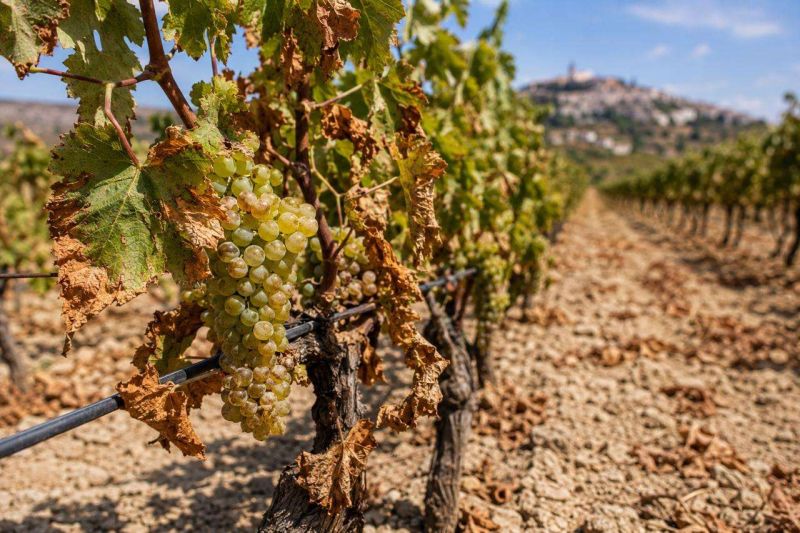
The 2026 grape harvest in Italy’s Abruzzo region is moving ahead under severe drought pressure, with farm group CIA Chieti-Pescara estimating that production losses in the hardest-hit vineyards could reach 70%.
The warning applies to specific areas and not to the whole region. CIA said the worst damage is showing up in coastal and mid-hill wine zones in the provinces of Chieti and Pescara, where a long lack of rain and sustained high temperatures have put vines under water and heat stress. Growers are reporting shriveled fruit, sunburn on grapes, lower berry weight and a faster loss of acidity.
The harvest started on Aug. 3, about 10 days earlier than the recent average, another sign of how weather conditions have altered the season. Early white varieties began first, and Pecorino and Trebbiano are already being picked in several areas. The outlook for Montepulciano and other mid- to late-ripening varieties remains uncertain and will depend on conditions over the next few weeks.
CIA Chieti-Pescara said the 70% figure reflects localized maximum losses in the most affected vineyards and should not be treated as a measure for all of Abruzzo’s wine production. The group is still collecting reports from the field to produce a broader damage estimate.
The group’s president, Domenico Bomba, said the current harvest problems come after several difficult years for local growers. He pointed to heavy damage from downy mildew in 2023, followed by drought and other weather-related setbacks. In his view, the issue is no longer a single bad season but a pattern that is becoming structural for many farms.
That concern goes beyond the crop in the field. Abruzzo is one of Italy’s major wine-producing regions, and a sharp decline in grape deliveries affects cooperatives and wineries that still have to cover much of the same spending on facilities, processing, labor and energy. With less fruit to spread those fixed costs over, margins can shrink even if farm-gate prices improve.
CIA also warned that lower production does not automatically mean a better market for growers. As of July 31, Abruzzo wineries held 2.46 million hectoliters of wine in storage, according to the ICQRF Cantina Italia report cited by the farm group. Of that total, 1.96 million hectoliters were in Chieti province alone, or nearly 80% of the regional stock. That inventory overhang complicates the idea that a smaller crop will quickly translate into stronger prices.
For growers, the risk is that they produce less, face higher unit costs and still fail to secure enough revenue to offset the damage. For cooperatives, the pressure is similar. A lower grape intake can reduce output while leaving operating structures largely intact, hurting profitability across the supply chain.
CIA said some farms are reaching the limit of their ability to absorb repeated losses after several poor campaigns. Bomba said the repeated emergencies are eroding the financial capacity of businesses that might withstand one bad year, or even two, but struggle when shocks continue season after season. He warned that some operations risk closing, with consequences for jobs, local production and the rural economy.
The organization said it will immediately activate its network of agricultural assistance centers to help affected farms file damage reports and start procedures under AGRICAT, Italy’s agricultural risk management framework. At the same time, it plans to gather detailed field declarations to support a precise assessment of losses and to press regional and national authorities for action.
CIA is calling for an immediate damage survey, liquidity support for the most affected businesses and a longer-term strategy for water management. The group argues that emergency responses after each weather shock are no longer enough in a region where climate pressures are increasingly affecting farm budgets and harvest outcomes.
The next stage of the season will be especially important for vineyards that have not yet been harvested. While Pecorino and Trebbiano are already being brought in, Montepulciano, one of Abruzzo’s key red grapes, still has part of its yield to define in the field. Producers and cooperatives are watching closely to see whether any late change in weather can limit further losses before the harvest broadens.