Climate Change Pushes Chablis Harvest to an Unprecedented Aug. 17 Start
A 664-year record shows ripening is accelerating, putting pressure on the acidity and style that define Burgundy.
2026-08-25
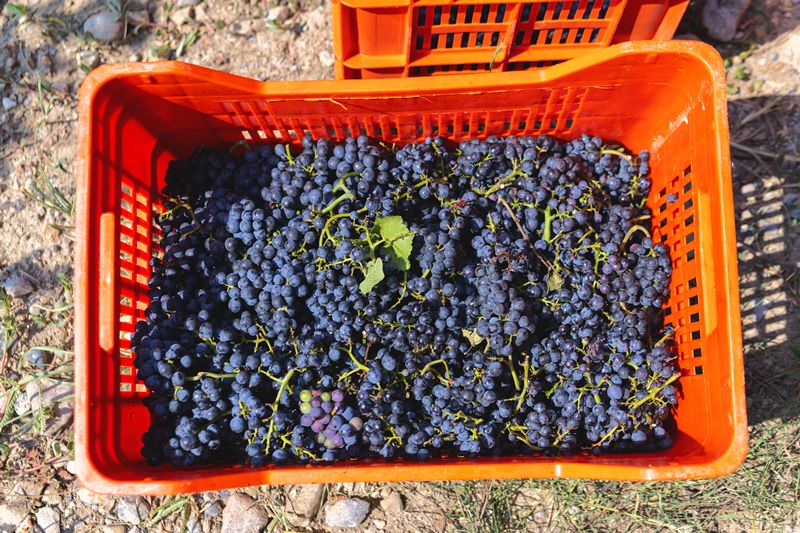
Harvest started in Chablis on Aug. 17 this year, a date growers there describe as unprecedented and one more sign that climate change is moving from weather charts into the vines themselves. In Burgundy and neighboring Champagne, producers are dealing with earlier picking, stronger heat, tighter water supplies and disease pressure that can rise after heavy rain. The concern is not only how much fruit can be brought in, but what kind of wine these regions will be able to keep making.
A long-term study in Beaune helps show how fast the shift has accelerated. Researchers reconstructed harvest dates over 664 years, from 1354 to 2018. From 1354 to 1987, harvests began on average around Sept. 28. From 1988 to 2018, they started 13 days earlier on average. Of the 33 years that rank among the earliest 5% of harvests, only five fell between 1720 and 2002. Since 2003, eight of 16 spring and summer periods have been statistically exceptional, a sign that what once looked unusual is becoming more common.
For growers, the immediate effect is simple. Grapes ripen sooner, and the harvest follows. The harder part comes in the cellar and, eventually, in the glass. When fruit matures too quickly, keeping the usual balance between sugar, acidity and aroma becomes more difficult. If picking is delayed, grapes can accumulate more sugar, which can lead to wines with more alcohol and less of the freshness that has long defined many Burgundy styles.
That matters well beyond the vineyard. For wine producers, merchants and restaurants, the commercial value of Burgundy and Champagne rests in part on consistent style and identity. Faster ripening can shift those profiles, potentially changing alcohol levels, acidity and texture in ways that affect both quality and consumer expectations. It also helps explain why research spending on plant material, water management and protection from heat stress is becoming a central issue for the beverage sector, not just an agricultural one.
Emmanuel Jobard, a climatologist and head of environment and territory at the Yonne Chamber of Agriculture, argues that the problem should not be reduced to a simple rise in temperature. He describes climate as an energy system, with more volatility as well as more warmth. In practical terms, that means growers may have to work with a wider swing of damaging conditions: heat waves, drought, violent rain and disease outbreaks. In his view, vineyards are moving toward a future with fewer easy years and more difficult ones.
The taste question is especially sensitive in Burgundy because the region depends heavily on two grapes. Chardonnay and Pinot Noir account for more than 80% of vineyard area there. Both are tied closely to the reputation of Burgundy wines, and both respond to climate. Pinot Noir, in particular, is vulnerable to temperature changes and water stress. A study covering 80 vineyards worldwide found that beyond a certain level of drought, the grape can lose some of the characteristics that shape its aromatic profile. That does not mean Burgundy will stop making wine. It raises a different question: whether it can keep making wines that taste recognizably like Burgundy.
The regional wine body Comité Bourgogne has been increasing its research effort with that issue in mind. Over the past 10 years, it has devoted more than €3 million to work related to climate disruption. Its technical and innovation department now leads or co-finances about 60 projects with a multidisciplinary team of around 20 people.
One of the largest is Vitilience CAP-2050, launched in January 2026 for a three-year period. The program is designed to test vineyard systems that could make estates more resilient by 2050. Researchers are studying four combinations of adaptation measures, including plant material, protection against weather hazards and ways to manage heat stress. The project covers key Burgundy grapes, including Chardonnay, Pinot Noir and Aligoté, across the region’s main vineyard areas from Chablis to the Mâconnais.
Another line of work involves the grapes themselves. Through a program known as Cepinnov, Burgundy is working with Champagne on new varieties that aim to preserve the qualities associated with Pinot Noir and Chardonnay while improving resistance to disease. After several years of selection and small-scale vinification trials, about 40 promising varieties are now due to move into larger experiments.
Even so, adaptation is not a simple technical switch. In Burgundy, appellation rules set precise limits on grape varieties, yields and planting density. Any change in vineyard practice can touch a system built over decades, and in some cases centuries. That makes research essential, but it also makes implementation slow. A grower choosing new plant material or a different training method is making a decision that will shape production for years, often long after the current market cycle has passed.
The economics add more pressure. Vineyard investments are long-term, and producers cannot wait until climate stress becomes overwhelming before reacting. A vine planted today may still be producing decades from now. Decisions on rootstocks, varieties, canopy management and water use therefore carry unusual weight, especially in regions where place and tradition are part of the product being sold.
Jobard says there is no single solution. The practical response, he argues, is to build resilience estate by estate, reducing dependence on any one weather pattern. That can mean adjusting water management, diversifying approaches and rethinking how vineyards are set up to handle heat and irregular rainfall. In Burgundy and Champagne, the debate has already moved past whether the climate is changing. The work now is to determine how far adaptation can go without erasing the character that gives these wines their value.
