U.S. Delays New 50% Tariff on Canadian Products for Three Days
Trump said the pause gives Washington and Ottawa time to complete a preliminary trade agreement after weeks of closed-door talks.
Wednesday, August 19, 2026
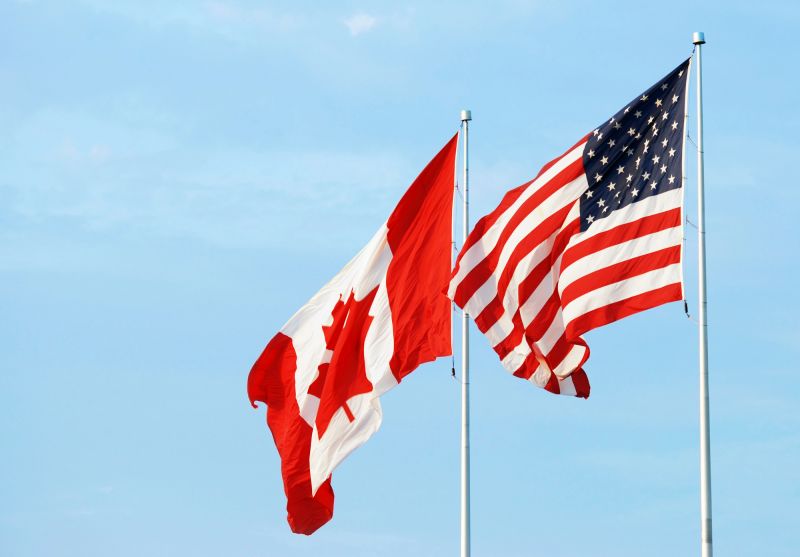
The United States has pushed back by three days the start of a new 50% tariff on some Canadian products, including wines, whiskey and other spirits, temporarily halting a measure that had been due to take effect on Aug. 19 as Washington and Ottawa try to finish a preliminary trade agreement.
President Donald Trump announced the delay late Tuesday, saying on Truth Social that the tariffs were being paused because Canada and the United States, “subject to the finalization of documents,” have a deal. The White House later posted a proclamation confirming the extension.
The short reprieve came after a call Tuesday afternoon between Trump and Canadian Prime Minister Mark Carney, their second conversation this week, and after several weeks of closed-door negotiations between trade officials from both countries. Carney said in a statement that “substantial progress has been made,” but added that “important work still” remained before any agreement could be completed.
The delay does not cancel the threatened tariff. It only postpones it, and neither government has released the full terms of any draft arrangement. U.S. officials said the emerging deal would include broader access for American goods, commitments tied to economic security and alignment on digital trade. Trump also said Canada had committed to address U.S. concerns involving dairy, alcoholic beverages and motor vehicles. The Canadian government did not confirm those specific terms.
For the spirits industry, the three-day extension pauses a sharp escalation in a dispute that has already caused heavy losses for U.S. exporters. The Distilled Spirits Council of the United States, known as DISCUS, said Canadian provincial sales bans have been in place for more than a year and a half and have caused exports of American spirits to Canada to fall by more than 70%. Reuters reported that U.S. spirits exports to Canada dropped by more than 70% year over year between March and December 2025 after several provinces removed American brands from government-run liquor systems and public stores.
In a statement issued late Tuesday, DISCUS President and Chief Executive Chris Swonger said the group welcomed Trump’s decision to extend the deadline and urged both governments to use the extra time to restore normal trade. He said American distillers had been caught in the middle of a broader trade fight and called for a negotiated solution that would return U.S. spirits to retail shelves across all Canadian provinces and bring the sector back to a “zero-for-zero tariff framework.”
That framework has long been a goal of the industry, which argues that open bilateral trade is especially important in a business where distribution is tightly controlled and brand placement on shelves can determine whether a producer keeps access to consumers. In Canada, many provinces operate liquor sales through state monopolies or heavily regulated public channels, which has made the removal of U.S. products especially damaging for American exporters.
The threatened new U.S. tariffs were expected to apply to about $20 billion in Canadian imports and would have taken effect regardless of whether the goods qualified for preferential treatment under the U.S.-Mexico-Canada Agreement. That detail raised concern because the USMCA has protected much of Canadian trade from earlier rounds of U.S. tariffs.
Trade specialists and industry groups had warned that the new tariffs could lead to layoffs and business closures in vulnerable sectors in Canada, including lumber, wine and dairy, while also deepening uncertainty around broader North American trade talks. Existing U.S. tariffs on autos remained one of the key sticking points in the negotiations, according to industry sources cited by Reuters.
The talks have involved U.S. Trade Representative Jamieson Greer, Commerce Secretary Howard Lutnick, Canada’s minister responsible for U.S. trade, Dominic LeBlanc, and Canada’s chief trade negotiator, Janice Charette. LeBlanc and Charette have been in Washington since last week. On Monday, they met with Greer and Lutnick for nearly two hours.
Greer has repeatedly pointed to several U.S. complaints about Canada, including retaliatory tariffs, the Canadian dairy supply management system and the refusal by some provinces to carry U.S. liquor products. Those issues have become part of a wider bargaining process that now stretches beyond spirits into autos, agriculture and digital trade.
Reuters reported that the two sides have also discussed reducing U.S. Section 232 tariffs on Canadian vehicles to 15% from 25%, with the possibility of further cuts based on the share of U.S. content in each vehicle. One unresolved issue has been how to calculate those deductions. Washington has pushed for counting only U.S.-made content, while Canada has argued that all North American content, including parts made in Canada and Mexico, should be included.
Earlier Tuesday, before the tariff pause was announced, the U.S. Commerce Department released new rules for automakers shipping vehicles from Canada and Mexico. The rules simplify the certification process for U.S. content by requiring it once a year instead of twice, but companies must recertify by Sept. 30 to claim deductions in the new annual cycle that begins Dec. 1.
Trump also said in his social media post that the Keystone XL pipeline “may be awoken from the grave,” referring to the project canceled in 2021 after years of opposition from Indigenous groups and environmental activists. He did not provide any details, and the pipeline was not presented by either government as part of the trade framework under discussion.
Canadian officials had signaled in recent days that they were keeping options open if the new U.S. tariffs took effect, including support for affected domestic industries and a possible suspension of bilateral trade talks. At the same time, Canadian negotiators had expressed hope that Washington still wanted a deal.
For now, the immediate pressure on distillers and other affected industries has eased, but only briefly. The threatened 50% tariff remains on the table unless the two countries finish the paperwork and settle the remaining disputes in the coming days, including unresolved questions about market access, provincial treatment of U.S. alcohol and the handling of long-running tensions in North American auto trade.