Italian nursery groups urge Italy to use wine funds for vineyard renewal, not uprooting.
They argue that hotter weather and weak demand require new varieties, clones and rootstocks rather than a smaller vineyard base.
Tuesday, October 13, 2026
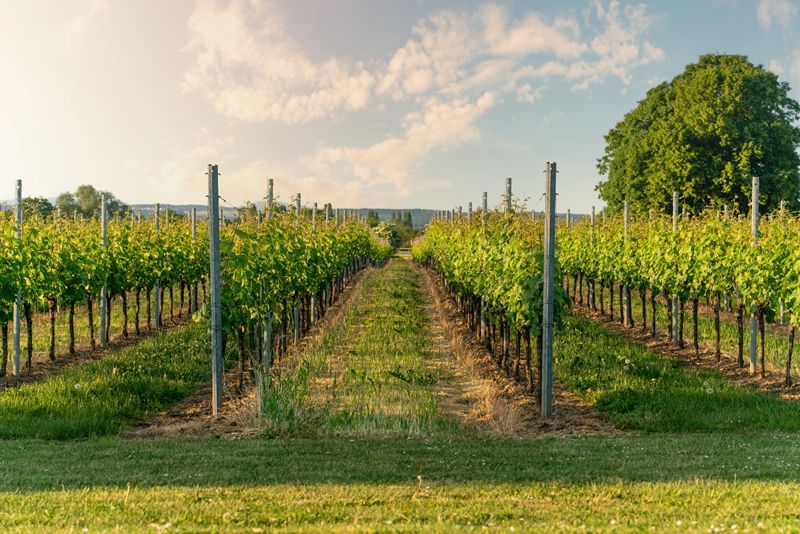
Two leading Italian vine nursery associations on Tuesday called for public money in the country’s wine support system to be used to renew vineyards rather than pay growers to pull them out, arguing that Italy should respond to weak demand and climate pressure by redesigning vineyards for future production instead of shrinking its productive base.
MIVA, the association of Italian grapevine propagators, and the Association of Vine Nurseries of Friuli Venezia Giulia said resources under the OCM wine program should be directed to restructuring and reconversion projects. Their proposal would favor new plantings based on varieties, clones and rootstocks better suited to hotter conditions, tighter water availability, disease pressure and changing consumer demand.
The groups, which said they represent nearly all of Italy’s nursery sector, presented the appeal as a response to a crisis hitting the industry from two sides at once. They pointed to growing wine stocks, weaker exports and softer domestic sales on one side, and earlier ripening, hotter temperatures and more erratic weather on the other.
According to figures cited by the associations, Italian cellars held 42.6 million hectoliters of wine as of July 31, up 6.9% from the same point in 2025, while must stocks reached 3.1 million hectoliters, up 31.5%. At the same time, they said, Italian wine exports in the first half of 2026 were just over 3.6 billion euros, down 6.2% by value and 4% by volume. Bottled still wines fell 8.9% by value, and sales in large-scale retail on the domestic market slipped 2.5% by volume.
For the associations, those numbers show why uprooting incentives are the wrong answer. Dino Scanavino, president of MIVA, said reducing vineyard potential now would treat the effects of the downturn rather than its causes. In his view, the better use of available funds is to help producers move toward vineyards that are more efficient, more resilient and better aligned with the wines the market is likely to demand over the next decade.
The dispute goes to the center of agricultural policy in one of the world’s largest wine producers. Italy’s wine sector already has access to restructuring tools under European wine policy and the European Union’s Common Agricultural Policy strategic plan. What the nursery groups are asking for is a shift in how those tools are used. They say restructuring too often has meant replacing an old vineyard with a nearly identical new one, using the same varieties, the same clones, the same rootstocks and the same training systems, with too little attention to climate trends or changes in consumer demand.
Yuri Zambon, director of the nursery group VCR and speaking on behalf of the Friuli Venezia Giulia association, said the industry needs to move beyond simple replacement. Pulling out a Merlot vineyard only to replant the same Merlot under the same production model may reduce the average age of the vines, he said, but it does not change the vineyard’s ability to cope with future conditions. He argued that genetics, rootstocks, canopy management and training systems need to be part of a broader strategy that starts with a basic question: what kind of wine will the market want in 10 or 15 years.
The groups are urging support for plant material and vineyard designs that preserve acidity, balance and quality in warmer conditions, improve water-use efficiency, and expand the use of disease-resistant varieties where rules permit. They also say vineyard renewal should be connected to product design, including the growing market interest in wines with lower alcohol levels. In their view, that objective can be addressed in the vineyard itself through plant material choices, agronomic methods and harvest timing that allow aromatic and phenolic ripeness with lower sugar accumulation, rather than relying only on cellar technology after harvest.
The debate matters well beyond the nursery trade. Italy’s wine industry is a major part of the broader beverage economy, and decisions on whether public funds support vineyard renewal or vineyard removal could influence future supply, production costs, product style and export competitiveness. A policy centered on climate adaptation may also shape how quickly producers can respond to changing demand in global wine markets.
The associations also warned that uprooting can have long-term consequences that are hard to reverse, especially in historic and hillside vineyard areas where viticulture serves not only as an economic activity but also as a form of land management. In those areas, they said, vineyard abandonment can increase the risk of neglect and hydrogeological instability and can weaken local landscapes that depend on continued cultivation.
Alongside the funding issue, the nursery groups asked the rest of the supply chain to place greater value on certified vine plants. Their argument is partly regulatory. From the upcoming marketing campaign, operators will face tighter obligations under EU Regulation 2016/2031 and the bloc’s certification rules for vine propagation material, including stricter identification, traceability and control requirements through the plant passport system.
Those requirements mean more record-keeping, more inspections, more qualified staff and heavier technical and administrative costs for nurseries. The associations said growers benefit from stronger sanitary guarantees and clearer traceability, while the long-term quality of a vineyard also depends on the reliability of the material planted at the start.
Scanavino said a vine plant carries more than its physical form. In his description, it also carries verified varietal and clonal identity, a controlled health status, a traceable production history and a certification system that requires investment and accountability from the nursery business. The groups argue that these elements should be recognized in pricing and purchasing decisions, especially at a time when energy, fuel, fertilizers, crop protection products, labor and compliance costs are rising.
That concern reflects a wider tension in the wine chain. MIVA and the Friuli Venezia Giulia nursery association said competition based only on the lowest price risks cutting into the spending needed for research, sanitary selection, genetic improvement and certification. Since the cost of vine plants represents only a limited share of the total investment needed to establish a vineyard, they argue that choosing cheaper but less reliable material can create larger problems later in the vineyard’s productive life, affecting health, yield and value for decades.
Zambon said each vineyard begins with a choice that can shape production for 20 or 30 years. In that sense, he said, a certified, healthy and traceable vine plant is the first form of insurance on the quality of both the vineyard and the wine that will come from it.
The two associations are now calling for talks with national institutions, producer groups, consortia and research bodies on what they describe as a national renewal plan for Italian vineyards. Their proposal would connect public support, genetic research, sustainability goals, climate adaptation and market strategy at a time when Italy’s wine sector is under pressure to preserve capacity while changing what and how it produces.